Showing posts with label manned space flight. Show all posts

Wednesday, April 18, 2012

Pictures from Discovery's final voyage to DC.

The Space Shuttle Discovery, or its somewhat gutted carcass, was flown over where I work yesterday on its way to the Air & Space Museum out at Dulles International Airport. Thanks to a telecon I missed seeing, but various co-workers got a bunch of picture of it that are actually more impressive than the National Geographic gallery here.

Wednesday, September 09, 2009

Off to Mars, but not the Moon?

The summary of the Human Space Flight Review Committee report requested by the Obama administration advocates a long-term program with Mars as the long term goal (i.e. no set date), de-emphasising any return to the Moon:

... NASA has drafted a concept proposal called "Generation Mars" which envisions a 30-year blueprint for developing technologies, staging precursor missions to asteroids and other destinations, and building grassroots support for eventual human expeditions to Mars.
It also offers an unsurprising warning:
"The U.S. human spaceflight program appears to be on an unsustainable trajectory. It is perpetuating the perilous practice of pursuing goals that do not match allocated resources," the report summary said.
[Hat tip: TPM/Reuters]

Thursday, May 07, 2009

Manned space program stuff...

John Wilkins at Evolving Thoughts had a post that brought this to my notice:

Now that NASA head Mike Griffin is gone, people are finally able to review the absurdities of the Ares I launcher. I think that the existing heavy launchers will do fine, and that they should develop a very heavy launcher like this.

Monday, January 05, 2009

Bob Park's take on what NASA's mission should be

In January 2nd's "What's New" (*) Bob Park at UMD presented his typically blunt view of what NASA's future should and should not involve:

4. NASA: A HOPELESSLY OLD-FASHIONED VISION OF THE FUTURE.
In discussing NASA’s future on Tuesday, the NY Times was mesmerized by the "gap" between the end of the shuttle and the launch of a new bus to transport astronauts. Forget the damn gap. The 21st Century will be focused on planets around other suns, and on the bad news about what’s happening to our own planet. Astronauts can’t go to other stars, but we can build better telescopes and get a better look at them. Astronauts will be no help either in studying our own Sun and our own planet, Earth. We need to finish what we set out to do a decade ago, but were stopped from doing by the Bush administration: launch an updated Deep Space Climate Observatory. There is still time, but we urgently need to get started.
While some might consider this extreme, it does makes sense.

Proponents of manned space flight have got to start making a realistic case for their very expensive passion. Continuing to use empty buzzwords and catch-phrases "exploration" or "only astronauts can go fossil hunting on Mars" is not going to work on Congress and the tax-payer forever.

(*) The 01/02/09 edition was yet available on the What's New website when this post was written.

Tuesday, December 16, 2008

Yet more...

The Washington Post has perhaps the most interesting article of the bunch about tensions between NASA's administrator Michael Griffin and Obama's NASA transition team ("Uncertainty Clouds Transition at NASA", by Joel Achenbach. 12/15./2008.).

Basically it sounds like Obama's team (at least one of whom has high-level NASA experience) are skeptical of some of the information they're being given on the Constellation program (basically the manned-space program replacing the Shuttle, and intended as the vehicle for a return to the Moon. Note that Constellation is nothing to do with the proposed X-ray Observatory formerly known as Constellation-X).

Rumors of delays and costs overruns in the Constellation program are nothing new. Those of you who read Alan Stern's November 23 editorial in the NYT decrying routine acceptance of cost increases as a cancer overtaking NASA may remember that Constellation was one of the programs he chose to specifically mention by name.

My personal opinion is that hard scrutiny, especially of the components of Bush's Moon/Mars plan, will not hurt NASA in the long run. There are many reasons why programs rarely come in on cost, few of which involve deliberate malfeasance, but that does not mean it should be accepted without question.

We certainly need a long term plan for space, more powerful launch vehicles, a replacement for the Shuttle (if we are to continue with manned space flight), and most importantly a rational, justifiable, sustainable, cost-effective plan for the long term development of space (including, if needs be, manned space flight). Simply continuing Bush's plan is unlikely to be the best way of doing that.

Monday, December 15, 2008

Dustup denied...

NASA Administrator Michael Griffin has denied as false the anonymous claims made in the Orlando Sentinel article (which I mentioned previously here) of conflict between him and members of Obama's transition, in particular regarding the Constellation manned space flight program aimed at getting America back to the Moon.

Lets hope this is true... If there are real problems with Constellation then the associated financial problems would unavoidably spill over in some degree to hurt NASA's science mission and space astrophysics.

Sunday, November 30, 2008

Worth reading: Men from Earth by Buzz Aldrin and Malcolm McConnell


My father in law Mike lent me Men from Earth, by Buzz Aldrin and Malcolm McConnell (1989, Amazon link), and it turned out to be quite a page-turner.

The book is an account of the space program from the end of World War II through to Apollo 11, in particular the manned space program. It is a mix of Buzz Aldrin's first hand account with technical and historical details of both the US and Soviet space programs, the blending of which both humanizes the history and places the human aspect in context.

It is refreshingly frank regarding the disappointments, problems and failures experienced on both sides of the space race, and also regarding the issues confronting NASA in the 1980's with the lack of a real mission or a mandate to develop a long term space program. Given that it was written in the late 80's it is ironic how Aldrin and McConnell identify the same problems that confront NASA now: the shuttle as a flawed launcher, the need to develop a safe launch capability, the lack of direction for the manned space program, the sad fact that we don't have a heavy launcher comparable to the Saturn launcher technology that was thrown away in the 70's when the Shuttle program was cobbled together.

I was also surprised at how much was known about the Soviet moon program - although I knew the Soviets had been developing the G-1 launcher and that they'd had accidents with it I hadn't realized how seriously they had taken the moon race, or how much political pressures for propaganda victories had damaged their space program.

All in all I learned a lot that I hadn't seen or heard before - there was a lot of detail that you can't get in wikipedia articles - and its really quite well written. Well worth a read.

Monday, September 29, 2008

Hubble problems?

Nothing official on the HST website at STScI at the moment (7pm EDT, 09/29/08), but MSNBC is reporting that NASA is delaying the Hubble Servicing mission because Hubble's command and data handling systems failed over the weekend.

[Hat tip: Jim Herald]

[Update: Bad Astronomy had a detailed post 35 minutes ago. Hubble in safe mode. See it for the details.]

Chinese Astronauts return after spacewalk, get lawn chairs


"Hey! I risked my life in space and all I got was this camping chair" is what Chinese
astronaut Zhai Zhigang appears to be saying after the crew of three emerged from their re-entry capsule on Sunday.

Actually what he said was “It was a glorious mission, full of challenges, but the result is perfect.”

Those old-school spherical re-entry capsules certainly have a lot of retro-chic.

Friday, June 20, 2008

Alpha Magnetic Spectrometer will go to the ISS!


In a surprisingly bi-partisan decision (409 to 15) the House overwhelming voted more funding for NASA, despite Bush's stated opposition (AP story here).

Part of the extra funding goes toward an additional Shuttle launch that will take the Alpha Magnetic Spectrometer to the Space Station. Seeing as a lot of money has already been spent on building the AMS and storing it in a warehouse near DC for the last few years, actually using the thing is good for the both the tax-payer and science.

[Expanded diagram of the AMS-02 detector image from http://cyclo.mit.edu/~bmonreal/detector_intro.html ]

Tuesday, February 06, 2007

Boldly going where so many have gone before.


After the spending the morning polishing off the proofs for both my M82 hard X-ray and NGC 6810 papers, I chanced upon this interesting story...

Basically an astronaut love triangle involving assault, pepper spray and diapers.

I guess the pro-manned space flight crowd were right after all - you can't do this with robots.

Friday, September 22, 2006

Too much emphasis on manned space flight (?)

The current WH-ordered emphasis on manned space flight is not capturing the (liberal) public imagination, at least in terms of DailyKos readers. As of 11am EST (with 203 votes) 54% think more emphasis should be placed on unmanned missions (you know, the ones that actually produce useful results and also cost vastly less than manned mission).

This is from DarkSyde's science friday article, which is is pretty damn clear as to the cost/benefit outcomes of manned missions (the shuttle, the international space station) and unmanned missions (e.g. Hubble, Cassini).

What is a little disturbing (at least to me) is that despite his rather clear discussion 16% believe the current balance (i.e. running NASA's science capability into the ground) is acceptable, and 26% believe more manned space flight should be done.

Just for fun lets basically recap the facts, the numbers are rough but are qualitatively correct:
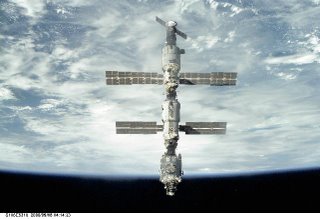

International Space Station:

  • Reason for construction: Congress, after deciding GHWB's Mar's plan was too expensive.
  • Total cost: $100 billion dollars?
  • Unique science accomplished: None. Microgravity experiments can be done on planes.
  • Unique advances/development of space technology: ?
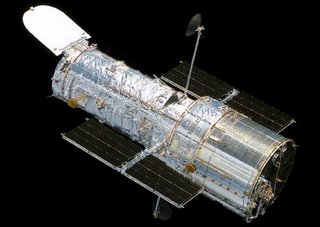

Space-based (unmanned) observatories: example, the Hubble Space Telescope
  • Reason for construction: Scientific need to determine the expansion rate of the Universe (the Hubble Constant) by detecting Cepheid variables in galaxies further away than possible with any ground-based observatory.
  • Total cost: At about $5 billion HST is one of the most expensive science missions of the last 2 decades.
  • Unique science accomplished: Determined Hubble constant, distant SNe show Universe is expanding, presence of Dark Energy, deepest observations of the Universe to date, etc etc.
  • Unique advances/development of space technology: Multiple successful upgrades performed in space by astronauts.
The problem, and the cause of wasted tax-payer money, is not manned space flight itself, it is any form of space mission driven by narrow political or financial reasons. NASA does (did?) science well because missions were chosen based on apolitical scientific need as prioritized by the entire scientific community.