Wednesday, January 22, 2014

New supernova in M82!

Students at UCL have discovered a new Supernova in M82. This is the first optically visible SN in M82 since I can't remember when, and its location is a kpc or two out from the nucleus (where there is an optically-obscured core-collapse Supernova every 10-20 years or so) seems consistent with the preliminary reports of it being a SN type Ia.

This image is from the UCL press release:  http://www.ucl.ac.uk/maps-faculty/maps-news-publication/maps1405. The first image was taken in December 2013, the second on January 21st 2014.


Friday, January 10, 2014

Digital Camera detector sizes and noise characteristics

The following sites contain some useful information regarding the physical sizes of certain digital camera CCDs, pixel sizes in microns, and noise characteristics and gains at different ISO levels.

Why is this important? Its related to a project I'm working on at the moment. This kind of information is very difficult to find on manufacturer's sites, as they're catering to an audience who has been make to think that number of megapixels is the only metric of value.

Other useful links:
  • dcraw: Read and convert RAW files (of all the various types).
  • rawtran: A wrapper around dcraw to support better conversion of RAw to FITS than the cruder method suggested by dcraw. This is related to the munipack software package.

Thursday, January 09, 2014

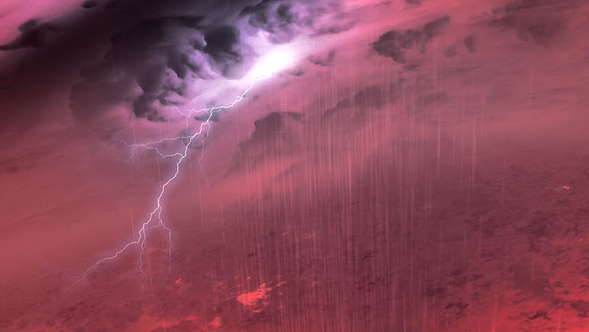
Molten iron storm clouds

Here is some pretty cool research on Brown Dwarfs (or Dwarves?) using the Spitzer Space Telescope. Researchers expected that Brown Dwarfs should show variations in brightness due to storms in their atmospheres, which are more like extreme versions of giant planets like Jupiter than the atmospheres of actual stars like the Sun. When they went looking with the SST they found even more variation in brightness than expected.

The really cool part: the clouds aren't made of water vapour or methane, but molten iron, sand or salt.

Originally seen on Space.Com: Storms on 'Failed Stars' Rain Molten Iron.

Free fun fact. I very nearly did a PhD on searching for Brown Dwarfs, back before any had been actually detected.

Friday, November 29, 2013

Goodbye Comet ISON

Comet ISON appears to have broken up and evaporated as it approached the Sun, so we won't be seeing a spectacular show in our December skies as hoped. It seems unlikely that any remnants that do make it back out towards Earth's orbit will be much to look at.


The embedded YouTUBE video of pretty low quality, but NASA's website has high quality video versions of Comet ISON fizzling available for viewing and downloading here.