Showing posts with label M82. Show all posts

Sunday, August 29, 2021

Work In Progress Astrophotography

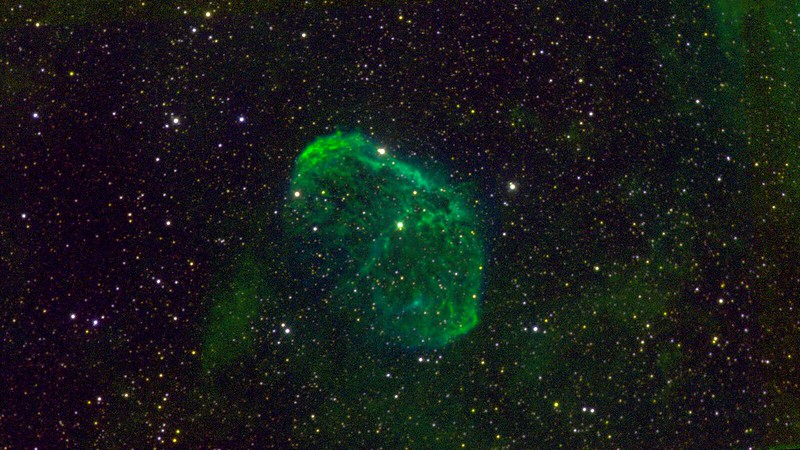
Here are a few new amateur astronomical images I've been working on. These are very much a work in progress, in particular with handling the sky background when building up large mosiac images. These were taken using the iTelescope T05 (a 250mm Takahashi reflector) and T20 (a 106mm APO refractor) telescopes in New Mexico over a series of nights this year, and processed using various python tools I wrote for the purpose.

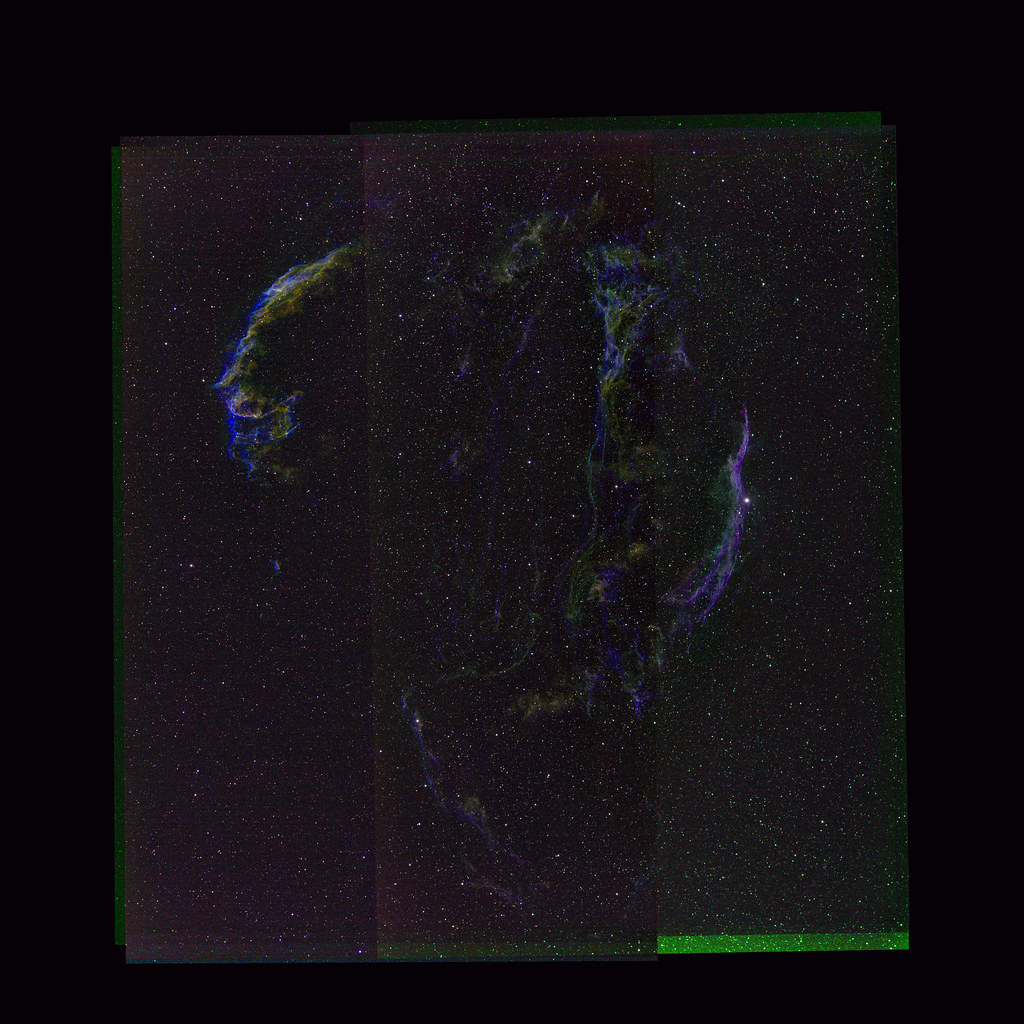
A 5x5 degrees SII, H-alpha and OIII mosaics of the Cygnus Loop supernova remnant, taken with T20. CygnusLoop_SIIHaOIII_5000x5000_resamp_wgtavg_gf10_cs15_b8 The struggle with the images were taken when the Moon was up, even though the were taken over several days. Weather has been crummy at the NM site this summer, so you make do with what you get. But the sky backgrounds need some additional work.

The other images are of the NGC 6888 (shown previously), and M82 and/or M81, each taken separately with T05, and mosaiced together in some versions. The depth of the different images and bands varies a lot, for example there are 25 5-minute H-alpha images of M82, but only 6 5-minute H-alpha images of M81. I also messed up by using the Johnson-Cousins B filter on M81 when I've used the Astrodon Blue on M82. Astrophotography

Sunday, February 09, 2020

NASA Astrophoto Challenge for Winter 2019 is M82

Noted with approval: the NASA Astrophoto challenge for Winter 2019 is my old friend Messier 82. See if you can create a press-release worthy image of M82 using either existing NASA images for different orbiting observatories and/or ground-based optical images taken at your request by Harvard's MicroObservatory service.

Tuesday, May 13, 2014

SN 2014J update

I've been exceptionally busy lately, and haven't had any time to follow up on what observations of SN 2014J have told us. A google search didn't show very much, so I ended up searching Arxiv.org for papers associated with SN 2014J returns the following list (search http://arxiv.org/find/all/1/all:+2014J/0/1/0/all/0/1):

1. arXiv:1405.1488 [pdf, other]
No X-rays from the very nearby Type Ia SN2014J: constraints on its environment
Comments: 9 pages, Submitted to ApJ
2. arXiv:1404.2639 [pdf, ps, other]
Diffuse Interstellar Bands vs. Known Atomic and Molecular Species in the Interstellar Medium of M82 toward SN 2014J
Daniel E. Welty (1), Adam M. Ritchey (2), Julie A. Dahlstrom (3), Donald G. York (1) ((1) Univ. of Chicago, (2) Univ. of Washington, (3) Carthage College)
Comments: 27 pages, 6 figures, submitted to ApJ (comments welcome)
3. arXiv:1403.7405 [pdf, ps, other]
Supernova 2014J at maximum light
Comments: 10 pages, 4 figures, submitted to Contrib. Astron. Obs. Skalnate Pleso
4. arXiv:1403.4250 [pdf, other]
Constraints on the Progenitor System of the Type Ia Supernova 2014J from Pre-Explosion Hubble Space Telescope Imaging
Comments: Submitted to ApJ, comments welcome
5. arXiv:1402.4806 [pdf, ps, other]
Expectations for the Hard X-ray Continuum and Gamma-ray Line Fluxes from the Type Ia supernova SN 2014J in M82
Comments: Accepted to the Astrophysical Journal (March 31, 2014), with one additional figure and further discussion of technique
6. arXiv:1402.2717 [pdf, ps, other]
Specific predictions for SN 2014J in the context of the Quark Nova Ia model
Rachid Ouyed (1), Nico Koning (1), Denis Leahy (1), Jan E. Staff (2) ((1) Department of Physics and Astronomy, University of Calgary, Calgary, Alberta, Canada, (2) Department of Physics and Astronomy, Macquarie University, Australia)
Comments: 3 pages
7. arXiv:1401.7968 [pdf, ps, other]
Estimating the First-Light Time of the Type Ia Supernova 2014J in M82
Comments: Accepted for publication in ApJ Letters
This is quite a varied set of papers. I quite like the Margutti et al paper, not just because it is on X-ray emission but because of the impressive figures.

Otherwise, the most interesting of the bunch is Zheng et al. Not only did they uncover some earlier but unrecognized observations of the supernova, but the managed to estimate the explosion time (*) at Jan 14.75 UT (2014), about a week before Fossey's UCL undergraduates first noticed it. Tsvetkov et al present UVBRI light and color curves and conclude that SN 2014J belongs the the "normal" [Quotation marks in the original] subset of Type 1a SNe. How this matches up with the unusual early-time powerl-law light curve Zheng discovered doesn't seem to be discussed in their article, and as the subject is out of my (former) expertise I don't have enough information to make an informed speculation.

(*) Technically the time that any light from the explosion would have passed Earth. At a distance of D~3.5 Megaparsecs the actual explosion occurred ~11 million years ago (i.e. well before our ancestors and the ancestors of chimpanzees split off from each other).


Friday, February 07, 2014

Supernova 2014J in M82: Some more pictures and how to spot it

The Type Ia supernova 2004J in M82 is near peak brightness, and should be easy to spot if you live in the northern hemisphere and have a small telescope or large binoculars. Brian Dodson has a good guide to finding it on the sky.

Here are two more images of M82 taken by Swift UVOT, the second taken some years before the SN and the first taken on January 22, the day after its initial discovery. [Images from NASA/GSFC media site, credit NASA/Swift/P. Brown, TAMU]. Note that the SN is circled in the first image. The large white blob surrounding a blue and white point is not the SN, but a bright foreground star.


Wednesday, January 22, 2014

New supernova in M82!

Students at UCL have discovered a new Supernova in M82. This is the first optically visible SN in M82 since I can't remember when, and its location is a kpc or two out from the nucleus (where there is an optically-obscured core-collapse Supernova every 10-20 years or so) seems consistent with the preliminary reports of it being a SN type Ia.

This image is from the UCL press release:  http://www.ucl.ac.uk/maps-faculty/maps-news-publication/maps1405. The first image was taken in December 2013, the second on January 21st 2014.


Friday, June 11, 2010

Interesting Astrophysics: June 01 to June 11

This is the final edition of Interesting Astrophysics with me working as a professional astrophysicist, as I start a new job outside astronomy next week. If I have the spare time at home I may try to continue this series, but perhaps at a reduced rate.

Nevertheless, there is some interesting stuff to look at. Molecular gas in starbursts is the subject of the Bothwell et al, Naylor et al, and Feruglio et al papers. In terms of winds, Muzic et al discuss possible/futher evidence of a wind within the central regions of our own galaxy (I still remain somewhat sceptical that the Milky Way hosts a true galactic wind), Kobulnicky & Martin present X-ray observations of the dwarf starburst Henize 2-10, Feruglio et al claim there is a hugely energetic molecular outflow in Markarian 231 that can only be power by an AGN, and Fischer discuss the geometry of the outflow in the central kiloparsec of the Seyfert 2 galaxy Mrk 573. Randall Smith and collaborators have posted two interesting X-ray line diagnostics papers, for all your X-ray spectroscopists out there.


Galaxies and Starbursts

AKARI infrared observations of edge-on spiral galaxy NGC 3079
Mitsuyoshi Yamagishi, Hidehiro Kaneda, Daisuke Ishihara, Shinya Komugi, Takashi Onaka, Toyoaki Suzuki, arXiv:1005.5251 [pdf, ps, other]
Comments: 15 pages, 7 figures, accepted for publication in PASJ

High-resolution CO and radio imaging of ULIRGs: extended CO structures and implications for the universal star formation law
M. S. Bothwell, S. C. Chapman, L. Tacconi, Ian Smail, R. J. Ivison, C. M. Casey, F. Bertoldi, R. Beswick, A. Biggs, A. W. Blain, P. Cox, R. Genzel, T. R. Greve, R. Kennicutt, T. Muxlow, R. Neri, A. Omont, 2010, MNRAS, 405, 219
Full Text: HTML, PDF (Size: 1391K)

From their abstract: "We find a difference in size between the CO and radio emission regions, and as such we suggest that using the spatial extent of the CO emission region to estimate the surface density of star formation may lead to error. This size difference also causes the star formation efficiencies within systems to vary by up to a factor of 5. We also find, with our new accurate sizes, that SMGs lie significantly above the KS relation, indicating that stars are formed more efficiently in these extreme systems than in other high- z star-forming galaxies."


A Census of the High-Density Molecular Gas in M82
B. J. Naylor, C. M. Bradford, J. E. Aguirre, J. J. Bock, L. Earle, J. Glenn, H. Inami, J. Kamenetzky, P. R. Maloney, H. Matsuhara, H. T. Nguyen, J. Zmuidzinas, arXiv:1006.1964 [pdf, ps, other]
Comments: 15 pages (using emulateapj.cls), 6 figures, submitted to the Astrophysical Journal

From their abstract: "We present a three-pointing study of the molecular gas in the starburst nucleus of M82 based on 190 - 307 GHz spectra obtained with Z-Spec at the Caltech Submillimeter Observatory. We measure intensities or upper-limits for 20 transitions, including several new detections of CS, HNC, C2H, H2CO and CH3CCH lines. We combine our measurements with previously-published measurements at other frequencies for HCN, HNC, CS, C34S, and HCO+ in a multi-species likelihood analysis constraining gas mass, density and temperature, and the species' relative abundances. We find some 1.7 - 2.7 x 10^8 M_sun of gas with n_H2 between 1 - 6 x 10^4 cm^-3 and T > 50 K. While the mass and temperature are comparable to values inferred from mid-J CO transitions, the thermal pressure is a factor of 10 - 20 greater."

Their median thermal pressure estimate P/k ~ 106.4 K cm-3 for the molecular gas, is a little lower than our (Strickland & Heckman 2009) estimates for the very hot gas in the starburst (P/k ~107), but for astrophysical work that's actually pretty close - its certainly closer than some other estimates in the literature. Nor would I expect the molecular gas to be in exact thermal pressure equilibrium with the hot gas.

Cometary shaped sources at the Galactic Center - Evidence for a wind from the central 0.2 pc
K. Muzic, A. Eckart, R. Schoedel, R. Buchholz, M. Zamaninasab, arXiv:1006.0909 [pdf, other]
Comments: to appear in A&A

Abstract in full: "In 2007 we reported two cometary shaped sources in the vicinity of Sgr A* (0.8" and 3.4" projected distance), named X7 and X3. The symmetry axes of the two sources are aligned to within 5 degrees in the plane of the sky and the tips of their bow-shocks point towards Sgr A*. Our measurements show that the proper motion vectors of both features are pointing in directions more than 45 deg away from the line that connects them with Sgr A*. This misalignment of the bow-shock symmetry axes and their proper motion vectors, combined with the high proper motion velocities of several 100 km/s, suggest that the bow-shocks must be produced by an interaction with some external fast wind, possibly coming from Sgr A*, or stars in its vicinity. We have developed a bow-shock model to fit the observed morphology and constrain the source of the external wind. The result of our modeling allows us to estimate the velocity of the external wind, making sure that all likely stellar types of the bow-shock stars are considered. We show that neither of the two bow-shocks (one of which is clearly associated with a stellar source) can be produced by influence of a stellar wind of a single mass-losing star in the central parsec. Instead, an outflow carrying a momentum comparable to the one contributed by the ensemble of the massive young stars, can drive shock velocities capable of producing the observed cometary features. We argue that a collimated outflow arising perpendicular to the plane of the clockwise rotating stars (CWS), can easily account for the two features and the mini-cavity. However, the collective wind from the CWS has a scale of >10''. The presence of a strong, mass-loaded outbound wind at projected distances from Sgr A* of <1'' is in fact in agreement with models that predict a highly inefficient accretion onto the central black hole due to a strongly radius dependent accretion flow."

Exploring the Origin and Fate of the Magellanic Stream with Ultraviolet and Optical Absorption

Andrew J. Fox, Bart P. Wakker, Jonathan V. Smoker, Philipp Richter, Blair D. Savage, Kenneth R. Sembach, arXiv:1006.0974 [pdf, ps, other]
Comments: Accepted for publication in ApJ. 18 pages, 7 figures, all in color

From their abstract: "Summing over the low-ion and high-ion phases, we derive conservative lower limits on the ratio N(total H II)/N(H I) of >19 toward NGC 7469 and >330 toward Mrk 335, showing that along these two directions the vast majority of the Stream has been ionized. The presence of warm-hot plasma together with the small-scale structure observed at 21 cm provides evidence for an evaporative interaction with the hot Galactic corona. This scenario, predicted by hydrodynamical simulations, suggests that the fate of the MS will be to replenish the Galactic corona with new plasma, rather than to bring neutral fuel to the disk."

The Diffuse and Compact X-ray Components of the Starburst Galaxy Henize~2-10
Henry A. Kobulnicky, Crystal L. Martin, arXiv:1006.1189 [pdf, ps, other]
Comments: Accepted for publication in The Astrophysical Journal; a version with high-resolution figures can be found at this http URL

From their abstract: "Chandra X-ray imaging spectroscopy of the starburst galaxy Henize 2-10 reveals a strong nuclear point source and at least two fainter compact sources embedded within a more luminous diffuse thermal component. ...Two-temperature solar-composition plasmas (kT~0.2 keV and kT~0.7 keV) fit the diffuse X-ray component as well as single-temperature plasmas with enhanced alpha/Fe ratios. Since the observed radial gradient of the X-ray surface brightness closely follows that of the Halpha emission, the composition of the X-ray plasma likely reflects mixing of the ambient cool/warm ISM with an even hotter, low emission measure plasma, thereby explaining the ~solar ISM composition. Aperture synthesis 21-cm maps show an extended neutral medium to radii of 60" so that the warm and hot phases of the ISM, which extend to ~30", are enveloped within the 8x10^20 /cm^2 contour of the cool neutral medium. This extended neutral halo may serve to inhibit a starburst-driven outflow unless it is predominantly along the line of sight. The high areal density of star formation can also be reconciled with the lack of prominent outflow signatures if Henize 2-10 is in the very early stages of developing a galactic wind."


Black Holes and AGN

Quasar feedback revealed by giant molecular outflows
Chiara Feruglio, Roberto Maiolino, Enrico Piconcelli, Nicola Menci, Herve' Aussel, Alessandra Lamastra, Fabrizio Fiore, arXiv:1006.1655 [pdf, ps, other]
Comments: Submitted for publication in A&A Letters. 4 pages, 3 figures

From their abstract: "We used the IRAM PdBI to observe the CO(1-0) transition in Mrk 231, the closest quasar known. We detect broad wings of the CO line, with velocities up to 750 km/s and spatially resolved on the kpc scale. Such broad CO wings trace a giant molecular outflow of about 2000 MSun/year, far larger than the ongoing star-formation rate (~200 MSun/year) observed in the host galaxy. This wind will totally expel the cold gas reservoir in Markarian 231 in less than 1e7 yrs, therefore halting the star-formation activity on the same timescale. The inferred kinetic energy in the molecular outflow is ~4e44 erg/s, corresponding to 7% of the AGN bolometric luminosity, which is very close to the fraction expected by models ascribing quasar feedback to highly supersonic shocks generated by radiatively accelerated nuclear winds. Instead, the contribution by the SNe fall short by orders of magnitude to account for the outflow kinetic energy."


There is going to be some skepticism about this paper in the superwind community, given the uncertainties in CO to hydrogen conversion factors. In terms of the larger scale (10+ kpc) superwind Mrk 231 is not that different from other ULIRGs with winds.

Modeling the Outflow in the Narrow-Line Region of Markarian 573: Biconical Illumination of a Gaseous Disk
T. C. Fischer, D. M. Crenshaw, S. B. Kraemer, H. R. Schmitt, M. L. Trippe, arXiv:1006.1875 [pdf]
Comments: 20 pages, 5 figures (1 color), to be published in The Astronomical Journal
Subjects: Cosmology and Extragalactic Astrophysics (astro-ph.CO)

Abstract in full: "We present a study of the outflowing ionized gas in the resolved narrow-line region (NLR) of the Seyfert 2 galaxy Mrk 573, and its interaction with an in- ner dust/gas disk, based on Hubble Space Telescope (HST) WFPC2 and STIS observations. From the spectroscopic and imaging information, we determined the fundamental geometry of the outflow and inner disk, via two modeling pro- grams used to recreate the morphology of these regions imaged with HST. We also determined that the bicone of ionizing radiation from the Active Galactic Nucleus (AGN) intersects with the inner disk, illuminating a section of the disk including inner segments of spiral arms, fully seen through structure mapping, which appear to be outflowing and expanding. In addition, we see high velocities at projected distances of \geq 2'' (- 700 pc) from the nucleus, which could be due to rotation or to in situ acceleration of gas off the spiral arms. We find that the true half opening angle of the ionizing bicone (53 degrees) is much larger than the apparent half-opening angle (34 degrees) due to the above geometry, which may apply to a number of other Seyferts as well."


X-ray Astronomy

Ionization Equilibrium Timescales in Collisional Plasmas
Randall K. Smith, John P. Hughes, arXiv:1006.0254 [pdf, ps, other]
Comments: 4 pages, 2 figures. Accepted for publication by the Astrophysical Journal

Full abstract: "Astrophysical shocks or bursts from a photoionizing source can disturb the typical collisional plasma found in galactic interstellar media or the intergalactic medium. The spectrum emitted by this plasma contains diagnostics that have been used to determine the time since the disturbing event, although this determination becomes uncertain as the elements in the plasma return to ionization equilibrium. A general solution for the equilibrium timescale for each element arises from the elegant eigenvector method of solution to the problem of a non-equilibrium plasma described by Masai (1984) and Hughes & Helfand (1985). In general the ionization evolution of an element Z in a constant electron temperature plasma is given by a coupled set of Z+1 first order differential equations. However, they can be recast as Z uncoupled first order differential equations using an eigenvector basis for the system. The solution is then Z separate exponential functions, with the time constants given by the eigenvalues of the rate matrix. The smallest of these eigenvalues gives the scale of slowest return to equilibrium independent of the initial conditions, while conversely the largest eigenvalue is the scale of the fastest change in the ion population. These results hold for an ionizing plasma, a recombining plasma, or even a plasma with random initial conditions, and will allow users of these diagnostics to determine directly if their best-fit result significantly limits the timescale since a disturbance or is so close to equilibrium as to include an arbitrarily-long time"

Hooray, it has finally appeared!


A New Calculation of Ne IX Line Diagnostics

Randall K. Smith, Guo-Xin Chen, Kate Kirby, Nancy S. Brickhouse, arXiv:1006.0667 [pdf, ps, other]
Journal-ref: 2009, ApJ, 700, 679

Their abstract: "We describe the effect that new atomic calculations, including fully-relativistic R-matrix calculations of collisional excitation rates and level-specific dielectronic and radiative recombination rates, have on line ratios from the astrophysically significant ion Ne IX. The new excitation rates systematically change some predicted Ne IX line ratios by 25% at temperatures at or below the temperature of maximum emissivity (4x10^6 K), while the new recombination rates lead to systematic changes at higher temperatures. The new line ratios are shown to agree with observations of Capella and sigma^2 CrB significantly better than older line ratios, showing that 25-30% accuracy in atomic rates is inadequate for high-resolution X-ray observations from existing spectrometers."

This paper is from last year, but worth keeping in mind.


Numerical Astrophysics and Hydrodynamics

Inviscid SPH
Lee Cullen, Walter Dehnen, arXiv:1006.1524 [pdf, ps, other]
Comments: 14 pages (15 in arXiv), 15 figures, accepted for publication in MNRAS

Abstract in full: "In smooth-particle hydrodynamics (SPH), artificial viscosity is necessary for the correct treatment of shocks, but often generates unwanted dissipation away from shocks. We present a novel method of controlling the amount of artificial viscosity, which uses the total time derivative of the velocity divergence as shock indicator and aims at completely eliminating viscosity away from shocks. We subject the new scheme to numerous tests and find that the method works at least as well as any previous technique in the strong-shock regime, but becomes virtually inviscid away from shocks, while still maintaining particle order. In particular sound waves or oscillations of gas spheres are hardly damped over many periods."


Stars, Supernovae and Planets

Atmospheric mass loss by stellar wind from planets around main sequence M stars
Jesus Zendejas, Antigona Segura, Alejandro Raga, arXiv:1006.0021 [pdf, ps, other]
Comments: Icarus, submitted. 18 pages, 6 figures

They conclude that for late type M dwarfs (later than M5),most planets within the habitable zone may have lost their atmospheres in 1 Gyr or less.

The Evolution of Cloud Cores and the Formation of Stars
Avery E. Broderick, Eric Keto, arXiv:1006.0733 [pdf, ps, other]
Comments: 12 pages, 7 figures, submitted to ApJ

Friday, May 14, 2010

Interesting Astrophysics: May 03 to May 14

It looks like the Herschel folks have been busy, judged by the deluge of preprints that have appeared on arXiv over the last few weeks. I found Roussel et al's paper on dust in/around M82 and Fischer et al's paper on Markarian 231 (and its molecular outflow) of particular interest.

Nevertheless X-ray-related papers dominate this issue of Interesting Astrophysics, from hot gas in galaxy halos (Mulchaey & Jeltema; Henley et al; Crain et al) to the detection or modelling of the Warm/Hot Intergalactic Medium (Yao et al; Cen & Chisari).


Galaxies and Starbursts

SPIRE imaging of M82: cool dust in the wind and tidal streams
H. Roussel, et al, arXiv:1005.1526 [pdf, ps, other]
Comments: accepted in A&A Herschel special issue

Their abstract in full: "M82 is a unique representative of a whole class of galaxies, starbursts with superwinds, in the Very Nearby Galaxy Survey with Herschel. In addition, its interaction with the M81 group has stripped a significant portion of its interstellar medium from its disk. SPIRE maps now afford better characterization of the far-infrared emission from cool dust outside the disk, and sketch a far more complete picture of its mass distribution and energetics than previously possible. They show emission coincident in projection with the starburst wind and in a large halo, much more extended than the PAH band emission seen with Spitzer. Some complex substructures coincide with the brightest PAH filaments, and others with tidal streams seen in atomic hydrogen. We subtract the far-infrared emission of the starburst and underlying disk from the maps, and derive spatially-resolved far-infrared colors for the wind and halo. We interpret the results in terms of dust mass, dust temperature, and global physical conditions. In particular, we examine variations in the dust physical properties as a function of distance from the center and the wind polar axis, and conclude that more than two thirds of the extraplanar dust has been removed by tidal interaction, and not entrained by the starburst wind."

The Stellar Kinematic Center and the True Galactic Nucleus of NGC253
F. Müller-Sánchez, O. González-Martín, J. A. Fernández-Ontiveros, J. A. Acosta-Pulido, M. A. Prieto, arXiv:1005.1645 [pdf, ps, other]
Comments: 33 pages, 7 figures, Accepted for publication in ApJ, Version with high resolution figures available at this http URL

Herschel PACS Spectroscopic Diagnostics of Local ULIRGs: Conditions and Kinematics in Mrk 231
Jacqueline Fischer, et al, arXiv:1005.2213 [pdf, other]
Comments: Accepted for publication in the Astronomy and Astrophysics Herschel Special Issue, 5 pages, 4 figures

Full abstract, emphasis mine: "In this first paper on the results of our Herschel PACS survey of local Ultraluminous Infrared Galaxies (ULIRGs), as part of our SHINING survey of local galaxies, we present far-infrared spectroscopy of Mrk 231, the most luminous of the local ULIRGs, and a type 1 broad absorption line AGN. For the first time in a ULIRG, all observed far-infrared fine-structure lines in the PACS range were detected and all were found to be deficient relative to the far infrared luminosity by 1 - 2 orders of magnitude compared with lower luminosity galaxies. The deficits are similar to those for the mid-infrared lines, with the most deficient lines showing high ionization potentials. Aged starbursts may account for part of the deficits, but partial covering of the highest excitation AGN powered regions may explain the remaining line deficits. A massive molecular outflow, discovered in OH and 18OH, showing outflow velocities out to at least 1400 km/sec, is a unique signature of the clearing out of the molecular disk that formed by dissipative collapse during the merger. The outflow is characterized by extremely high ratios of 18O / 16O suggestive of interstellar medium processing by advanced starbursts."

Hot Gas Halos in Early-Type Field Galaxies
John S. Mulchaey, Tesla E. Jeltema, arXiv:1004.5376 [pdf, ps, other]
Comments: Accepted for publication in ApJ Letters

Their abstract: "We use Chandra and XMM-Newton to study the hot gas content in a sample of field early-type galaxies. We find that the L_X-L_K relationship is steeper for field galaxies than for comparable galaxies in groups and clusters. The low hot gas content of field galaxies with L_K < L_star suggests that internal processes such as supernovae driven winds or AGN feedback expel hot gas from low mass galaxies. Such mechanisms may be less effective in groups and clusters where the presence of an intragroup or intracluster medium can confine outflowing material. In addition, galaxies in groups and clusters may be able to accrete gas from the ambient medium. While there is a population of L_K < L_star galaxies in groups and clusters that retain hot gas halos, some galaxies in these rich environments, including brighter galaxies, are largely devoid of hot gas. In these cases, the hot gas halos have likely been removed via ram pressure stripping. This suggests a very complex interplay between the intragroup/intracluster medium and hot gas halos of galaxies in rich environments with the ambient medium helping to confine or even enhance the halos in some cases and acting to remove gas in others. In contrast, the hot gas content of more isolated galaxies is largely a function of the mass of the galaxy, with more massive galaxies able to maintain their halos, while in lower mass systems the hot gas escapes in outflowing winds."

A fundamental relation between mass, SFR and metallicity in local and high redshift galaxies

F. Mannucci, G. Cresci, R. Maiolino, A. Marconi, A. Gnerucci, arXiv:1005.0006 [pdf, other]
Comments: 13 pages, submitted to MNRAS
Subjects: Cosmology and Extragalactic Astrophysics (astro-ph.CO)

Their abstract: "We show that the mass-metallicity relation observed in the local universe is due to a more general relation between stellar mass M*, gas-phase metallicity and SFR. Local galaxies define a tight surface in this 3D space, the Fundamental Metallicity Relation (FMR), with a small residual dispersion of ~0.05 dex in metallicity, i.e, ~12%. At low stellar mass, metallicity decreases sharply with increasing SFR, while at high stellar mass, metallicity does not depend on SFR. High redshift galaxies, up to z~2.5 are found to follow the same FMR defined by local SDSS galaxies, with no indication of evolution. The evolution of the mass-metallicity relation observed up to z=2.5 is due to the fact that galaxies with progressively higher SFRs, and therefore lower metallicities, are selected at increasing redshifts, sampling different parts of the same FMR. By introducing the new quantity mu_alpha=log(M*)-alpha log(SFR), with alpha=0.32, we define a projection of the FMR that minimizes the metallicity scatter of local galaxies. The same quantity also cancels out any redshift evolution up to z~2.5, i.e, all galaxies have the same range of values of mu_0.32. At z>2.5, evolution of about 0.6 dex off the FMR is observed, with high-redshift galaxies showing lower metallicities. The existence of the FMR can be explained by the interplay of infall of pristine gas and outflow of enriched material. The former effect is responsible for the dependence of metallicity with SFR and is the dominant effect at high-redshift, while the latter introduces the dependence on stellar mass and dominates at low redshift. The combination of these two effects, together with the Schmidt-Kennicutt law, explains the shape of the FMR and the role of mu_0.32. The small metallicity scatter around the FMR supports the smooth infall scenario of gas accretion in the local universe."

A fundamental plane for field star-forming galaxies
M.A. Lara-López, J. Cepa, A. Bongiovanni, A.M. Pérez García, A. Ederoclite, H. Castañeda, M. Fernández Lorenzo, M. Póvic, M. Sánchez-Portal, arXiv:1005.0509 [pdf, ps, other]
Comments: Submitted to A&amp;A as a letter to the Editor on April 15, 2010. 4 pages, 4 Figures

Their abstract: "Star formation rate (SFR), metallicity and stellar mass are within the important parameters of star--forming galaxies that characterize their formation and evolution. They are known to be related to each other at low and high redshift in the mass--metallicity, mass--SFR, and metallicity--SFR relations. In this work we demonstrate the existence of a plane in the 3D space defined by the axes SFR [log(SFR)(M_sun yr^-1)], gas metallicity [12+log(O/H)], and stellar mass [log(M_star/M_sun)] of star-forming galaxies. We used star--forming galaxies from the "main galaxy sample" of the Sloan Digital Sky Survey--Data Release 7 (SDSS-DR7) in the redshift range 0.04 < z < 0.1 and r-magnitudes between 14.5 and 17.77. Metallicities, SFRs, and stellar masses were taken from the Max-Planck-Institute for Astrophysics-John Hopkins University (MPA-JHU) emission line analysis database. From a final sample of 44214 galaxies, we find for the first time a fundamental plane for field galaxies relating the SFR, gas metallicity, and stellar mass for star--forming galaxies in the local universe. One of the applications of this plane would be estimating stellar masses from SFR and metallicity. High redshift data from the literature at redshift ~2.2 and 3.5, do not show evidence for evolution in this fundamental plane."

Our Milky Way as a Pure-Disk Galaxy -- A Challenge for Galaxy Formation
Juntai Shen, R. Michael Rich, John Kormendy, Christian D. Howard, Roberto De Propris, Andrea Kunder, arXiv:1005.0385 [pdf, ps, other]
Comments: 5 pages; emulateapj format; submitted to ApJL

Massive star formation in Wolf-Rayet galaxies. V: Star formation rates, masses and the importance of galaxy interactions
Angel R. Lopez-Sanchez
Comments: 33 pages, 21 figures, accepted for publication by A&A

From the abstract: "We have performed a comprehensive analysis of a sample of 20 starburst galaxies, most of them classified as Wolf-Rayet galaxies. In this paper, the last of the series, we analyze the global properties of our galaxy sample using multiwavelength data (X-ray, FUV, optical, NIR, FIR, and radio). The agreement between our Ha-based SFR and those provided by indicators at other wavelengths is remarkable, but we consider that the new Ha-based calibration provided by Calzetti et al. (2007) should be preferred over older calibrations. The FUV-based SFR provides a powerful tool to analyze the star-formation activity in both global and local scales independently to the Ha emission. We provide empirical relationships between the ionized gas mass, neutral gas mass, dust mass, stellar mass, and dynamical mass with the B-luminosity. ... Considering all data, we found that 17 up to 20 galaxies are clearly interacting or merging with low-luminosity dwarf objects or HI clouds. We conclude that interactions do play a fundamental role in the triggering mechanism of the strong star-formation activity observed in dwarf starburst galaxies."

The Dearth of Chemically Enriched Warm-Hot Circumgalactic Gas
Y. Yao, Q. D. Wang, S. V. Penton, T. M. Tripp, J. M. Shull, J. T. Stocke, arXiv:1005.0923 [pdf, ps, other]
Comments: 10 pages, 7 figures, and 5 tables. Accepted for publication in the ApJ, June 2010 - 20 v716 issue.

Argues against a local group origin for the z~0 X-ray absorbers, as have others. Also "These results indicate that the putative CGM [Circum Galactic Medium] in the temperature range of 10^{5.5}-10^{6.3} K may not be able to account for the missing baryons unless the metallicity is less than 10% solar." Of course its probably more accurate to say the mire astronomers believe the missing baryons to be in the warm-hot inter galactic medium, and not within galactic halos at all.

The Origin of the Hot Gas in the Galactic Halo: Confronting Models with XMM-Newton Observations
David B. Henley, Robin L. Shelton, Kyujin Kwak, M. Ryan Joung, Mordecai-Mark Mac Low, arXiv:1005.1085 [pdf, ps, other]
Comments: 18 pages, 13 figures. Submitted to the Astrophysical Journal
Subjects: Galaxy Astrophysics (astro-ph.GA)

Full abstract: "We compare the predictions of three physical models for the origin of the hot halo gas with the observed halo X-ray emission, derived from 26 high-latitude XMM-Newton observations of the soft X-ray background between $l=120\degr$ and $l=240\degr$. These observations were chosen from a much larger set of observations as they are expected to be the least contaminated by solar wind charge exchange emission. We characterize the halo emission in the XMM-Newton band with a single-temperature plasma model. We find that the observed halo temperature is fairly constant across the sky (~1.8e6-2.4e6 K), whereas the halo emission measure varies by an order of magnitude ($\sim$0.0005-0.006 cm^-6 pc), including significant sightline-to-sightline variation on scales as small as a few degrees. When we compare our observations with the model predictions, we find that most of the hot gas observed with XMM-Newton does not reside in an extended hot halo (predicted by disk galaxy formation models), nor is it contained within isolated extraplanar supernova remnants - both these models are at least an order of magnitude too faint in the XMM-Newton band. A model of a supernova-driven interstellar medium, one feature of which is a fountain of hot gas from the disk into the halo, gives the best agreement with the observed 0.4-2.0 keV surface brightness. This model overpredicts the halo X-ray temperature by a factor of ~2. However, there are a several plausible explanations for this discrepancy. Therefore, our general conclusion is that the hot halo gas observed with XMM-Newton originates in a fountain driven into the halo by disk supernovae."

Can galaxy outflows and re-accretion produce a downsizing in the specific star-formation rate of late-type galaxies?
C. Firmani, V. Avila-Reese and A. Rodríguez-Puebla, 2010, MNRAS, 404, 1100
Full Text: HTML, PDF (Size: 685K)


Theoretical Cosmology

Star Formation Feedback and Metal Enrichment History Of The Intergalactic Medium
Renyue Cen, Nora Elisa Chisari, arXiv:1005.1451 [pdf, other]
Comments: 52 pages, 26 figures, submitted to ApJ, all comments welcome

From their abstract: "Using the state-of-the-art cosmological hydrodynamic simulations we compute the metal enrichment history of the intergalactic medium (IGM). Overall, we show that galactic superwind feedback from star formation is able to transport metals to the IGM that matches a broad range of observations. We find ... (6) While gravitational shocks from large-scale structure formation dominate the energy budget (80-90%) for turning about 50% of IGM to the warm-hot intergalactic medium (WHIM) by z=0, galactic superwind feedback shocks are energetically dominant over gravitational shocks at z>1-2. (7) Most of the so-called "missing metals" at z=2-3 are hidden in a warm-hot (T=10^{4.5-7}K) gaseous phase. (8) Approximately (37,46,10,7)% of the total metals at z=0 are in (stars, WHIM, X-ray gas, cold gas); the distribution stands at (23,57,2,18)% and (14,51,4,31)% at z=2 and z=4, respectively."

X-ray coronae in simulations of disc galaxy formation
Robert A. Crain, Ian G. McCarthy, Carlos S. Frenk, Tom Theuns, Joop Schaye, arXiv:1005.1642 [pdf, other]
Comments: 21 pages, 16 figures. Accepted for publication in MNRAS. Accompanying visualisations at this http URL

Their abstract: "The existence of X-ray luminous gaseous coronae around massive disc galaxies is a long-standing prediction of galaxy formation theory in the cold dark matter cosmogony. This prediction has garnered little observational support, with non-detections commonplace and detections for only a relatively small number of galaxies which are much less luminous than expected. We investigate the coronal properties of a large sample of bright, disc-dominated galaxies extracted from the GIMIC suite of cosmological hydrodynamic simulations recently presented by Crain et al. Remarkably, the simulations reproduce the observed scalings of X-ray luminosity with K-band luminosity and star formation rate and, when account is taken of the density structure of the halo, with disc rotation velocity as well. Most of the star formation in the simulated galaxies (which have realistic stellar mass fractions) is fuelled by gas cooling from a quasi-hydrostatic hot corona. However, these coronae are more diffuse, and of a lower luminosity, than predicted by the analytic models of White & Frenk because of a substantial increase in entropy at z ~ 1-3. Both the removal of low entropy gas by star formation and energy injection from supernovae contribute to this increase in entropy, but the latter is dominant for halo masses M_200 <~ 10^(12.5) Msun. Only a small fraction of the mass of the hot gas is outflowing as a wind but, because of its high density and metallicity, it contributes disproportionally to the X-ray emission. The bulk of the X-ray emission, however, comes from the diffuse quasi-hydrostatic corona which supplies the fuel for ongoing star formation in discs today. Future deep X-ray observations with high spectral resolution (e.g. with NeXT/ASTRO-H or IXO) should be able to map the velocity structure of the hot gas and test this fundamental prediction of current galaxy formation theory."


Numerical Astrophysics

Multi-layered configurations in differentially-rotational equilibrium
Kenta Kiuchi, Hiroki Nagakura, Shoichi Yamada, arXiv:1005.2236 [pdf, ps, other]
Comments: To appear on APJ, high-resolution figures are available in the published version.

Full abstract: "We present a new formula to numerically construct configurations in rotational equilibrium, which consist of multiple layers. Each layer rotates uniformly or differentially according to cylindrical rotation-laws that are different from layer to layer. Assuming a different barotropic equation of state (EOS) for each layer, we solve the Bernoulli equation in each layer separately and combine the solutions by imposing continuity of the pressure at each boundary of the layers. It is confirmed that a single continuous barotropic EOS is incompatible with the junction condition. Identifying appropriate variables to be solved, we construct a convergent iteration scheme. For demonstration, we obtain two-layered configurations, each layer of which rotates rapidly with either an "$\Omega$-constant law" or a "$j$-constant law" or a "$v$-constant law". Other rotation laws and/or a larger number of layers can be treated similarly. We hope that this formula will be useful in studying the stellar evolution in multi-dimension with the non-spherical configuration induced by rotation being fully taken into account."


Stars, Supernovae and Planets

On the evolution of a star cluster and its multiple stellar systems following gas dispersal
Nickolas Moeckel and Matthew R. Bate, 2010, MNRAS, 404, 712
Full Text: HTML, PDF (Size: 3726K)

Bursting SN 1996cr's Bubble: Hydrodynamic and X-ray Modeling of its Circumstellar Medium
Vikram V. Dwarkadas, Daniel Dewey, Franz Bauer, arXiv:1005.1090 [pdf, ps, other]
Comments: Accepted to MNRAS. 21 pages, 8 Figures, 6 in color. For a version with higher resolution colour figures see this http URL
Subjects: High Energy Astrophysical Phenomena (astro-ph.HE)

From their abstract: "SN1996cr is one of the five closest SNe to explode in the past 30 years. Due to its fortuitous location in the Circinus Galaxy at ~ 3.7 Mpc, there is a wealth of recently acquired and serendipitous archival data available to piece together its evolution over the past decade, including a recent 485 ks Chandra HETG spectrum. In order to interpret this data, we have explored hydrodynamic simulations, followed by computations of simulated spectra and light curves under non-equilibrium ionization conditions, and directly compared them to the observations. Our simulated spectra manage to fit both the X-ray continuum and lines at 4 epochs satisfactorily, while our computed light curves are in good agreement with additional flux-monitoring data sets. These calculations allow us to infer the nature and structure of the circumstellar medium, the evolution of the SN shock wave, and the abundances of the ejecta and surrounding medium. The data imply that SN 1996cr exploded in a low-density medium before interacting with a dense shell of material about 0.03pc away from the progenitor star."

Radio and X-ray Observations of the Type Ic SN 2007gr Reveal an Ordinary, Non-relativistic Explosion
Alicia M. Soderberg, Andreas Brunthaler, Ehud Nakar, Roger A. Chevalier, arXiv:1005.1932 [pdf, ps, other]
Comments: 14 pages, 6 figures, submitted to ApJ

Again, evidence that the supernova blastwave is expanding into circum-stellar medium shaped by stellar winds.

Generation of radiative knots in a randomly pulsed protostellar jet II. X-ray emission
R. Bonito, S. Orlando, M. Miceli, J. Eislöffel, G. Peres, F. Favata, arXiv:1005.2125 [pdf, ps, other]
Comments: Accepted for publication in Astronomy and Astrophysics

Their abstract: "Protostellar jets are known to emit in a wide range of bands, from radio to IR to optical bands, and to date also about ten X-ray emitting jets have been detected, with a rate of discovery of about one per year. We aim at investigating the mechanism leading to the X-ray emission detected in protostellar jets and at constraining the physical parameters that describe the jet/ambient interaction by comparing our model predictions with observations. We perform 2D axisymmetric hydrodynamic simulations of the interaction between a supersonic jet and the ambient. The jet is described as a train of plasma blobs randomly ejected by the stellar source along the jet axis. We explore the parameter space by varying the ejection rate, the initial jet Mach number, and the initial density contrast between the ambient and the jet. We synthesized from the model the X-ray emission as it would be observed with the current X-ray telescopes. The mutual interactions among the ejected blobs and of the blobs with the ambient medium lead to complex X-ray emitting structures within the jet: irregular chains of knots; isolated knots with measurable proper motion; apparently stationary knots; reverse shocks. The predicted X-ray luminosity strongly depends on the ejection rate and on the initial density contrast between the ambient and the jet, with a weaker dependence on the jet Mach number. Our model represents the first attempt to describe the X-ray properties of all the X-ray emitting protostellar jets. The comparison between our model predictions and the observations can provide a useful diagnostic tool necessary for a proper interpretation of the observations. In particular, we suggest that the observable quantities derived from the spectral analysis of X-ray observations can be used to constrain the ejection rate, a parameter explored in our model that is not measurable by current observations."

Friday, April 16, 2010

Microquasar in M82?

I'm seeing this story all over the Internet. Sadly I don't have time to make much comment on it.

The hard working and often sadly under-appreciated folks at Jodrell Bank have made a splash with news of the sudden appearance of a mysterious radio source (woo!) in M82, which is possibly a microquasar (e.g. like SS 433 in our own Galaxy. *). The official Jodrell Bank press release is definitely the best place to get the background on this exciting discovery, as the press stories tend to be... superficial.

It is unfortunate that the images used in all the press stories I've seen so far, and even the lead image on the Jodrell Bank press release, are NOT actual radio images of M82, let alone images showing the new source, but either the Hubble ACS image (i.e. optical light) or a Spitzer image (near Infra-red light). This is the tyranny of Hubble - its a pretty picture machine, but very often the real science can't be done in the optical. Yet what mission does the public associate with astronomy and astrophysics... Hubble. If your mission or observatory doesn't make pretty pictures, or perish the thought, doesn't make images at all (e.g. FUSE) then you have a public relations problem, and potentially a funding problem.

(*) Sadly the wikipedia entry on SS 433 doesn't do a great job in conveying how interesting and awesome this object is.

Monday, March 22, 2010

Interesting Astrophysics: Mar 08 to Mar 22

I return from a much-needed holiday in the Caribbean to an energetic bunch of preprints and papers making its appearance in this edition of Interesting Astrophysics.

Galactic winds, including possible AGN-driven galactic winds, are of course my major interest, so Scannapieco & Brüggen's paper is of particular note, but note also Dadina et al, Shu et al (twice) and Jiménez-Vicente et al's papers.

X-ray emission from star forming galaxies also makes an appearance, with Wang's PNAS review, Owen & Warwick's XMM-Newton study of M33, and Anderson & Bregman's discussion of the baryon content of hot halos around galaxies. Martin Weisskopf's history of the project to build the Chandra X-ray Observatory is also well worth reading.


Galaxies and Starbursts

X-raying Galaxies: A Chandra Legacy
Q. Daniel Wang, arXiv:1003.1282 [pdf, other]
Comments: Refereed review article to be published in Proceedings of the National Academy of Sciences

The submillimetre properties of ultraluminous infrared galaxies
D. L. Clements, L. Dunne, S. Eales, 2010, MNRAS, 403, 274
Full Text: HTML, PDF (Size: 859K)

A blue tilt in the globular cluster system of the Milky Way-like galaxy NGC 5170
Duncan A. Forbes, Lee R. Spitler, W. E. Harris, Jeremy Bailin, Jay Strader, Jean P. Brodie, S. S. Larsen, 2010, MNRAS, 403, 429
Full Text: HTML, PDF (Size: 3707K)

The likeness of a galaxy to the Milky-Way often depends greatly on whose opinion you ask. NGC 5170 has a circular rotation velocity of ~250 km/s and a star formation rate of ~0.5 Solar masses per year, making it somewhat more massive and less active than the Milky Way. Nevertheless an interesting galaxy (No X-ray halo was detected around NGC 5170 in Chandra observations, see Pedersen et al 2006 and Rasmussen et al 2009. Note that the detection of an X-ray halo around NGC 5746 claimed in Pedersen et all 2006 was effectively retracted by Rasmussen et al 2009).

Ongoing Star Formation In AGN Host Galaxy Disks: A View From Core-collapse Supernovae
J. Wang, J. S. Deng, J. Y. Wei, arXiv:1003.1358 [ps, pdf, other]
Comments: 5 pages, 4 figures, accepted by MNRAS

A Region of Violent Star Formation in the Irr Galaxy IC 10: Structure and Kinematics of Ionized and Neutral Gas
O. V. Egorov, T. A. Lozinskaya, A. V. Moiseev, arXiv:1003.1705 [ps, pdf, other]
Comments: 22 pages, 10 figures; accepted in Astronomy Reports

Do Hot Haloes Around Galaxies Contain the Missing Baryons?
Michael E. Anderson, Joel N. Bregman, arXiv:1003.3273 [ps, pdf, other]
Comments: accepted for publication in the Astrophysical Journal

As with most papers that pose a question in their title, the answer is no. A nice paper worth looking at.

On The GeV & TeV Detections of the Starburst Galaxies M82 & NGC 253
Brian C. Lacki, Todd A. Thompson, Eliot Quataert, Abraham Loeb, Eli Waxman, arXiv:1003.3257 [ps, pdf, other]
Comments: 14 pages, emulateapj format, submitted to ApJ.


Black Holes and AGN

X-ray imaging of the ionisation cones in NGC 5252
M.Dadina, M.Guainazzi, M.Cappi, S.Bianchi, C. Vignali, G. Malaguti, A. Comastri, rXiv:1003.1665 [ps, pdf, other]
Comments: Accepted for publication in A&A

NGC 2992 in an X-ray high state observed by XMM: Response of the Relativistic Fe K$\alpha$ Line to the Continuum
X. W. Shu, T. Yaqoob, K. D. Murphy, V. Braito, J. X. Wang, W. Zheng, arXiv:1003.1789 [ps, pdf, other]
Comments: 30 pages, 6 figures, Accepted to ApJ

The Cores of the Fe Kα Lines in Active Galactic Nuclei: an Extended Chandra High Energy Grating Sample
X. W. Shu, T. Yaqoob, J. X. Wang, arXiv:1003.1790 [ps, pdf, other]
Comments: 54 pages, 7 figures, and 4 tables, to appear in ApJ Supplement Series

Blasts and shocks in the disc of NGC 4258
J. Jiménez-Vicente, E. Mediavilla, A. Castillo-Morales, E. Battaner, arXiv:1003.3635 [ps, pdf, other]
Comments: 7 pages, 10 colour figures. Accepted for publication in MNRAS.

Na I observations with an IFU.


Numerical Methods

General two-dimensional least-squares image subtraction
J. L. Quinn, A. Clocchiatti and M. Hamuy, 2010, MNRAS, 403, L1
Full Text: HTML, PDF (Size: 514K)

Shape: A 3D Modeling Tool for Astrophysics
Wolfgang Steffen, Nicholas Koning, Stephan Wenger, Christophe Morisset, Marcus Magnor, arXiv:1003.2012 [pdf, other]
Comments: 13 pages, 11 figures, accepted for publication in the "IEEE Transactions on Visualization and Computer Graphics"

Simulating Supersonic Turbulence in Galaxy Outflows
Evan Scannapieco, Marcus Brüggen, arXiv:1003.3234 [pdf, other]
Comments: 22 pages, 13 figures, MNRAS, in press


X-rays

Innovations in the Analysis of Chandra-ACIS Observations
Patrick S. Broos, Leisa K. Townsley, Eric D. Feigelson, Konstantin V. Getman, Franz E. Bauer, Gordon P. Garmire, arXiv:1003.2397 [pdf, other]
Comments: Accepted by the ApJ, 2010 Mar 10, 39 pages, 16 figures

The Making of the Chandra X-ray Observatory: the Project Scientist's Perspective
Martin C. Weisskopf, arXiv:1003.1990 [pdf]
Comments: 6 pages, 17 figures. To be published in the Proceedings of the national Academy of Sciences of the United States of America.

I found this to be a really interesting article. It discusses both technical and political development with a sprinkling of dry humor. Also note the time span between the conceptual birth of AXAF/Chandra (1963, and the updated 1976 proposal) and the actual launch in 1999.

Soft X-ray emission from the inner disc of M33
R. A. Owen and R. S. Warwick, 2010, MNRAS, 403, 558
Full Text: HTML, PDF (Size: 4702K)

Friday, March 05, 2010

Interesting Astrophysics: 22 Feb to 05 Mar, 2010

Of particular interest (to me at least) are a variety of papers related to galactic winds. The AKARI observations of Kaneda et al probe dust in M82's wind; Steidel et al use absorption lines probe the distribution and kinematics gas around redshift z~2-3 LBGs at impact parameters of - to ~100 kpc; Nestor et al propose to understand ultra-strong Mg II absorbers in the context of galactic winds; Alexander et al present evidence for a galactic wind in z~2 ULIRG; Sumui et al present a theoretical mixed Cosmic-ray/thermal wind model; and Pinsonneault et al consider the effects of galactic winds anisotropy in cosmological simulations.

In a similar vein, albeit not quite galactic winds, there is a conference proceedings by Proga et al on large scale outflows from AGN, and papers on dust in HII regions (Draine) and in wind-blown bubbles (Everett & Churchwell).

Quite of a few of these papers were noted in previous editions of "Interesting Astrophysics" when they appeared as preprints on arXiv.org, but its worth noting them again with their full journal reference information.


Galaxies and Starbursts

Large-scale distributions of mid- and far-infrared emission from the center to the halo of M82 revealed with AKARI
H. Kaneda, D. Ishihara, T.Suzuki, N. Ikeda, T. Onaka, M. Yamagishi, Y. Ohyama, T. Wada, A. Yasuda, arXiv:1002.4521 [pdf, ps, other]
Comments: 12 pages, 8 figures, accepted for publication in A&A

Full abstract: "The edge-on starburst galaxy M82 exhibits complicated distributions of gaseous materials in its halo, which include ionized superwinds driven by nuclear starbursts, neutral materials entrained by the superwinds, and large-scale neutral streamers probably caused by a past tidal interaction with M81. We investigate detailed distributions of dust grains and polycyclic aromatic hydrocarbons (PAHs) around M82 to understand their interplay with the gaseous components. We performed mid- (MIR) and far-infrared (FIR) observations of M82 with the Infrared Camera and Far-Infrared Surveyor on board AKARI. We obtain new MIR and FIR images of M82, which reveal both faint extended emission in the halo and very bright emission in the center with signal dynamic ranges as large as five and three orders of magnitude for the MIR and FIR, respectively. We detect MIR and FIR emission in the regions far away from the disk of the galaxy, reflecting the presence of dust and PAHs in the halo of M82. We find that the dust and PAHs are contained in both ionized and neutral gas components, implying that they have been expelled into the halo of M82 by both starbursts and galaxy interaction. In particular, we obtain a tight correlation between the PAH and H$\alpha$ emission, which provides evidence that the PAHs are well mixed in the ionized superwind gas and outflowing from the disk."

Discovery of an unusual new radio source in the star-forming galaxy M82: Faint supernova, supermassive blackhole, or an extra-galactic microquasar?
T. W. B. Muxlow, R. J. Beswick, S. T. Garrington, A. Pedlar, D. M. Fenech, M. K. Argo, J. van Eymeren, M. Ward, A. Zezas, A. Brunthaler, arXiv:1003.0994 [pdf, ps, other]
Comments: 6 pages, 3 figures (2 colour), MNRAS letters accepted

The Structure and Kinematics of the Circum-Galactic Medium from Far-UV Spectra of z~2-3 Galaxies
C. C. Steidel, D. K. Erb, A. E. Shapley, M. Pettini, N. A. Reddy, M. Bogosavljević, G. C. Rudie, O. Rakic, arXiv:1003.0679 [pdf, ps, other]
Comments: Submitted to ApJ, 22 February 2010. 32 pages, 24 figures

Full abstract: "We present new results on the kinematics and spatial distribution of metal-enriched gas within 125 kpc (physical) of Lyman Break galaxies at redshifts z~2-3. In particular, we demonstrate how rest-UV galaxy spectra can be used to obtain key spatial and spectral information more efficiently than possible with QSO sightlines. After recalibrating the measurement of galaxy systemic redshifts from their UV spectra, we investigate the kinematics of galaxy-scale outflows via the strong interstellar (IS) absorption and Lya emission lines (when present), as well as their dependence on other physical properties of the galaxies. We construct a sample of 512 close (1-15 arcsec) angular pairs of z~2-3 LBGs in which the spectra background galaxies probe the circumgalactic gas surrrounding those in the foreground. The close pairs, together with spectra of the foreground galaxies themselves, sample galactocentric impact parameters b=0-125 kpc (physical) at <z>=2.2. The ensemble provides a spatial map of cool gas as a function of galactocentric distance for a well-characterized population of galaxies. We propose a simple model that simultaneously matches the kinematics, depth, and profile shape of IS absorption and Lya emission lines, as well as the observed variation of absorption line strength (of HI, CII, CIV, SiII, SiIV) versus galactocentric impact parameter. We discuss the results of the observations in the context of "cold accretion", in which cool gas accretes via filamentary streams directly onto the central regions of galaxies. At present, we find little observational support for cool infalling material, whereas evidence supporting the large-scale effects of outflows is strong. Reconciling theory and observation on the subject of gas flows into and out of forming galaxies seems necessary."

The SAURON project – XVI. On the sources of ionization for the gas in elliptical and lenticular galaxies
Marc Sarzi, et al, 2010, MNRAS, 402, 2187
Full Text: HTML, PDF (Size: 15234K)

From their abstract: "Finally, in the most massive and slowly or non-rotating galaxies in our sample, which can retain a massive X-ray halo, the finding of a spatial correlation between the hot and warm phases of the interstellar medium (ISM) suggests that the interaction with the hot ISM provides an additional source of ionization besides old ultraviolet-bright stars."

Note that they consider the X-ray gas static, as opposed to the SN Ia-driven wind scenario favored by Wang. Of course the kinematics of the WIM should provide insight into whether there is a bulk flow or not...


AINUR: Atlas of Images of NUclear Rings
S. Comerón, J. H. Knapen, J. E. Beckman, E. Laurikainen, H. Salo, I. Martínez-Valpuesta and R. J. Buta, 2010, MNRAS, 402, 2462
Full Text: HTML, PDF (Size: 10365K)

Cosmic ray driven outflows from high-redshift galaxies
Saumyadip Samui, Kandaswamy Subramanian and Raghunathan Srianand, 2010, MNRAS, 402, 2778
Full Text: HTML, PDF (Size: 1035K)

Searching for evidence of energetic feedback in distant galaxies: a galaxy wide outflow in a z ≈ 2 ultraluminous infrared galaxy
D. M. Alexander, A. M. Swinbank, Ian Smail, R. McDermid and N. P. H. Nesvadba, MNRAS, 402, 2211
Full Text: HTML, PDF (Size: 1066K)

Anisotropic Galactic Outflows and Enrichment of the Intergalactic Medium. II. Numerical Simulations
Steeve Pinsonneault, Hugo Martel, Matthew M. Pieri, arXiv:1002.4881 [pdf, ps, other]
Comments: Submitted to ApJ. Figures 4, 5 and 6 are not included because of their large sizes. They can be downloaded from: this http URL

Large scale outflows from z ~ 0.7 starburst galaxies identified via ultra-strong MgII quasar absorption lines
Daniel B. Nestor, Benjamin D. Johnson, Vivienne Wild, Brice Ménard, David A. Turnshek, Sandhya Rao, Max Pettini, arXiv:1003.0693 [pdf, ps, other]
Comments: 14 pages, 6 figure, to be submitted to MNRAS

Their abstract: "(Abridged) Star formation-driven outflows are a critically important phenomenon in theoretical treatments of galaxy evolution, despite our limited ability to trace them across cosmological timescales. It has been suggested that the strongest QAL systems might arise in such outflows. If confirmed, "Ultra-strong" MgII (USMgII) absorbers may identify galactic winds over a huge baseline in cosmic time, independently of the luminous properties of the galaxy. To this end, we present the first detailed imaging/spectroscopic study of the fields of two USMgII absorber systems culled from a statistical absorber catalog, to investigate the physical processes leading to the large velocity spreads that define such systems. Each field contains two bright emission-line galaxies at similar redshift to that of the absorption. Their specific SFRs are among the highest for their masses at these redshifts, and their 4000A break and Balmer absorption strengths imply they have undergone recent (~ 0.01-1 Gyr) starbursts. The concomitant presence of two rare phenomena - starbursts and USMgII absorbers - strongly implies a causal connection. We consider these data and USMgII absorbers in general in the context of various models, and conclude that galactic outflows are generally necessary to account for the velocity-extent of the absorption, favouring starburst driven outflows over tidally-stripped gas from a major interaction which triggered the starburst. Unlike past discoveries of blueshifted gas in the spectra of galaxies at cosmological distances, identifying outflows in this manner unambiguously demonstrates that the material reaches the IGM. Finally, we discuss the implications of these results and speculate on the overall contribution of such systems to the global SFR density at z ~ 0.7."


Black Holes and AGN

Large-Scale Outflows from AGN: a link between central black holes and galaxies
Daniel Proga, Ryuichi Kurosawa, Kentaro Nagamine, arXiv:1002.4896 [pdf, ps, other]
Comments: 8 pages, 2 figures. To be published in the Proceedings of IAU Symposium 267 "Co-Evolution of Central Black Holes and Galaxies"


Cosmology

A sub-resolution multiphase interstellar medium model of star formation and SNe energy feedback
Giuseppe Murante, Pierluigi Monaco, Martina Giovalli, Stefano Borgani, Antonaldo Diaferio, arXiv:1002.4122 [pdf, ps, other]
Comments: 23 pages, 26 figures, MNRAS accepted

Note to self: I need to have a careful look at what they assume about the energy efficiency of SN feedback.


Interstellar Medium and Hydrodynamics

On Radiation Pressure in Static, Dusty HII Regions
B. T. Draine, arXiv:1003.0474 [pdf, ps, other]
Comments: submitted to ApJ

Dusty Wind-Blown Bubbles
John E. Everett, Ed Churchwell, arXiv:1003.0838 [pdf, ps, other]
Comments: 13 pages, 14 figures, Accepted to ApJ

rpSPH: a much improved Smoothed Particle Hydrodynamics Algorithm
Tom Abel, arXiv:1003.0937 [pdf, other]
Comments: 14 pages, 11 figures, submitted to MNRAS. Comments welcome

Let the flame wars among the SPH community commence!


Stars, Supernovae and Planets

Bacterial survival in Martian conditions
Giuseppe Galletta; Giulio Bertoloni; Maurizio D'Alessandro, arXiv:1002.4077 [pdf, ps, other]
Comments: 5 pages, 3 figures, special issue of Planetary and Space science on Methane on Mars discovery. Topics: Astrobiology - Methods: laboratory - Mars - Panspermia

Full abstract: "We shortly discuss the observable consequences of the two hypotheses about the origin of life on Earth and Mars: the Lithopanspermia (Mars to Earth or viceversa) and the origin from a unique progenitor, that for Earth is called LUCA (the LUCA hypothesis). To test the possibility that some lifeforms similar to the terrestrial ones may survive on Mars, we designed and built two simulators of Martian environments where to perform experiments with different bacterial strains: LISA and mini-LISA. Our LISA environmental chambers can reproduce the conditions of many Martian locations near the surface trough changes of temperature, pressure, UV fluence and atmospheric composition. Both simulators are open to collaboration with other laboratories interested in performing experiments on many kind of samples (biological, minerals, electronic) in situations similar to that of the red planet. Inside LISA we have studied the survival of several bacterial strains and endospores. We verified that the UV light is the major responsible of cell death. Neither the low temperature, nor the pressure, nor the desiccation or the atmospheric changes were effective in this sense. We found that some Bacillus strains have a particular capability to survive for some hours in Martian conditions without being screened by dust or other shields. We also simulated the coverage happening on a planet by dust transported by the winds, blowing on the samples a very small quantity of volcanic ash grains or red iron oxide particles. Samples covered by these dust grains have shown a high percentage of survival, indicating that under the surface dust, if life were to be present on Mars in the past, some bacteria colonies or cells could still be present."

Saturday, January 30, 2010

Geoffrey Burbidge passes away (Jan 26 2010)

UCSD reports that Geoffrey Burbidge passed away on January 26th, 2010, after a long illness.

I extend my condolences to his surviving family and friends.

He will be remembered for seminal contributions to astrophysics, in particular our understanding of stellar nucleosynthesis and chemical evolution (Burbidge, Burbidge, Fowler & Hoyle, 1957, Rev. Mod. Phys. 29, 547), his long stint as editor of Annual Reviews of Astronomy & Astrophysics, and his quixotic refusal to accept a Big Bang cosmology even in the face of overwhelming evidence for it and against Hoyle's and his favored Steady State models.

I must admit I have much tolerance for the Burbidge's peculiarities than for Hoyle (e.g. the crazy anti-evolution stuff).

That the Burbidges did some of the early work on M82's wind (Burbidge, Burbidge & Rubin, 1964, AJ, 69, 535; Burbidge, Burbidge & Rubin, 1964, ApJ, 140, 942; although admittedly they thought it a non-thermal phenomenon possibly related to the contemporarily discovered quasar/QSO phenomenon, and also Lynds & Sandage's paper on M82 came before theirs) certainly helps.

More recently (various papers between 1980 to 2003) the Burbidge's interest in M82 has been with identifying QSOs that are nearby to M82. Of course they believed there were unusual areal densities of QSOs near galaxies like M82, which they thought meant that QSOs were ejected from the centers of galaxies (Steady State cosmologies required continual creation of matter ex-nihilo) and that the QSO's much higher redshifts were non-cosmological. But papers, including those papers, can still be scientifically useful even you don't have to believe the author's interpretations. QSOs can be used as background light sources to probe the intergalactic medium around galaxies, and with a sufficiently sensitive detector this can be used to probe the extent of the IGM around M82 and the extent of its wind - this could answer important unanswered questions about the galactic winds. Sadly the QSOs near M82 are too faint for this technique to be currently useful... but at some point in the future those QSO will be good targets. But you need to have a list of the coordinates and brightness of your candidate background QSOs, and the Burbidge's (and Arp) have spent a lot of telescope time finding QSOs in the sky near galaxies when few other astronomers were interested in doing so.

[The image of Geoffrey Burbidge shown here, credit UCSD, is dated 1966.]