Showing posts with label bubbles. Show all posts

Tuesday, February 02, 2021

The Wolf-Rayet bubble NGC 6888

 As a bit of amateur astronomy I signed up with iTelescope in July 2020, and took some images of NGC 6888, a favorite object of mine. It took several months to accumulate the set of images I wanted, and another several months to write the tools to process the raw data in the way I wanted, but finally here they are:

NGC 6888 SII, H-alpha, OIII
NGC 6888 taken in SII (red), H-alpha (green) and OIII (blue) filters.

NGC 6888 Red Green Blue filters
NGC 6888 using Astrodon Red, Green and Blue filters.

NGC 6888 is the wind blown bubble surrounding Wolf Rayet 136, at a distance of around 2,000 parsecs (6,500 light years) from us. WR 136 is an evolved massive star with a strong stellar wind (velocity approximately 1,500 km/s) that is blowing into the slower and denser ejecta from the star's previous Red Supergiant phase, creating a bubble approximately 10 pc x 7 pc in size (34 x 23 light years). WR 136 is the bright star at the center of the image. Although only about mV ~ 7.5, its intrinsic luminosity is approximately 500,000 times that of the Sun, and its effective temperature is 70 to 80 thousand degrees Kelvin,

The nebula emission seen in these images is almost exclusively swept-up and compressed RSG wind material, that has been photo-ionized by the WR star. The WR wind material inflating the bubble is shock-heated to million degree temperatures, and hence is not visible in these images. There are of course X-ray images of this hot gas, although the Chandra and XMM-Newton images only partly cover the bubble (given those observatories small field of view), and absorption from intervening interstellar gas and dust severely attenuates the soft X-ray emission. (I did a theoretical paper that modeled NGC 6888 as part of my PhD thesis work at the University of Birmingham back in the mid 1990's.)

The bubble itself is relatively young, at least compared to million-year-old main-sequence massive star wind bubbles and superbubbles: with an expansion velocity of approximately 80 km/s its dynamical age is only about 50,000 years. The relatively short lifespan of the RSG/WR wind interaction probably explains why WR bubbles are only clearly seen around a small fraction of galactic WR stars.

The hydro-dynamical instabilities caused by the interaction of the fast tenuous WR wind and the slow dense RSG wind are also the source of the beautiful substructure in the nebula, first demonstrated (I think) in some excellent papers by García-Segura and Mac Low in the mid 1990's [e.g. this paper]. They are even more apparent in the Hubble Space Telescope images of a small region of the rim of the bubble.

Telescope and image information:
  • iTelescope T05 at New Mexico site (MPC H06)
  • Takahashi Epsilon 250 with Paramount PME mount and SBIG ST-10XME CCD.
  • Images taken on 2020-07-16, 2020-08-10, 2020-08-12, 2020-09-17 and 2020-10-16.
  • Resampled images have 1.8 arcsecond square pixels aligned North at the top, East at the left, and cover a 0.96 degree x 0.54 degree FOV.
  • Net exposure time:
    • SII/H-alpha/OIII image: 113 minutes
    • Red/Green/Blue image: 18 minutes
  • Individual raw frames:
    • SII/H-alpha/OIII image: SII 2x240s, 8x300s; H-alpha 9x180s; OIII 2x240s, 6x300s.
    • Red/Green/Blue image: Red 6x60s; Green 6x60s; Blue 6x60s.
  • Measured effective Point Spread Function FWHM = 5.8 arcseconds, which on paper sounds pretty poor. 
  • Processed from raw FITS images using my AstroPhotography python code (which uses astropy, photutils, ccdproc and Astrometry.net), some additional bash scripts, and Astromatic swarp (for resampling and co-addition) and stiff (for color image generation). No additional photoshop/gimp manipulation!


Thursday, July 09, 2015

Blobs in Space!

Interesting times, but not much time to comment on them.

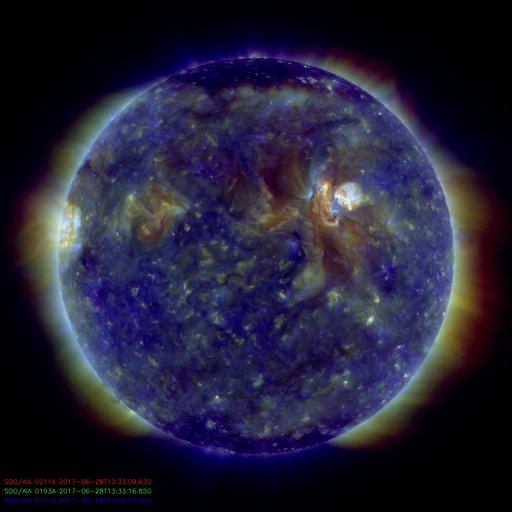
The Sun is doing it's thing as always. Not much too special to talk about today. For more data go to http://sdo.gsfc.nasa.gov/data/

 AIA 211 Angstrom band is red, AIA 193 Angstrom band is green, and AIA 171 is blue


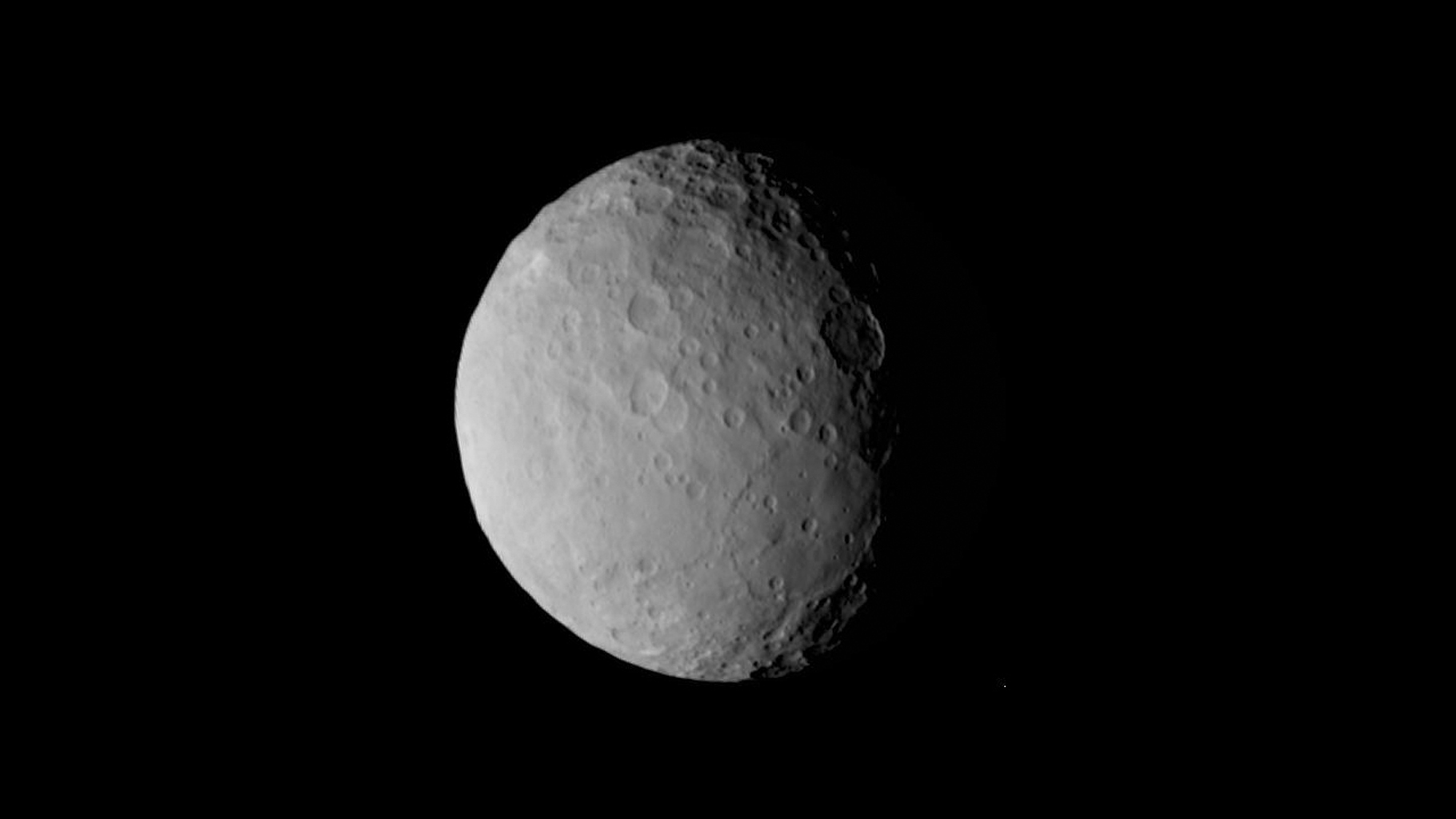
In our back yard the robotic missions to Minor Planets Ceres and Pluto are really getting interesting.

Dwarf planet Ceres as seen by NASA's DAWN mission
NASA's DAWN mission to Ceres is continuing its second mapping orbit. The CERES Image Of The Day website is worth looking at every now and again. The image on the right was taken on  Feb. 19, 2015 from a distance of nearly 29,000 miles (46,000 kilometers) from Ceres.

Fun Ceres facts: It is about 590 miles across, and accounts for about 25% of the entire asteroid belt's mass. Yet it is less than 1/14th of the mass of Plute, the other dwarf planet of note at the moment.

It is amazing to finally see non-deconvolved images of Pluto that actually look like something other than a blurry blob. [Read more at Space.com] Original images from JHU Applied Physics Lab.
New Horizon's image of Pluto and Charon taken on 06/29/2015 at a distance of 18 million km.

Sharpless 308. Copyright Kfir Simon
Bubbles. About 5,000 light years away from us is the beautiful Wolf-Rayet (stellar) bubble Sharpless 308. It is about 60 light years in diameter, and only 70,000 years old. The genetically modern human ancestors of ~98% or more of your DNA were present and still hanging out in Africa, but some were about to set off on extended holiday. [Credit: Kfir Simon, as seen on APOD]

Speaking of Wolf Rayet stars, how about Wolf Rayet galaxies? Why, it's a Hubble image of the famous SBS1415+437. (Just kidding, this galaxy is not well known, even among the so-called Wolf Rayet galaxies.)
The Wolf-Rayet galaxy SBS1415+437. Credit NASA/HST/Aloisi et al?

Go read the background at SpaceTelescope.org's Image of the Week. Although it is not clear from the Image of the Week site the image is probably that described in Aloisi et al, 2005, ApJ, 631, L45 which detected the presence of old (1+ Gyr) stars in SBS1415+437., which had bearing on an old (by now) debate about whether the so-called Wolf Rayet galaxies in the local Universe where young galaxies just experiencing their first burst of star formation (Answer: In general no, they're not).

I of course chose the bubble, superbubble, Wolf Rayet galaxy, and NGC 6503 images because I did some work on wind-blown bubbles, superbubbles, WR galaxies and NGC 6503 back in the days I was a professional astronomer. Red and green Solar images are for Micah and Caelan, who are very into that type of solar imagery at the moment.

Friday, May 14, 2010

Interesting Astrophysics: May 03 to May 14

It looks like the Herschel folks have been busy, judged by the deluge of preprints that have appeared on arXiv over the last few weeks. I found Roussel et al's paper on dust in/around M82 and Fischer et al's paper on Markarian 231 (and its molecular outflow) of particular interest.

Nevertheless X-ray-related papers dominate this issue of Interesting Astrophysics, from hot gas in galaxy halos (Mulchaey & Jeltema; Henley et al; Crain et al) to the detection or modelling of the Warm/Hot Intergalactic Medium (Yao et al; Cen & Chisari).


Galaxies and Starbursts

SPIRE imaging of M82: cool dust in the wind and tidal streams
H. Roussel, et al, arXiv:1005.1526 [pdf, ps, other]
Comments: accepted in A&A Herschel special issue

Their abstract in full: "M82 is a unique representative of a whole class of galaxies, starbursts with superwinds, in the Very Nearby Galaxy Survey with Herschel. In addition, its interaction with the M81 group has stripped a significant portion of its interstellar medium from its disk. SPIRE maps now afford better characterization of the far-infrared emission from cool dust outside the disk, and sketch a far more complete picture of its mass distribution and energetics than previously possible. They show emission coincident in projection with the starburst wind and in a large halo, much more extended than the PAH band emission seen with Spitzer. Some complex substructures coincide with the brightest PAH filaments, and others with tidal streams seen in atomic hydrogen. We subtract the far-infrared emission of the starburst and underlying disk from the maps, and derive spatially-resolved far-infrared colors for the wind and halo. We interpret the results in terms of dust mass, dust temperature, and global physical conditions. In particular, we examine variations in the dust physical properties as a function of distance from the center and the wind polar axis, and conclude that more than two thirds of the extraplanar dust has been removed by tidal interaction, and not entrained by the starburst wind."

The Stellar Kinematic Center and the True Galactic Nucleus of NGC253
F. Müller-Sánchez, O. González-Martín, J. A. Fernández-Ontiveros, J. A. Acosta-Pulido, M. A. Prieto, arXiv:1005.1645 [pdf, ps, other]
Comments: 33 pages, 7 figures, Accepted for publication in ApJ, Version with high resolution figures available at this http URL

Herschel PACS Spectroscopic Diagnostics of Local ULIRGs: Conditions and Kinematics in Mrk 231
Jacqueline Fischer, et al, arXiv:1005.2213 [pdf, other]
Comments: Accepted for publication in the Astronomy and Astrophysics Herschel Special Issue, 5 pages, 4 figures

Full abstract, emphasis mine: "In this first paper on the results of our Herschel PACS survey of local Ultraluminous Infrared Galaxies (ULIRGs), as part of our SHINING survey of local galaxies, we present far-infrared spectroscopy of Mrk 231, the most luminous of the local ULIRGs, and a type 1 broad absorption line AGN. For the first time in a ULIRG, all observed far-infrared fine-structure lines in the PACS range were detected and all were found to be deficient relative to the far infrared luminosity by 1 - 2 orders of magnitude compared with lower luminosity galaxies. The deficits are similar to those for the mid-infrared lines, with the most deficient lines showing high ionization potentials. Aged starbursts may account for part of the deficits, but partial covering of the highest excitation AGN powered regions may explain the remaining line deficits. A massive molecular outflow, discovered in OH and 18OH, showing outflow velocities out to at least 1400 km/sec, is a unique signature of the clearing out of the molecular disk that formed by dissipative collapse during the merger. The outflow is characterized by extremely high ratios of 18O / 16O suggestive of interstellar medium processing by advanced starbursts."

Hot Gas Halos in Early-Type Field Galaxies
John S. Mulchaey, Tesla E. Jeltema, arXiv:1004.5376 [pdf, ps, other]
Comments: Accepted for publication in ApJ Letters

Their abstract: "We use Chandra and XMM-Newton to study the hot gas content in a sample of field early-type galaxies. We find that the L_X-L_K relationship is steeper for field galaxies than for comparable galaxies in groups and clusters. The low hot gas content of field galaxies with L_K < L_star suggests that internal processes such as supernovae driven winds or AGN feedback expel hot gas from low mass galaxies. Such mechanisms may be less effective in groups and clusters where the presence of an intragroup or intracluster medium can confine outflowing material. In addition, galaxies in groups and clusters may be able to accrete gas from the ambient medium. While there is a population of L_K < L_star galaxies in groups and clusters that retain hot gas halos, some galaxies in these rich environments, including brighter galaxies, are largely devoid of hot gas. In these cases, the hot gas halos have likely been removed via ram pressure stripping. This suggests a very complex interplay between the intragroup/intracluster medium and hot gas halos of galaxies in rich environments with the ambient medium helping to confine or even enhance the halos in some cases and acting to remove gas in others. In contrast, the hot gas content of more isolated galaxies is largely a function of the mass of the galaxy, with more massive galaxies able to maintain their halos, while in lower mass systems the hot gas escapes in outflowing winds."

A fundamental relation between mass, SFR and metallicity in local and high redshift galaxies

F. Mannucci, G. Cresci, R. Maiolino, A. Marconi, A. Gnerucci, arXiv:1005.0006 [pdf, other]
Comments: 13 pages, submitted to MNRAS
Subjects: Cosmology and Extragalactic Astrophysics (astro-ph.CO)

Their abstract: "We show that the mass-metallicity relation observed in the local universe is due to a more general relation between stellar mass M*, gas-phase metallicity and SFR. Local galaxies define a tight surface in this 3D space, the Fundamental Metallicity Relation (FMR), with a small residual dispersion of ~0.05 dex in metallicity, i.e, ~12%. At low stellar mass, metallicity decreases sharply with increasing SFR, while at high stellar mass, metallicity does not depend on SFR. High redshift galaxies, up to z~2.5 are found to follow the same FMR defined by local SDSS galaxies, with no indication of evolution. The evolution of the mass-metallicity relation observed up to z=2.5 is due to the fact that galaxies with progressively higher SFRs, and therefore lower metallicities, are selected at increasing redshifts, sampling different parts of the same FMR. By introducing the new quantity mu_alpha=log(M*)-alpha log(SFR), with alpha=0.32, we define a projection of the FMR that minimizes the metallicity scatter of local galaxies. The same quantity also cancels out any redshift evolution up to z~2.5, i.e, all galaxies have the same range of values of mu_0.32. At z>2.5, evolution of about 0.6 dex off the FMR is observed, with high-redshift galaxies showing lower metallicities. The existence of the FMR can be explained by the interplay of infall of pristine gas and outflow of enriched material. The former effect is responsible for the dependence of metallicity with SFR and is the dominant effect at high-redshift, while the latter introduces the dependence on stellar mass and dominates at low redshift. The combination of these two effects, together with the Schmidt-Kennicutt law, explains the shape of the FMR and the role of mu_0.32. The small metallicity scatter around the FMR supports the smooth infall scenario of gas accretion in the local universe."

A fundamental plane for field star-forming galaxies
M.A. Lara-López, J. Cepa, A. Bongiovanni, A.M. Pérez García, A. Ederoclite, H. Castañeda, M. Fernández Lorenzo, M. Póvic, M. Sánchez-Portal, arXiv:1005.0509 [pdf, ps, other]
Comments: Submitted to A&amp;A as a letter to the Editor on April 15, 2010. 4 pages, 4 Figures

Their abstract: "Star formation rate (SFR), metallicity and stellar mass are within the important parameters of star--forming galaxies that characterize their formation and evolution. They are known to be related to each other at low and high redshift in the mass--metallicity, mass--SFR, and metallicity--SFR relations. In this work we demonstrate the existence of a plane in the 3D space defined by the axes SFR [log(SFR)(M_sun yr^-1)], gas metallicity [12+log(O/H)], and stellar mass [log(M_star/M_sun)] of star-forming galaxies. We used star--forming galaxies from the "main galaxy sample" of the Sloan Digital Sky Survey--Data Release 7 (SDSS-DR7) in the redshift range 0.04 < z < 0.1 and r-magnitudes between 14.5 and 17.77. Metallicities, SFRs, and stellar masses were taken from the Max-Planck-Institute for Astrophysics-John Hopkins University (MPA-JHU) emission line analysis database. From a final sample of 44214 galaxies, we find for the first time a fundamental plane for field galaxies relating the SFR, gas metallicity, and stellar mass for star--forming galaxies in the local universe. One of the applications of this plane would be estimating stellar masses from SFR and metallicity. High redshift data from the literature at redshift ~2.2 and 3.5, do not show evidence for evolution in this fundamental plane."

Our Milky Way as a Pure-Disk Galaxy -- A Challenge for Galaxy Formation
Juntai Shen, R. Michael Rich, John Kormendy, Christian D. Howard, Roberto De Propris, Andrea Kunder, arXiv:1005.0385 [pdf, ps, other]
Comments: 5 pages; emulateapj format; submitted to ApJL

Massive star formation in Wolf-Rayet galaxies. V: Star formation rates, masses and the importance of galaxy interactions
Angel R. Lopez-Sanchez
Comments: 33 pages, 21 figures, accepted for publication by A&A

From the abstract: "We have performed a comprehensive analysis of a sample of 20 starburst galaxies, most of them classified as Wolf-Rayet galaxies. In this paper, the last of the series, we analyze the global properties of our galaxy sample using multiwavelength data (X-ray, FUV, optical, NIR, FIR, and radio). The agreement between our Ha-based SFR and those provided by indicators at other wavelengths is remarkable, but we consider that the new Ha-based calibration provided by Calzetti et al. (2007) should be preferred over older calibrations. The FUV-based SFR provides a powerful tool to analyze the star-formation activity in both global and local scales independently to the Ha emission. We provide empirical relationships between the ionized gas mass, neutral gas mass, dust mass, stellar mass, and dynamical mass with the B-luminosity. ... Considering all data, we found that 17 up to 20 galaxies are clearly interacting or merging with low-luminosity dwarf objects or HI clouds. We conclude that interactions do play a fundamental role in the triggering mechanism of the strong star-formation activity observed in dwarf starburst galaxies."

The Dearth of Chemically Enriched Warm-Hot Circumgalactic Gas
Y. Yao, Q. D. Wang, S. V. Penton, T. M. Tripp, J. M. Shull, J. T. Stocke, arXiv:1005.0923 [pdf, ps, other]
Comments: 10 pages, 7 figures, and 5 tables. Accepted for publication in the ApJ, June 2010 - 20 v716 issue.

Argues against a local group origin for the z~0 X-ray absorbers, as have others. Also "These results indicate that the putative CGM [Circum Galactic Medium] in the temperature range of 10^{5.5}-10^{6.3} K may not be able to account for the missing baryons unless the metallicity is less than 10% solar." Of course its probably more accurate to say the mire astronomers believe the missing baryons to be in the warm-hot inter galactic medium, and not within galactic halos at all.

The Origin of the Hot Gas in the Galactic Halo: Confronting Models with XMM-Newton Observations
David B. Henley, Robin L. Shelton, Kyujin Kwak, M. Ryan Joung, Mordecai-Mark Mac Low, arXiv:1005.1085 [pdf, ps, other]
Comments: 18 pages, 13 figures. Submitted to the Astrophysical Journal
Subjects: Galaxy Astrophysics (astro-ph.GA)

Full abstract: "We compare the predictions of three physical models for the origin of the hot halo gas with the observed halo X-ray emission, derived from 26 high-latitude XMM-Newton observations of the soft X-ray background between $l=120\degr$ and $l=240\degr$. These observations were chosen from a much larger set of observations as they are expected to be the least contaminated by solar wind charge exchange emission. We characterize the halo emission in the XMM-Newton band with a single-temperature plasma model. We find that the observed halo temperature is fairly constant across the sky (~1.8e6-2.4e6 K), whereas the halo emission measure varies by an order of magnitude ($\sim$0.0005-0.006 cm^-6 pc), including significant sightline-to-sightline variation on scales as small as a few degrees. When we compare our observations with the model predictions, we find that most of the hot gas observed with XMM-Newton does not reside in an extended hot halo (predicted by disk galaxy formation models), nor is it contained within isolated extraplanar supernova remnants - both these models are at least an order of magnitude too faint in the XMM-Newton band. A model of a supernova-driven interstellar medium, one feature of which is a fountain of hot gas from the disk into the halo, gives the best agreement with the observed 0.4-2.0 keV surface brightness. This model overpredicts the halo X-ray temperature by a factor of ~2. However, there are a several plausible explanations for this discrepancy. Therefore, our general conclusion is that the hot halo gas observed with XMM-Newton originates in a fountain driven into the halo by disk supernovae."

Can galaxy outflows and re-accretion produce a downsizing in the specific star-formation rate of late-type galaxies?
C. Firmani, V. Avila-Reese and A. Rodríguez-Puebla, 2010, MNRAS, 404, 1100
Full Text: HTML, PDF (Size: 685K)


Theoretical Cosmology

Star Formation Feedback and Metal Enrichment History Of The Intergalactic Medium
Renyue Cen, Nora Elisa Chisari, arXiv:1005.1451 [pdf, other]
Comments: 52 pages, 26 figures, submitted to ApJ, all comments welcome

From their abstract: "Using the state-of-the-art cosmological hydrodynamic simulations we compute the metal enrichment history of the intergalactic medium (IGM). Overall, we show that galactic superwind feedback from star formation is able to transport metals to the IGM that matches a broad range of observations. We find ... (6) While gravitational shocks from large-scale structure formation dominate the energy budget (80-90%) for turning about 50% of IGM to the warm-hot intergalactic medium (WHIM) by z=0, galactic superwind feedback shocks are energetically dominant over gravitational shocks at z>1-2. (7) Most of the so-called "missing metals" at z=2-3 are hidden in a warm-hot (T=10^{4.5-7}K) gaseous phase. (8) Approximately (37,46,10,7)% of the total metals at z=0 are in (stars, WHIM, X-ray gas, cold gas); the distribution stands at (23,57,2,18)% and (14,51,4,31)% at z=2 and z=4, respectively."

X-ray coronae in simulations of disc galaxy formation
Robert A. Crain, Ian G. McCarthy, Carlos S. Frenk, Tom Theuns, Joop Schaye, arXiv:1005.1642 [pdf, other]
Comments: 21 pages, 16 figures. Accepted for publication in MNRAS. Accompanying visualisations at this http URL

Their abstract: "The existence of X-ray luminous gaseous coronae around massive disc galaxies is a long-standing prediction of galaxy formation theory in the cold dark matter cosmogony. This prediction has garnered little observational support, with non-detections commonplace and detections for only a relatively small number of galaxies which are much less luminous than expected. We investigate the coronal properties of a large sample of bright, disc-dominated galaxies extracted from the GIMIC suite of cosmological hydrodynamic simulations recently presented by Crain et al. Remarkably, the simulations reproduce the observed scalings of X-ray luminosity with K-band luminosity and star formation rate and, when account is taken of the density structure of the halo, with disc rotation velocity as well. Most of the star formation in the simulated galaxies (which have realistic stellar mass fractions) is fuelled by gas cooling from a quasi-hydrostatic hot corona. However, these coronae are more diffuse, and of a lower luminosity, than predicted by the analytic models of White & Frenk because of a substantial increase in entropy at z ~ 1-3. Both the removal of low entropy gas by star formation and energy injection from supernovae contribute to this increase in entropy, but the latter is dominant for halo masses M_200 <~ 10^(12.5) Msun. Only a small fraction of the mass of the hot gas is outflowing as a wind but, because of its high density and metallicity, it contributes disproportionally to the X-ray emission. The bulk of the X-ray emission, however, comes from the diffuse quasi-hydrostatic corona which supplies the fuel for ongoing star formation in discs today. Future deep X-ray observations with high spectral resolution (e.g. with NeXT/ASTRO-H or IXO) should be able to map the velocity structure of the hot gas and test this fundamental prediction of current galaxy formation theory."


Numerical Astrophysics

Multi-layered configurations in differentially-rotational equilibrium
Kenta Kiuchi, Hiroki Nagakura, Shoichi Yamada, arXiv:1005.2236 [pdf, ps, other]
Comments: To appear on APJ, high-resolution figures are available in the published version.

Full abstract: "We present a new formula to numerically construct configurations in rotational equilibrium, which consist of multiple layers. Each layer rotates uniformly or differentially according to cylindrical rotation-laws that are different from layer to layer. Assuming a different barotropic equation of state (EOS) for each layer, we solve the Bernoulli equation in each layer separately and combine the solutions by imposing continuity of the pressure at each boundary of the layers. It is confirmed that a single continuous barotropic EOS is incompatible with the junction condition. Identifying appropriate variables to be solved, we construct a convergent iteration scheme. For demonstration, we obtain two-layered configurations, each layer of which rotates rapidly with either an "$\Omega$-constant law" or a "$j$-constant law" or a "$v$-constant law". Other rotation laws and/or a larger number of layers can be treated similarly. We hope that this formula will be useful in studying the stellar evolution in multi-dimension with the non-spherical configuration induced by rotation being fully taken into account."


Stars, Supernovae and Planets

On the evolution of a star cluster and its multiple stellar systems following gas dispersal
Nickolas Moeckel and Matthew R. Bate, 2010, MNRAS, 404, 712
Full Text: HTML, PDF (Size: 3726K)

Bursting SN 1996cr's Bubble: Hydrodynamic and X-ray Modeling of its Circumstellar Medium
Vikram V. Dwarkadas, Daniel Dewey, Franz Bauer, arXiv:1005.1090 [pdf, ps, other]
Comments: Accepted to MNRAS. 21 pages, 8 Figures, 6 in color. For a version with higher resolution colour figures see this http URL
Subjects: High Energy Astrophysical Phenomena (astro-ph.HE)

From their abstract: "SN1996cr is one of the five closest SNe to explode in the past 30 years. Due to its fortuitous location in the Circinus Galaxy at ~ 3.7 Mpc, there is a wealth of recently acquired and serendipitous archival data available to piece together its evolution over the past decade, including a recent 485 ks Chandra HETG spectrum. In order to interpret this data, we have explored hydrodynamic simulations, followed by computations of simulated spectra and light curves under non-equilibrium ionization conditions, and directly compared them to the observations. Our simulated spectra manage to fit both the X-ray continuum and lines at 4 epochs satisfactorily, while our computed light curves are in good agreement with additional flux-monitoring data sets. These calculations allow us to infer the nature and structure of the circumstellar medium, the evolution of the SN shock wave, and the abundances of the ejecta and surrounding medium. The data imply that SN 1996cr exploded in a low-density medium before interacting with a dense shell of material about 0.03pc away from the progenitor star."

Radio and X-ray Observations of the Type Ic SN 2007gr Reveal an Ordinary, Non-relativistic Explosion
Alicia M. Soderberg, Andreas Brunthaler, Ehud Nakar, Roger A. Chevalier, arXiv:1005.1932 [pdf, ps, other]
Comments: 14 pages, 6 figures, submitted to ApJ

Again, evidence that the supernova blastwave is expanding into circum-stellar medium shaped by stellar winds.

Generation of radiative knots in a randomly pulsed protostellar jet II. X-ray emission
R. Bonito, S. Orlando, M. Miceli, J. Eislöffel, G. Peres, F. Favata, arXiv:1005.2125 [pdf, ps, other]
Comments: Accepted for publication in Astronomy and Astrophysics

Their abstract: "Protostellar jets are known to emit in a wide range of bands, from radio to IR to optical bands, and to date also about ten X-ray emitting jets have been detected, with a rate of discovery of about one per year. We aim at investigating the mechanism leading to the X-ray emission detected in protostellar jets and at constraining the physical parameters that describe the jet/ambient interaction by comparing our model predictions with observations. We perform 2D axisymmetric hydrodynamic simulations of the interaction between a supersonic jet and the ambient. The jet is described as a train of plasma blobs randomly ejected by the stellar source along the jet axis. We explore the parameter space by varying the ejection rate, the initial jet Mach number, and the initial density contrast between the ambient and the jet. We synthesized from the model the X-ray emission as it would be observed with the current X-ray telescopes. The mutual interactions among the ejected blobs and of the blobs with the ambient medium lead to complex X-ray emitting structures within the jet: irregular chains of knots; isolated knots with measurable proper motion; apparently stationary knots; reverse shocks. The predicted X-ray luminosity strongly depends on the ejection rate and on the initial density contrast between the ambient and the jet, with a weaker dependence on the jet Mach number. Our model represents the first attempt to describe the X-ray properties of all the X-ray emitting protostellar jets. The comparison between our model predictions and the observations can provide a useful diagnostic tool necessary for a proper interpretation of the observations. In particular, we suggest that the observable quantities derived from the spectral analysis of X-ray observations can be used to constrain the ejection rate, a parameter explored in our model that is not measurable by current observations."

Friday, April 16, 2010

Interesting Astrophysics: Apr 05 to Apr 16

The last two weeks have produced quite a number of interesting papers and preprints. Given the diversity I'll let them speak for themselves. Note to self: two papers on cloud statistics.


Galaxies and Starbursts

An Empirical Characterization of Extended Cool Gas Around Galaxies Using MgII Absorption Features
Hsiao-Wen Chen, Jennifer E. Helsby, Jean-Rene Gauthier, Stephen A. Shectman, Ian B. Thompson, Jeremy L. Tinker, arXiv:1004.0705 [pdf, ps, other]
Comments: 20 pages, 13 figures; to appear in the Astrophysical Journal 2010 May 10 issue; a version with higher resolution figures can be found at this http URL

From their abstract: "... The lack of correlation between Wr(2796) and galaxy colors suggests a lack of physical connection between the origin of extended MgII halos and recent star formation history of the galaxies ..."

Seeing Through the Trough: Outflows and the Detectability of Lyman Alpha Emission from the First Galaxies
Mark Dijkstra, Stuart Wyithe, arXiv:1004.2490 [pdf, ps, other]
Comments: 11 pages, 7 figures, submitted to MNRAS

From their abstract: "In this paper we demonstrate that the radiative transfer effects in the interstellar medium (ISM), which cause Lya flux to emerge from galaxies at frequencies where the Gunn-Peterson optical depth is reduced, can substantially enhance the prospects for detection of the Lya line at high redshift. In particular, scattering off outflows of interstellar HI gas can modify the Lya spectral line shape such that >5% of the emitted Lya radiation is transmitted directly to the observer, even through a fully neutral IGM. It may therefore be possible to directly observe `strong' Lya emission lines (EW > 50 Angstrom rest frame) from the highest redshift galaxies that reside in the smallest HII `bubbles' early in the reionization era with JWST. In addition, we show that outflows can boost the fraction of Lya radiation that is transmitted through the IGM during the latter stages of reionization, and even post-reionization."

The Great Observatories All-Sky LIRG Survey: Comparison of Ultraviolet and Far-Infrared Properties
Justin H. Howell, et al, arXiv:1004.0985 [pdf, ps, other]
Comments: 37 pages, 10 figures, accepted for publication in ApJ

From their abstract: "The Great Observatories All-sky LIRG Survey (GOALS) consists of a complete sample of 202 Luminous Infrared Galaxies (LIRGs) selected from the IRAS Revised Bright Galaxy Sample (RBGS). The galaxies span the full range of interaction stages, from isolated galaxies to interacting pairs to late stage mergers. We present a comparison of the UV and infrared properties of 135 galaxies in GOALS observed by GALEX and Spitzer. For interacting galaxies with separations greater than the resolution of GALEX and Spitzer (2-6"), we assess the UV and IR properties of each galaxy individually. The contribution of the FUV to the measured SFR ranges from 0.2% to 17.9%, with a median of 2.8% and a mean of 4.0 +/- 0.4%. The specific star formation rate of the GOALS sample is extremely high, with a median value (3.9*10^{-10} yr^{-1}) that is comparable to the highest specific star formation rates seen in the Spitzer Infrared Nearby Galaxies Survey sample."

Dwarf-Galaxy Cosmology
Regina Schulte-Ladbeck, Ulrich Hopp, Elias Brinks, Andrey Kravtsov, arXiv:1004.1139 [pdf, other]
Comments: This is the editorial paper which introduces the Special Issue on Dwarf-Galaxy Cosmology published in Advances in Astronomy. The issue contains fourteen review papers, and one original research article. All papers were peer-reviewed by a minimum of two referees. To read the Special Issue, please follow this link: this http URL .

Their abstract: "Dwarf galaxies provide opportunities for drawing inferences about the processes in the early universe by observing our "cosmological backyard"-the Local Group and its vicinity. This special issue of the open-access journal Advances in Astronomy is a snapshot of the current state of the art of dwarf-galaxy cosmology."

Sadly no articles focussing on outflows or supernova feedback.


Comparing Ultraviolet and Infrared-Selected Starburst Galaxies in Dust Obscuration and Luminosity
Lusine A. Sargsyan, Daniel W. Weedman, James R. Houck, arXiv:1004.1551 [pdf, ps, other]
Comments: accepted for publication in The Astrophysical Journal

Concludes that the "obscuration corrections by factors of two to three determined from reddening of the ultraviolet continuum for Lyman Break Galaxies with z > 2 are insufficient, and should be at least a factor of 10 for M(UV) about -17, with decreasing correction for more luminous sources."

A Multi-wavelength analysis of M81: insight on the nature of Arp's loop
A. Sollima, A. Gil de Paz, D. Martinez-Delgado, R.J. Gabany, J. Gallego, T. Hallas, arXiv:1004.1610 [pdf, ps, other]
Comments: 7 pages, 7 figures, accepted for publication by A&amp;A

Their abstract: "The optical ring like structure detected by Arp (1965) around M81 (commonly referenced as "Arp's loop") represents one of the most spectacular feature observed in nearby galaxies. Arp's loop is commonly interpreted as a tail resulting from the tidal interaction between M81 and M82. However, since its discovery the nature of this feature has remained controversial. Aims: Our primary purpose was to identify the sources of optical and infrared emission observed in Arp's loop. Methods: The morphology of the Arp's loop has been investigated with deep wide-field optical images. We also measured its colors using IRAS and Spitzer-MIPS infrared images and compared them with those of the disk of M81 and Galactic dust cirrus that fills the area where M81 is located. Results: Optical images reveal that this peculiar object has a filamentary structure characterized by many dust features overlapping M81's field. The ratios of far-infrared fluxes and the estimated dust-to-gas ratios indicate the infrared emission of Arp's loop is dominated by the contribution of cold dust that is most likely from Galactic cirrus. Conclusions: The above results suggest that the light observed at optical wavelengths is a combination of emission from i) a few recent star forming regions located close to M81, where both bright UV complexes and peaks in the HI distribution are found, ii) the extended disk of M81 and iii) scattered light from the same Galactic cirrus that is responsible for the bulk of the far infrared emission."

I've mentioned the Galactic cirrus emission along the line of sight to the M81/M82 group previously in this blog, as the cirrus is visible even in scattered optical/UV light. Amateur astronomers have termed this cirrus-associated nebulosity Integrated Flux Nebulae.


Black Holes and AGN

Momentum-driven winds and positive AGN feedback
Joe Silk, Adi Nusser, arXiv:1004.0857 [pdf, ps, other]
Subjects: Cosmology and Extragalactic Astrophysics (astro-ph.CO)

Their abstract: "Force balance considerations put a limit on the rate of AGN radiation momentum output, $L/c$, capable of driving galactic superwinds. We show that this condition is insufficient: black holes obeying the observed $\mbh -\sigma $ relation cannot supply enough energy in radiation which can drive the gas out by pressure alone. The shortfall is by up to an order of magnitude in most, but not all, cases. We propose that outflow-triggering of star formation by enhancing the intercloud medium turbulent pressure and squeezing clouds can supply the necessary boost, and suggest possible tests of this hypothesis. We further point out that the time-scales for Bondi accretion and for orbital decay of merging clumps by dynamical friction in the nuclear disk around a central black hole both follow a similar scaling with mass, favoring the most massive black holes, but the latter process is up to two orders of magnitude more rapid at $z\gtsim 10.$ The combination of accretion and coalescence results in earlier formation of more massive black holes, and, in particular, can account for the masses of the black holes inferred to power AGN at $z\sim 6.$"


Molecular clouds: X-ray mirrors of the Galactic nuclear activity
Gabriele Ponti, Regis Terrier, Andrea Goldwurm, Guillaume Belanger, Guillaume Trap, arXiv:1004.1412 [pdf, ps, other]
Comments: 4 pages, "The Galactic Center: A Window on the Nuclear Environment of Disk Galaxies" ASP Conference Series, 2010 eds: M. Morris, D. Q. Wang and F. Yuan

Did the supermassive black hole that currently lurks quietly at the center of our Galaxy flare up about 100 years ago?


Interstellar Medium

The Mass-Size Relation from Clouds to Cores. II. Solar Neighborhood Clouds
Jens Kauffmann, Thushara Pillai, Rahul Shetty, Philip C. Myers, Alyssa A. Goodman, arXiv:1004.1170 [pdf, ps, other]
Comments: accepted to the Astrophysical Journal

I must read this more carefully.

Abstract in full: "We measure the mass and size of cloud fragments in several molecular clouds continuously over a wide range of spatial scales (0.05 < r / pc < 3). Based on the recently developed "dendrogram-technique", this characterizes dense cores as well as the enveloping clouds. "Larson's 3rd Law" of constant column density, m(r) = C*r^2, is not well suited to describe the derived mass-size data. Solar neighborhood clouds not forming massive stars (< 10 M_sun; Pipe Nebula, Taurus, Perseus, and Ophiuchus) obey m(r) < 870 M_sun (r / pc)^1.33 . In contrast to this, clouds forming massive stars (Orion A, G10.15$-$0.34, G11.11$-$0.12) do exceed the aforementioned relation. Thus, this limiting mass-size relation may approximate a threshold for the formation of massive stars. Across all clouds, cluster-forming cloud fragments are found to be---at given radius---more massive than fragments devoid of clusters. The cluster-bearing fragments are found to roughly obey a mass-size law m = C*r^1.27 (where the exponent is highly uncertain in any given cloud, but is certainly smaller than 1.5).

Physical Properties of Giant Molecular Clouds in the Large Magellanic Cloud
A. Hughes, et al, arXiv:1004.2094 [pdf, ps, other]
Comments: 28 pages, 10 figures, accepted by MNRAS

Searching for Diffuse Nonthermal X-Rays from the Superbubbles N11 and N51D in the Large Magellanic Cloud
H. Yamaguchi, M. Sawada, A. Bamba, arXiv:1004.0753 [pdf, ps, other]
Comments: 9 pages, accepted for publication in ApJ.

Their abstract (emphasis mine): "We report on observations of the superbubbles (SBs) N11 and N51D in the Large Magellanic Cloud (LMC) with Suzaku and XMM-Newton. The interior of both SBs exhibits diffuse X-ray emission, which is well represented by thin thermal plasma models with a temperature of 0.2-0.3keV. The presence of nonthermal emission, claimed in previous works, is much less evident in our careful investigation. The 3-sigma upper limits of 2-10keV flux are 3.6*10^{-14}ergs/cm^2/s and 4.7*10^{-14}ergs/cm^2/s for N11 and N51D, respectively. The previous claims of the detection of nonthermal emission are probably due to the inaccurate estimation of the non X-ray background. We conclude that no credible nonthermal emission has been detected from the SBs in the LMC, with the exception of 30 Dor C. "


Hydrodynamics and Numerical Astrophysics

A comparison between grid and particle methods on the statistics of driven, supersonic, isothermal turbulence
Daniel J. Price, Christoph Federrath, arXiv:1004.1446 [pdf, ps, other]
Comments: 16 pages, 15 figures, accepted to MNRAS. Associated movies, images and full res version at: this http URL

The Athena Astrophysical MHD Code in Cylindrical Geometry
Aaron Skinner, Eve Ostriker, arXiv:1004.2487 [pdf, ps, other]

Their abstract: "A method for implementing cylindrical coordinates in the Athena magnetohydrodynamics (MHD) code is described. The extension follows the approach of Athena's original developers and has been designed to alter the existing Cartesian-coordinates code as minimally and transparently as possible. The numerical equations in cylindrical coordinates are formulated to maintain consistency with constrained transport, a central feature of the Athena algorithm, while making use of previously implemented code modules such as the Riemann solvers. Angular-momentum transport, which is critical in astrophysical disk systems dominated by rotation, is treated carefully. We describe modifications for cylindrical coordinates of the higher-order spatial reconstruction and characteristic evolution steps as well as the finite-volume and constrained transport updates. Finally, we present a test suite of standard and novel problems in one-, two-, and three-dimensions designed to validate our algorithms and implementation and to be of use to other code developers. The code is suitable for use in a wide variety of astrophysical applications and is freely available for download on the web."


Instrumentation

The New Hard X-ray Mission
G. Tagliaferri, et al, arXiv:1004.2691 [pdf]
Comments: 9 pages, 5 figures. Accepted for publication on PoS, proceedings of "The Extreme sky: Sampling the Universe above 10 keV", held in Otranto (Italy), 13-17 October 2009

Their abstract: "The Italian New Hard X-ray Mission (NHXM) has been designed to provide a real breakthrough on a number of hot astrophysical issues that includes: black holes census, the physics of accretion, the particle acceleration mechanisms, the effects of radiative transfer in highly magnetized plasmas and strong gravitational fields. NHXM is an evolution of the HEXIT-Sat concept and it combines fine imaging capability up to 80 keV, today available only at E<10 keV, with sensitive photoelectric imaging polarimetry. It consists of four identical mirrors, with a 10 m focal length, achieved after launch by means of a deployable structure. Three of the four telescopes will have at their focus identical spectral-imaging cameras, while X-ray imaging polarimetric cameras will be placed at the focus of the fourth. In order to ensure a low and stable background, NHXM will be placed in a low Earth equatorial orbit. In this paper we provide an overall description of this mission that is currently in phase B."


Stars, Supernovae and Planets

One-sided Outflows/Jets from Rotating Stars with Complex Magnetic Fields

R.V.E. Lovelace, M.M. Romanova, G.V. Ustyugova, A.V. Koldoba, arXiv:1004.0385 [pdf, other]
Comments: 10 pages, 11 figures

Dusty Disks around White Dwarfs I: Origin of Debris Disks
Ruobing Dong, Yan Wang, D. N.C. Lin, X.-W. Liu, arXiv:1004.0696 [pdf, ps, other]
Comments: 38 pages, 7 figures, single column, accepted by ApJ

Friday, March 05, 2010

Interesting Astrophysics: 22 Feb to 05 Mar, 2010

Of particular interest (to me at least) are a variety of papers related to galactic winds. The AKARI observations of Kaneda et al probe dust in M82's wind; Steidel et al use absorption lines probe the distribution and kinematics gas around redshift z~2-3 LBGs at impact parameters of - to ~100 kpc; Nestor et al propose to understand ultra-strong Mg II absorbers in the context of galactic winds; Alexander et al present evidence for a galactic wind in z~2 ULIRG; Sumui et al present a theoretical mixed Cosmic-ray/thermal wind model; and Pinsonneault et al consider the effects of galactic winds anisotropy in cosmological simulations.

In a similar vein, albeit not quite galactic winds, there is a conference proceedings by Proga et al on large scale outflows from AGN, and papers on dust in HII regions (Draine) and in wind-blown bubbles (Everett & Churchwell).

Quite of a few of these papers were noted in previous editions of "Interesting Astrophysics" when they appeared as preprints on arXiv.org, but its worth noting them again with their full journal reference information.


Galaxies and Starbursts

Large-scale distributions of mid- and far-infrared emission from the center to the halo of M82 revealed with AKARI
H. Kaneda, D. Ishihara, T.Suzuki, N. Ikeda, T. Onaka, M. Yamagishi, Y. Ohyama, T. Wada, A. Yasuda, arXiv:1002.4521 [pdf, ps, other]
Comments: 12 pages, 8 figures, accepted for publication in A&A

Full abstract: "The edge-on starburst galaxy M82 exhibits complicated distributions of gaseous materials in its halo, which include ionized superwinds driven by nuclear starbursts, neutral materials entrained by the superwinds, and large-scale neutral streamers probably caused by a past tidal interaction with M81. We investigate detailed distributions of dust grains and polycyclic aromatic hydrocarbons (PAHs) around M82 to understand their interplay with the gaseous components. We performed mid- (MIR) and far-infrared (FIR) observations of M82 with the Infrared Camera and Far-Infrared Surveyor on board AKARI. We obtain new MIR and FIR images of M82, which reveal both faint extended emission in the halo and very bright emission in the center with signal dynamic ranges as large as five and three orders of magnitude for the MIR and FIR, respectively. We detect MIR and FIR emission in the regions far away from the disk of the galaxy, reflecting the presence of dust and PAHs in the halo of M82. We find that the dust and PAHs are contained in both ionized and neutral gas components, implying that they have been expelled into the halo of M82 by both starbursts and galaxy interaction. In particular, we obtain a tight correlation between the PAH and H$\alpha$ emission, which provides evidence that the PAHs are well mixed in the ionized superwind gas and outflowing from the disk."

Discovery of an unusual new radio source in the star-forming galaxy M82: Faint supernova, supermassive blackhole, or an extra-galactic microquasar?
T. W. B. Muxlow, R. J. Beswick, S. T. Garrington, A. Pedlar, D. M. Fenech, M. K. Argo, J. van Eymeren, M. Ward, A. Zezas, A. Brunthaler, arXiv:1003.0994 [pdf, ps, other]
Comments: 6 pages, 3 figures (2 colour), MNRAS letters accepted

The Structure and Kinematics of the Circum-Galactic Medium from Far-UV Spectra of z~2-3 Galaxies
C. C. Steidel, D. K. Erb, A. E. Shapley, M. Pettini, N. A. Reddy, M. Bogosavljević, G. C. Rudie, O. Rakic, arXiv:1003.0679 [pdf, ps, other]
Comments: Submitted to ApJ, 22 February 2010. 32 pages, 24 figures

Full abstract: "We present new results on the kinematics and spatial distribution of metal-enriched gas within 125 kpc (physical) of Lyman Break galaxies at redshifts z~2-3. In particular, we demonstrate how rest-UV galaxy spectra can be used to obtain key spatial and spectral information more efficiently than possible with QSO sightlines. After recalibrating the measurement of galaxy systemic redshifts from their UV spectra, we investigate the kinematics of galaxy-scale outflows via the strong interstellar (IS) absorption and Lya emission lines (when present), as well as their dependence on other physical properties of the galaxies. We construct a sample of 512 close (1-15 arcsec) angular pairs of z~2-3 LBGs in which the spectra background galaxies probe the circumgalactic gas surrrounding those in the foreground. The close pairs, together with spectra of the foreground galaxies themselves, sample galactocentric impact parameters b=0-125 kpc (physical) at <z>=2.2. The ensemble provides a spatial map of cool gas as a function of galactocentric distance for a well-characterized population of galaxies. We propose a simple model that simultaneously matches the kinematics, depth, and profile shape of IS absorption and Lya emission lines, as well as the observed variation of absorption line strength (of HI, CII, CIV, SiII, SiIV) versus galactocentric impact parameter. We discuss the results of the observations in the context of "cold accretion", in which cool gas accretes via filamentary streams directly onto the central regions of galaxies. At present, we find little observational support for cool infalling material, whereas evidence supporting the large-scale effects of outflows is strong. Reconciling theory and observation on the subject of gas flows into and out of forming galaxies seems necessary."

The SAURON project – XVI. On the sources of ionization for the gas in elliptical and lenticular galaxies
Marc Sarzi, et al, 2010, MNRAS, 402, 2187
Full Text: HTML, PDF (Size: 15234K)

From their abstract: "Finally, in the most massive and slowly or non-rotating galaxies in our sample, which can retain a massive X-ray halo, the finding of a spatial correlation between the hot and warm phases of the interstellar medium (ISM) suggests that the interaction with the hot ISM provides an additional source of ionization besides old ultraviolet-bright stars."

Note that they consider the X-ray gas static, as opposed to the SN Ia-driven wind scenario favored by Wang. Of course the kinematics of the WIM should provide insight into whether there is a bulk flow or not...


AINUR: Atlas of Images of NUclear Rings
S. Comerón, J. H. Knapen, J. E. Beckman, E. Laurikainen, H. Salo, I. Martínez-Valpuesta and R. J. Buta, 2010, MNRAS, 402, 2462
Full Text: HTML, PDF (Size: 10365K)

Cosmic ray driven outflows from high-redshift galaxies
Saumyadip Samui, Kandaswamy Subramanian and Raghunathan Srianand, 2010, MNRAS, 402, 2778
Full Text: HTML, PDF (Size: 1035K)

Searching for evidence of energetic feedback in distant galaxies: a galaxy wide outflow in a z ≈ 2 ultraluminous infrared galaxy
D. M. Alexander, A. M. Swinbank, Ian Smail, R. McDermid and N. P. H. Nesvadba, MNRAS, 402, 2211
Full Text: HTML, PDF (Size: 1066K)

Anisotropic Galactic Outflows and Enrichment of the Intergalactic Medium. II. Numerical Simulations
Steeve Pinsonneault, Hugo Martel, Matthew M. Pieri, arXiv:1002.4881 [pdf, ps, other]
Comments: Submitted to ApJ. Figures 4, 5 and 6 are not included because of their large sizes. They can be downloaded from: this http URL

Large scale outflows from z ~ 0.7 starburst galaxies identified via ultra-strong MgII quasar absorption lines
Daniel B. Nestor, Benjamin D. Johnson, Vivienne Wild, Brice Ménard, David A. Turnshek, Sandhya Rao, Max Pettini, arXiv:1003.0693 [pdf, ps, other]
Comments: 14 pages, 6 figure, to be submitted to MNRAS

Their abstract: "(Abridged) Star formation-driven outflows are a critically important phenomenon in theoretical treatments of galaxy evolution, despite our limited ability to trace them across cosmological timescales. It has been suggested that the strongest QAL systems might arise in such outflows. If confirmed, "Ultra-strong" MgII (USMgII) absorbers may identify galactic winds over a huge baseline in cosmic time, independently of the luminous properties of the galaxy. To this end, we present the first detailed imaging/spectroscopic study of the fields of two USMgII absorber systems culled from a statistical absorber catalog, to investigate the physical processes leading to the large velocity spreads that define such systems. Each field contains two bright emission-line galaxies at similar redshift to that of the absorption. Their specific SFRs are among the highest for their masses at these redshifts, and their 4000A break and Balmer absorption strengths imply they have undergone recent (~ 0.01-1 Gyr) starbursts. The concomitant presence of two rare phenomena - starbursts and USMgII absorbers - strongly implies a causal connection. We consider these data and USMgII absorbers in general in the context of various models, and conclude that galactic outflows are generally necessary to account for the velocity-extent of the absorption, favouring starburst driven outflows over tidally-stripped gas from a major interaction which triggered the starburst. Unlike past discoveries of blueshifted gas in the spectra of galaxies at cosmological distances, identifying outflows in this manner unambiguously demonstrates that the material reaches the IGM. Finally, we discuss the implications of these results and speculate on the overall contribution of such systems to the global SFR density at z ~ 0.7."


Black Holes and AGN

Large-Scale Outflows from AGN: a link between central black holes and galaxies
Daniel Proga, Ryuichi Kurosawa, Kentaro Nagamine, arXiv:1002.4896 [pdf, ps, other]
Comments: 8 pages, 2 figures. To be published in the Proceedings of IAU Symposium 267 "Co-Evolution of Central Black Holes and Galaxies"


Cosmology

A sub-resolution multiphase interstellar medium model of star formation and SNe energy feedback
Giuseppe Murante, Pierluigi Monaco, Martina Giovalli, Stefano Borgani, Antonaldo Diaferio, arXiv:1002.4122 [pdf, ps, other]
Comments: 23 pages, 26 figures, MNRAS accepted

Note to self: I need to have a careful look at what they assume about the energy efficiency of SN feedback.


Interstellar Medium and Hydrodynamics

On Radiation Pressure in Static, Dusty HII Regions
B. T. Draine, arXiv:1003.0474 [pdf, ps, other]
Comments: submitted to ApJ

Dusty Wind-Blown Bubbles
John E. Everett, Ed Churchwell, arXiv:1003.0838 [pdf, ps, other]
Comments: 13 pages, 14 figures, Accepted to ApJ

rpSPH: a much improved Smoothed Particle Hydrodynamics Algorithm
Tom Abel, arXiv:1003.0937 [pdf, other]
Comments: 14 pages, 11 figures, submitted to MNRAS. Comments welcome

Let the flame wars among the SPH community commence!


Stars, Supernovae and Planets

Bacterial survival in Martian conditions
Giuseppe Galletta; Giulio Bertoloni; Maurizio D'Alessandro, arXiv:1002.4077 [pdf, ps, other]
Comments: 5 pages, 3 figures, special issue of Planetary and Space science on Methane on Mars discovery. Topics: Astrobiology - Methods: laboratory - Mars - Panspermia

Full abstract: "We shortly discuss the observable consequences of the two hypotheses about the origin of life on Earth and Mars: the Lithopanspermia (Mars to Earth or viceversa) and the origin from a unique progenitor, that for Earth is called LUCA (the LUCA hypothesis). To test the possibility that some lifeforms similar to the terrestrial ones may survive on Mars, we designed and built two simulators of Martian environments where to perform experiments with different bacterial strains: LISA and mini-LISA. Our LISA environmental chambers can reproduce the conditions of many Martian locations near the surface trough changes of temperature, pressure, UV fluence and atmospheric composition. Both simulators are open to collaboration with other laboratories interested in performing experiments on many kind of samples (biological, minerals, electronic) in situations similar to that of the red planet. Inside LISA we have studied the survival of several bacterial strains and endospores. We verified that the UV light is the major responsible of cell death. Neither the low temperature, nor the pressure, nor the desiccation or the atmospheric changes were effective in this sense. We found that some Bacillus strains have a particular capability to survive for some hours in Martian conditions without being screened by dust or other shields. We also simulated the coverage happening on a planet by dust transported by the winds, blowing on the samples a very small quantity of volcanic ash grains or red iron oxide particles. Samples covered by these dust grains have shown a high percentage of survival, indicating that under the surface dust, if life were to be present on Mars in the past, some bacteria colonies or cells could still be present."

Friday, October 23, 2009

Interesting Astrophysics: Oct 12 to Oct 23

This edition of Interesting Astrophysics spans an even wide range of topics than normal, from C IV in the IGM (D'Odorico et al), X-ray emission from galaxies (Laird et al, Pietsch), a variety of supernova-related preprints, to AGN feedback/outflows and other topics I've not mentioned.


Galaxies and Starbursts

An Anisotropic Propagation Model for Galactic Cosmic Rays
Iris Gebauer, Wim de Boer, arXiv:0910.2027 [ps, pdf, other]
Comments: 19 pages, 19 figures, submitted to A&amp;A

The rise of the C IV mass density at z<2.5
Valentina D'Odorico, Francesco Calura, Stefano Cristiani, Matteo Viel, arXiv:0910.2126 [ps, pdf, other]
Comments: Paper accepted by MNRAS. The parameters of the C IV line fitting will be available in electronic format

The radial distribution of core-collapse supernovae in spiral host galaxies
A. A. Hakobyan, G. A. Mamon, A. R. Petrosian, D. Kunth, M. Turatto, arXiv:0910.1801 [ps, pdf, other]
Comments: 10 pages, 6 figures, 5 tables. Astronomy &amp; Astrophysics, in press

On the X-ray properties of submm-selected galaxies
Elise S. Laird, Kirpal Nandra, Alexandra Pope, Douglas Scott, arXiv:0910.2464 [ps, pdf, other]
Comments: 12 pages, 5 figures, accepted for publication in MNRAS

X-ray emission from optical novae in M 31
W. Pietsch, arXiv:0910.3865 [ps, pdf, other]
Comments: 6 pages, 4 figures, accepted for publication in Aston.Nachr

Bars in Starbursts and AGNs -- A Quantitative Reexamination
Lei Hao, Shardha Jogee, Fabio D. Barazza, Irina Marinova, Juntai Shen, arXiv:0910.3960 [ps, pdf, other]
Comments: 8 pages, 3 figures, to be published in "Galaxy Evolution: Emerging Insights and Future Challenges", ed. S. Jogee et al., Astron. Soc. Pacific, 2009

From their abstract: "We find that AGN and star-forming galaxies have similar optical bar fractions, 47% and 50%, respectively. Both bar fractions are higher than that in inactive galaxies (29%)."

Extragalactic CS survey
E. Bayet, R. Aladro, S. Martin, S. Viti, J. Martin-Pintado, arXiv:0910.4282 [pdf, other]
Comments: 17 pages, 16 figures, 3 tables, Accepted to ApJ

From the abstract: "We present a coherent and homogeneous multi-line study of the CS molecule in nearby (D$<$10Mpc) galaxies. We include, from the literature, all the available observations from the $J=1-0$ to the $J=7-6$ transitions towards NGC 253, NGC 1068, IC 342, Henize~2-10, M~82, the Antennae Galaxies and M~83."


Black Holes and AGN

Feeding and Feedback in nearby AGN from Integral Field Spectroscopy
Thaisa Storchi-Bergmann, arXiv:0910.3234 [ps, pdf, other]
Comments: 4 pages, 2 figures, to appear in the proceedings of the conference "The Monster's Fiery Breath", eds. Sebastian Heinz and Eric Wilcots

From the abstract: "The ionized gas, on the other hand, traces the AGN feedback. Its
kinematics shows two components: (1) one originating in the plane, and
dominated by circular rotation; (2) another outflowing along the Narrow-Line
Region (NLR) whose flux distribution and kinematics frequently correlate with
structures seen in radio maps. Mass outflow rates along the NLR range from
10^-2 to 1 M_sun yr^-1, corresponding to 10-100 times the accretion rate to the
AGN, indicating that most of the NLR gas mass has been entrained from the
galaxy plane. The average kinetic power of the NLR outflows is ~10^-4 times the
bolometric luminosity.
"


AGN Feedback: Does it work?
Smita Mathur, Rebecca Stoll, Yair Krongold, Fabrizio Nicastro, Nancy Brickhouse, Martin Elvis, arXiv:0910.3691 [ps, pdf, other]
Comments: to appear in proceedings of the conference "The Monster's Fiery Breath: Feedback in Galaxies, Groups, and Clusters", June 2009, Madison, WI, Eds. S. Heinz &amp; E. Wilcots


Interstellar Medium

PAH processing in interstellar shocks
E. R. Micelotta, A. P. Jones, A. G. G. M. Tielens, arXiv:0910.2461 [ps, pdf, other]
Comments: 21 pages, 11 figures, accepted for publication in Astronomy and Astrophysics

VLT/FLAMES-ARGUS observations of stellar wind--ISM cloud interactions in NGC 6357
M.S. Westmoquette, J.D. Slavin, L.J. Smith, J.S. Gallagher III, arXiv:0910.4191 [ps, pdf, other]
Comments: 9 pages, 5 figures (3 colour). Accepted for publication in MNRAS


Stars, Supernovae and Planets

The rebrightening of planetary nebulae through ISM interaction


C J Wareing, arXiv:0910.2200 [ps, pdf, other]


Comments: Review paper accepted to PASA. 8 pages, 5 figures. High resolution images available from the author

Stellar Feedback in Molecular Clouds and its Influence on the Mass Function of Young Star Clusters
S. Michael Fall, Mark R. Krumholz, Christopher D. Matzner, arXiv:0910.2238 [ps, pdf, other]
Comments: 5 pages, 2 figures, emulateapj format, submitted to ApJL

Typing Supernova Remnants Using X-ray Line Emission Morphologies
Laura A. Lopez, Enrico Ramirez-Ruiz, Carles Badenes, Daniela Huppenkothen, Tesla E. Jeltema, David A. Pooley, arXiv:0910.3208 [ps, pdf, other]
Comments: 4 pages, 1 figure, accepted for publication in ApJL

Line-of-sight Shell Structure of the Cygnus Loop
Hiroyuki Uchida, Hiroshi Tsunemi, Satoru Katsuda, Masashi Kimura, Hiroko Kosugi, Hiroaki Takahashi, arXiv:0910.3731 [ps, pdf, other]
Comments: 8 pages, 7 figures, accepted for publication in ApJ
Journal-ref: Astrophysical Journal 705 (2009) 1152-1159


Other

FISH: A 3D parallel MHD code for astrophysical applications
R. Kaeppeli, S. C. Whitehouse, S. Scheidegger, U.-L. Pen, M. Liebendoerfer, arXiv:0910.2854 [ps, pdf, other]
Comments: 27 pages, 11 figures

Astrometry.net: Blind astrometric calibration of arbitrary astronomical images
Dustin Lang, David W. Hogg, Keir Mierle, Michael Blanton, Sam Roweis, arXiv:0910.2233 [pdf, other]
Comments: submitted to AJ

A very cool idea!

Friday, September 18, 2009

Interesting Astrophysics: Sep 16 to Sep 18

Both ram-pressure stripping and the neutral hydrogen content of galaxies stand out as topics this week. The issue of what are the elemental abundances in the Sun continues to elude solution.


Galaxies and Starbursts

Ram pressure stripping of disk galaxies in galaxy clusters
E. Roediger, arXiv:0909.2638 [pdf, other]
Comments: 11 pages, 4 figures, to appear in proceedings of symposium "Matter Cycles of Galaxies in Clusters" at JENAM 2008 (Vienna, Sept 2008), to be published in special issue of Astronomische Nachrichten in Nov 2009. Version with full resolution figures at this http URL

Infrared Luminosities and Dust Properties of z ~ 2 Dust-Obscured Galaxies
R. S. Bussmann, Arjun Dey, C. Borys, V. Desai, B. T. Jannuzi, E. Le Floc'h, J. Melbourne, K. Sheth, B. T. Soifer, arXiv:0909.2650 [ps, pdf, other]
Comments: 16 pages, 7 figures, 6 tables; accepted to the ApJ

Setting the normalcy level of HI properties in isolated galaxies
D. Espada, L. Verdes-Montenegro, E. Athanassoula, A. Bosma, W. K. Huchtmeier, S. Leon, U. Lisenfeld, J. Sabater, J. Sulentic, S. Verley, M. Yun, arXiv:0909.2736 [ps, pdf, other]
Comments: 4 pages, 2 figures, Conference 'Galaxies in Isolation: Exploring Nature vs. Nurture', Granada, 12-15 May 2009. To be published in the ASP Conference Series

Only the Lonely: HI Imaging of Void Galaxies
K. Stanonik, E. Platen, M. A. Aragon-Calvo, J. H. van Gorkom, R. van de Weygaert, J. M. van der Hulst, K. Kovac, C.-W. Yip, P. J. E. Peebles, arXiv:0909.2869 [ps, pdf, other]
Comments: 4 pages, to be published in the proceedings of the conference "Galaxies in Isolation" (12-15 May 2009; Granada, Spain)

Low-column density HVC and IVC gas in the halo of the Milky Way
N. Ben Bekhti, P. Richter, M. T. Murphy, arXiv:0909.2797 [ps, pdf, other]
Comments: 4 pages, 2 figures, in proceedings of "Panoramic Radio Astronomy: Wide-field 1-2 GHz research on galaxy evolution - PRA2009"

Does Stellar Feedback Create HI Holes? An HST/VLA Study of Holmberg II
Daniel R. Weisz, Evan D. Skillman, John M. Cannon, Andrew E. Dolphin, Robert C. Kennicutt Jr., Jance Lee, Fabian Walter, arXiv:0909.3025 [ps, pdf, other]
Comments: Accepted for Publication in The Astrophysical Journal; 28 Pages, 31 Figures, a version of this paper with full resolution figures is available at this http URL

The Tail of the Stripped Gas that Cooled: HI, Halpha and X-ray Observational Signatures of Ram Pressure Stripping
Stephanie Tonnesen, Greg L. Bryan, arXiv:0909.3097 [ps, pdf, other]
Comments: 18 pages, 11 figures, submitted to ApJ

Dust Emissivity Variations In the Milky Way
D. Paradis, J.-Ph. Bernard, C. Meny, arXiv:0909.3236 [ps, pdf, other]
Comments: 16 pages, 6 figures, accepted in A&A


Black Holes and AGN

A strong excess in the 20-100 keV emission of NGC 1365
G. Risaliti, V. Braito, V. Laparola, S. Bianchi, M. Elvis, G. Fabbiano, R. Maiolino, G. Matt, J. Reeves, M. Salvati, J. Wang, arXiv:0909.2820 [ps, pdf, other]
Comments: 13 pages, 3 figures. Accepted for publication in ApJ Letters

XMM-Newton Observations of a Complete Sample of Optically Selected Type 2 Seyfert Galaxies
Stephanie M. LaMassa, Timothy M. Heckman, Andrew A. Ptak, Ann Hornschemeier, Lucimara Martins, Paule Sonnentrucker, Christy Tremonti, arXiv:0909.3044 [ps, pdf, other]
Comments: accepted for publication to ApJ; 48 pages, 15 figures


Stars, Supernovae and Planets

New Solar Composition: The Problem With Solar Models Revisited
Aldo Serenelli, Sarbani Basu, Jason W. Ferguson, Martin Asplund, arXiv:0909.2668 [ps, pdf, other]
Comments: 11 pages, including 3 tables and 2 figures. Submitted to ApJL

From their abstract: "We find the improved input physics in the models has minor effects on the solar model structure and we confirm that the model using high (older) metallicity determinations gives consistent results with helioseismology."


Public Understanding of Science

Galaxy Zoo: Exploring the Motivations of Citizen Science Volunteers
M. Jordan Raddick, Georgia Bracey, Pamela L. Gay, Chris J. Lintott, Phil Murray, Kevin Schawinski, Alexander S. Szalay, Jan Vandenberg, arXiv:0909.2925 [pdf, other]
Comments: 15 pages, 3 figures