Showing posts with label stellar winds. Show all posts

Tuesday, February 02, 2021

The Wolf-Rayet bubble NGC 6888

 As a bit of amateur astronomy I signed up with iTelescope in July 2020, and took some images of NGC 6888, a favorite object of mine. It took several months to accumulate the set of images I wanted, and another several months to write the tools to process the raw data in the way I wanted, but finally here they are:

NGC 6888 SII, H-alpha, OIII
NGC 6888 taken in SII (red), H-alpha (green) and OIII (blue) filters.

NGC 6888 Red Green Blue filters
NGC 6888 using Astrodon Red, Green and Blue filters.

NGC 6888 is the wind blown bubble surrounding Wolf Rayet 136, at a distance of around 2,000 parsecs (6,500 light years) from us. WR 136 is an evolved massive star with a strong stellar wind (velocity approximately 1,500 km/s) that is blowing into the slower and denser ejecta from the star's previous Red Supergiant phase, creating a bubble approximately 10 pc x 7 pc in size (34 x 23 light years). WR 136 is the bright star at the center of the image. Although only about mV ~ 7.5, its intrinsic luminosity is approximately 500,000 times that of the Sun, and its effective temperature is 70 to 80 thousand degrees Kelvin,

The nebula emission seen in these images is almost exclusively swept-up and compressed RSG wind material, that has been photo-ionized by the WR star. The WR wind material inflating the bubble is shock-heated to million degree temperatures, and hence is not visible in these images. There are of course X-ray images of this hot gas, although the Chandra and XMM-Newton images only partly cover the bubble (given those observatories small field of view), and absorption from intervening interstellar gas and dust severely attenuates the soft X-ray emission. (I did a theoretical paper that modeled NGC 6888 as part of my PhD thesis work at the University of Birmingham back in the mid 1990's.)

The bubble itself is relatively young, at least compared to million-year-old main-sequence massive star wind bubbles and superbubbles: with an expansion velocity of approximately 80 km/s its dynamical age is only about 50,000 years. The relatively short lifespan of the RSG/WR wind interaction probably explains why WR bubbles are only clearly seen around a small fraction of galactic WR stars.

The hydro-dynamical instabilities caused by the interaction of the fast tenuous WR wind and the slow dense RSG wind are also the source of the beautiful substructure in the nebula, first demonstrated (I think) in some excellent papers by García-Segura and Mac Low in the mid 1990's [e.g. this paper]. They are even more apparent in the Hubble Space Telescope images of a small region of the rim of the bubble.

Telescope and image information:
  • iTelescope T05 at New Mexico site (MPC H06)
  • Takahashi Epsilon 250 with Paramount PME mount and SBIG ST-10XME CCD.
  • Images taken on 2020-07-16, 2020-08-10, 2020-08-12, 2020-09-17 and 2020-10-16.
  • Resampled images have 1.8 arcsecond square pixels aligned North at the top, East at the left, and cover a 0.96 degree x 0.54 degree FOV.
  • Net exposure time:
    • SII/H-alpha/OIII image: 113 minutes
    • Red/Green/Blue image: 18 minutes
  • Individual raw frames:
    • SII/H-alpha/OIII image: SII 2x240s, 8x300s; H-alpha 9x180s; OIII 2x240s, 6x300s.
    • Red/Green/Blue image: Red 6x60s; Green 6x60s; Blue 6x60s.
  • Measured effective Point Spread Function FWHM = 5.8 arcseconds, which on paper sounds pretty poor. 
  • Processed from raw FITS images using my AstroPhotography python code (which uses astropy, photutils, ccdproc and Astrometry.net), some additional bash scripts, and Astromatic swarp (for resampling and co-addition) and stiff (for color image generation). No additional photoshop/gimp manipulation!


Thursday, July 09, 2015

Blobs in Space!

Interesting times, but not much time to comment on them.

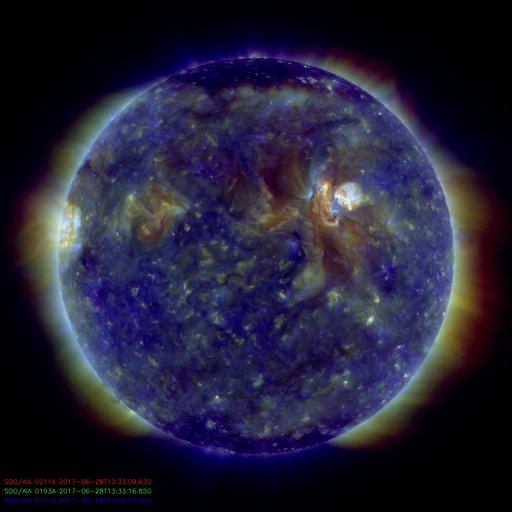
The Sun is doing it's thing as always. Not much too special to talk about today. For more data go to http://sdo.gsfc.nasa.gov/data/

 AIA 211 Angstrom band is red, AIA 193 Angstrom band is green, and AIA 171 is blue


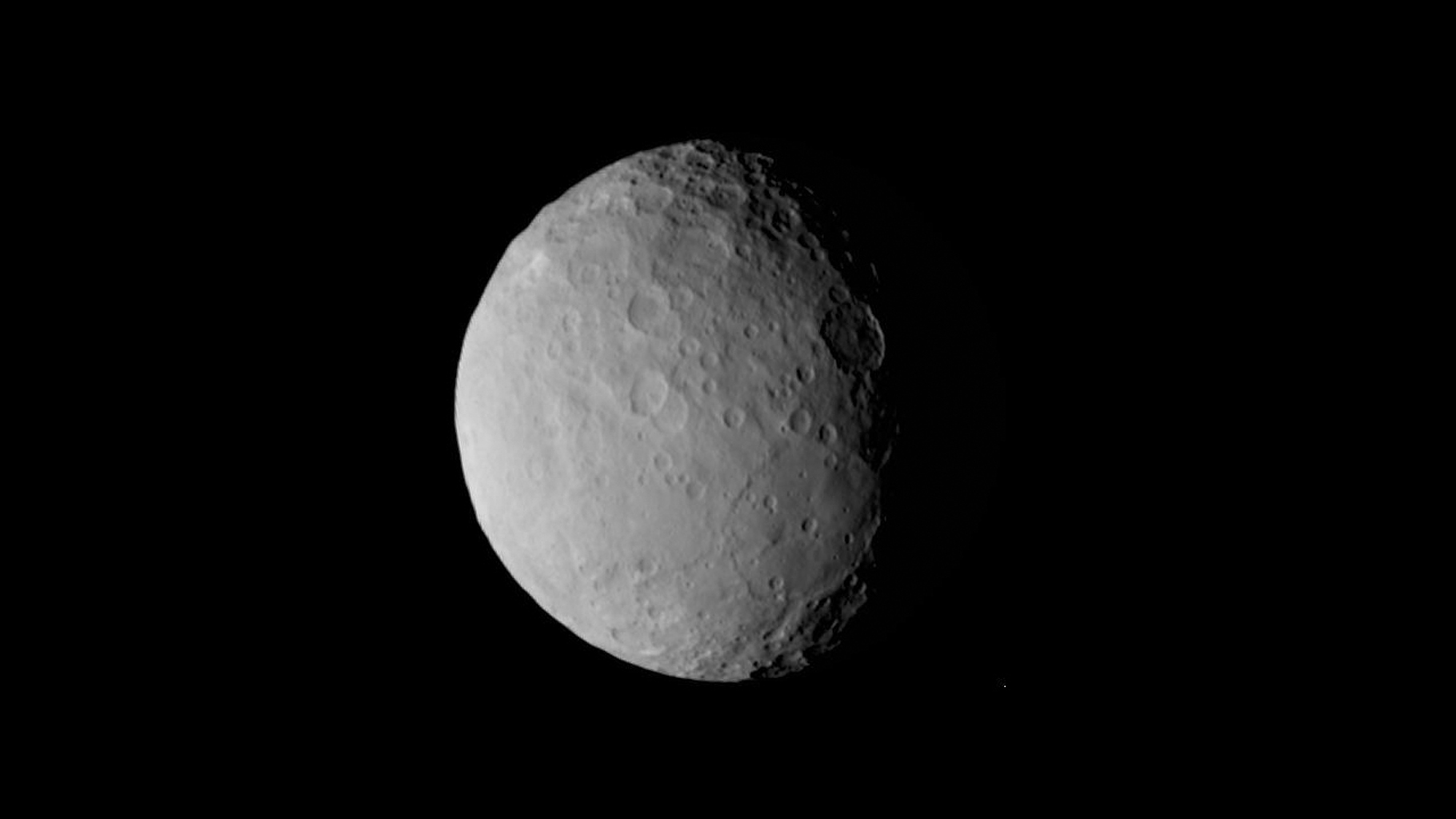
In our back yard the robotic missions to Minor Planets Ceres and Pluto are really getting interesting.

Dwarf planet Ceres as seen by NASA's DAWN mission
NASA's DAWN mission to Ceres is continuing its second mapping orbit. The CERES Image Of The Day website is worth looking at every now and again. The image on the right was taken on  Feb. 19, 2015 from a distance of nearly 29,000 miles (46,000 kilometers) from Ceres.

Fun Ceres facts: It is about 590 miles across, and accounts for about 25% of the entire asteroid belt's mass. Yet it is less than 1/14th of the mass of Plute, the other dwarf planet of note at the moment.

It is amazing to finally see non-deconvolved images of Pluto that actually look like something other than a blurry blob. [Read more at Space.com] Original images from JHU Applied Physics Lab.
New Horizon's image of Pluto and Charon taken on 06/29/2015 at a distance of 18 million km.

Sharpless 308. Copyright Kfir Simon
Bubbles. About 5,000 light years away from us is the beautiful Wolf-Rayet (stellar) bubble Sharpless 308. It is about 60 light years in diameter, and only 70,000 years old. The genetically modern human ancestors of ~98% or more of your DNA were present and still hanging out in Africa, but some were about to set off on extended holiday. [Credit: Kfir Simon, as seen on APOD]

Speaking of Wolf Rayet stars, how about Wolf Rayet galaxies? Why, it's a Hubble image of the famous SBS1415+437. (Just kidding, this galaxy is not well known, even among the so-called Wolf Rayet galaxies.)
The Wolf-Rayet galaxy SBS1415+437. Credit NASA/HST/Aloisi et al?

Go read the background at SpaceTelescope.org's Image of the Week. Although it is not clear from the Image of the Week site the image is probably that described in Aloisi et al, 2005, ApJ, 631, L45 which detected the presence of old (1+ Gyr) stars in SBS1415+437., which had bearing on an old (by now) debate about whether the so-called Wolf Rayet galaxies in the local Universe where young galaxies just experiencing their first burst of star formation (Answer: In general no, they're not).

I of course chose the bubble, superbubble, Wolf Rayet galaxy, and NGC 6503 images because I did some work on wind-blown bubbles, superbubbles, WR galaxies and NGC 6503 back in the days I was a professional astronomer. Red and green Solar images are for Micah and Caelan, who are very into that type of solar imagery at the moment.

Friday, May 28, 2010

Interesting Astrophysics: 17 May to 28 May

The final batch of interesting preprints (and a few accepted papers) for May 2010.


Galaxies and Starbursts

Witnessing the Formation of a Brightest Cluster Galaxy in a Nearby X-ray Cluster
Jesper Rasmussen, John S. Mulchaey, Lei Bai, Trevor J. Ponman, Somak Raychaudhury, Ali Dariush, arXiv:1005.3538 [pdf, ps, other]
Comments: 16 pages, 12 figures. ApJ accepted

UV+IR Star Formation Rates: Hickson Compact Groups with Swift and Spitzer
P. Tzanavaris, A. E. Hornschemeier, S. C. Gallagher, K. E. Johnson, C. Gronwall, S. Immler, A. E. Reines, E. Hoversten, J. C. Charlton, arXiv:1005.4059 [pdf, ps, other]
Comments: Accepted by ApJ. [8 Tables, 16 Figures. Color figures have reduced size for ArXiv - emulateapj v. 2/16/10]
Journal-ref: Astrophysical Journal 716 (2010) 556-573

From their abstract: "We present Swift UVOT (1600-3000A) 3-band photometry for 41 galaxies in 11 nearby (<4500km/s) Hickson Compact Groups (HCGs) of galaxies. We use the uvw2-band (2000A) to estimate the dust-unobscured component, SFR_UV, of the total star-formation rate, SFR_T. We use Spitzer MIPS 24-micron photometry to estimate SFR_IR, the dust-obscured component of SFR_T. We obtain SFR_T=SFR_UV+SFR_IR. Using 2MASS K_s band based stellar mass, M*, estimates, we calculate specific SFRs, SSFR=SFR_T/M*. SSFR values show a clear and significant bimodality, with a gap between low (<~3.2x10^-11 / yr) and high SSFR (>~1.2x10^-10 / yr) systems. All galaxies with MIR activity index a_IRAC <= 0 (>0) are in the high- (low-) SSFR locus, as expected if high levels of star-formation power MIR emission from polycyclic aromatic hydrocarbon molecules and a hot dust continuum. All elliptical/S0 galaxies are in the low-SSFR locus, while 22 out of 24 spirals/irregulars are in the high-SSFR locus, with two borderline cases. ... Unlike HCG galaxies, galaxies in a comparison quiescent SINGS sub-sample are continuously distributed both in SSFR and a_IRAC. Any uncertainties can only further enhance the SSFR bimodality. These results suggest that an environment characterized by high galaxy number-densities and low galaxy velocity-dispersions, such as the one found in compact groups, plays a key role in accelerating galaxy evolution by enhancing star-formation processes in galaxies and favoring a fast transition to quiescence."

Radiation pressure from massive star clusters as a launching mechanism for super-galactic winds
Norman Murray, Brice Ménard, Todd A. Thompson, arXiv:1005.4419 [pdf, ps, other]
Comments: Submitted to ApJ, comments welcome
Subjects: Cosmology and Extragalactic Astrophysics (astro-ph.CO); Galaxy Astrophysics (astro-ph.GA)

Their abstact: "Galactic outflows of low ionization, cool gas are ubiquitous in local starburst galaxies, and in the majority of galaxies at high redshift. How these cool outflows arise is still in question. Hot gas from supernovae has long been suspected as the primary driver, but this mechanism suffers from its tendency to destroy the cool gas as the latter is accelerated. We propose a modification of the supernova scenario that overcomes this difficulty.
Star formation is observed to take place in clusters; in a given galaxy, the bulk of the star formation is found in the ~20 most massive clusters. We show that, for L* galaxies, the radiation pressure from clusters with M>10^6 M_sun is able to expel the surrounding gas at velocities in excess of the circular velocity of the disk galaxy. This cool gas can travel above the galactic disk in less than 2 Myr, well before any supernovae erupt in the driving cluster. Once above the disk, the cool outflowing gas is exposed to radiation, and supernovae induced hot gas outflows, from other clusters in the disk, which drive it to distances of several tens to hundreds of kpc. Because the radiatively driven clouds grow in size as they travel, and because the hot gas is more dilute at large distance, the clouds are less subject to destruction if they do eventually encounter hot gas. Therefore, unlike wind driven clouds, radiatively driven clouds can survive to distances ~50 kpc. We identify these cluster-driven winds with large-scale galactic outflows. Another implication of our model is that only starburst galaxies, where massive clusters reside, are able to drive winds cold outflows on galactic scales via this mechanism. We find that the critical star formation rates above which large scale cool outflows will be launched to be ~0.1 M_sun/yr/kpc^2, which is in good agreement with observations."


I can see a quite a few problems with this line of argumentation. Hopefully I'll get around to addressing them in the monster paper I'm still adding to. Why write three papers when you can just write one absurdly large one?


Black Holes and AGN

"Comets" orbiting a black hole
R. Maiolino, G. Risaliti, M. Salvati, P. Pietrini, G. Torricelli-Ciamponi, M. Elvis, G. Fabbiano, V. Braito, J. Reeves, arXiv:1005.3365 [pdf, ps, other]
Comments: Accepted for publication in A&A. 11 pages, 9 figures

Their abstract: "We use a long (300 ksec), continuous Suzaku X-ray observation of the active nucleus in NGC1365 to investigate the structure of the circumnuclear BLR clouds through their occultation of the X-ray source. The variations of the absorbing column density and of the covering factor indicate that the clouds surrounding the black hole are far from having a spherical geometry (as sometimes assumed), instead they have a strongly elongated and cometary shape, with a dense head (n=10^11 cm^-3) and an expanding, dissolving tail. We infer that the cometary tails must be longer than a few times 10^13 cm and their opening angle must be smaller than a few degrees. We suggest that the cometary shape may be a common feature of BLR clouds in general, but which has been difficult to recognize observationally so far. The cometary shape may originate from shocks and hydrodynamical instabilities generated by the supersonic motion of the BLR clouds into the intracloud medium. As a consequence of the mass loss into their tail, we infer that the BLR clouds probably have a lifetime of only a few months, implying that they must be continuously replenished. We also find a large, puzzling discrepancy (two orders of magnitude) between the mass of the BLR inferred from the properties of the absorbing clouds and the mass of the BLR inferred from photoionization models; we discuss the possible solutions to this discrepancy."

Adaptive optics near infrared integral field spectroscopy of NGC 2992
S. Friedrich, R. I. Davies, E. K. S. Hicks, H. Engel, F. Müller-Sánchez, R. Genzel, L. J. Tacconi, arXiv:1005.4791 [pdf, ps, other]
Comments: 10 pages, 8 figures, accepted for publication in A&amp;A

From their abstract: "NGC 2992 is an intermediate Seyfert 1 galaxy showing outflows on kilo parsec scales which might be due either to AGN or starburst activity. We therefore aim at investigating its central region for a putative starburst in the past and its connection to the AGN and the outflows. Observations were performed with the adaptive optics near infrared integral field spectrograph SINFONI on the VLT, complemented by longslit observations with ISAAC on the VLT, as well as N- and Q-band data from the Spitzer archive. The spatial and spectral resolutions of the SINFONI data are 50 pc and 83 km/s, respectively. ... A simple geometric model of two mutually inclined disks and an additional cone to describe an outflow was developed to explain the observed complex velocity field in H_2 1-0S(1). ... We find a starburst age of 40 Myr - 50 Myr from Br_gamma line diagnostics and the radio continuum; ongoing star formation can be excluded. Both the energetics and the timescales indicate that the outflows are driven by the AGN rather than the starburst. The complex velocity field observed in H_2 1-0S(1) in the central 450 pc can be explained by the superposition of the galaxy rotation and an outflow."


So, the questions remains - is there really an outflow on larger scales too?. The lack of clear cases of purely AGN-driven large scale winds really makes me doubt radiation-driven wind models.


Fading hard X-ray emission from the Galactic Centre molecular cloud Sgr B2
R. Terrier, G. Ponti, G. Belanger, A. Decourchelle, V. Tatischeff, A. Goldwurm, G. Trap, M. R. Morris, R. Warwick, arXiv:1005.4807 [pdf, ps, other]
Comments: Accepted for publication in ApJ. 10 pages, 5 figures

From their abstract: "The centre of our Galaxy harbours a 4 million solar mass black hole that is unusually quiet: its present X-ray luminosity is more than 10 orders of magnitude less than its Eddington luminosity. The observation of iron fluorescence and hard X-ray emission from some of the massive molecular clouds surrounding the Galactic Centre has been interpreted as an echo of a past flare. ... Here we report the observation of a clear decay of the hard X-ray emission from the molecular cloud Sgr B2 during the past 7 years thanks to more than 20 Ms of INTEGRAL exposure. The measured decay time is compatible with the light crossing time of the molecular cloud core . Such a short timescale rules out inverse bremsstrahlung by cosmic-ray ions as the origin of the X ray emission. We also obtained 2-100 keV broadband X-ray spectra by combining INTEGRAL and XMM-Newton data and compared them with detailed models of X-ray emission due to irradiation of molecular gas by (i) low-energy cosmic-ray electrons and (ii) hard X-rays. Both models can reproduce the data equally well, but the time variability constraints and the huge cosmic ray electron luminosity required to explain the observed hard X-ray emission strongly favor the scenario in which the diffuse emission of Sgr B2 is scattered and reprocessed radiation emitted in the past by Sgr A*. Using recent parallax measurements that place Sgr B2 in front of Sgr A*, we find that the period of intense activity of Sgr A* ended between 75 and 155 years ago."


Black Hole Mass, Host galaxy classification and AGN activity
Barry McKernan, K.E.Saavik Ford, Chris Reynolds, arXiv:1005.4907 [pdf, ps, other]
Comments: MNRAS accepted. 14 pages, 11 figures, complete Table 1 in online journal


Theoretical Cosmology

The intergalactic medium over the last 10 billion years I: Lyman alpha absorption and physical conditions
Romeel Davé, Benjamin D. Oppenheimer, Neal Katz, Juna A. Kollmeier, David H. Weinberg, arXiv:1005.2421 [pdf, ps, other]
Comments: 21 pages, submitted to MNRAS

Intergalactic Dust Extinction in Hydrodynamic Cosmological Simulations
Ying Zu, David H. Weinberg, Romeel Davé, Mark Fardal, Neal Katz, Dusan Keres, Benjamin D. Oppenheimer, arXiv:1005.4406 [pdf, ps, other]
Comments: 12 pages, 7 figures, to be submitted to MNRAS


Astrophysical Processes

Secondary ionization and heating by fast electrons
Steven R. Furlanetto and Samuel Johnson Stoever, 2010, MNRAS, 404, 1869
Full Text: HTML, PDF (Size: 720K)


Numerical Astrophysics and Computational Techniques

Searchable Sky Coverage of Astronomical Observations: Footprints and Exposures
Tamas Budavari, Alex Szalay, Gyorgy Fekete, arXiv:1005.2606 [pdf, other]
Comments: 11 pages, 7 figures, submitted to PASP

Their abstract: "Sky coverage is one of the most important pieces of information about astronomical observations. We discuss possible representations, and present algorithms to create and manipulate shapes consisting of generalized spherical polygons with arbitrary complexity and size on the celestial sphere. This shape specification integrates well with our Hierarchical Triangular Mesh indexing toolbox, whose performance and capabilities are enhanced by the advanced features presented here. Our portable implementation of the relevant spherical geometry routines comes with wrapper functions for database queries, which are currently being used within several scientific catalog archives including the Sloan Digital Sky Survey, the Galaxy Evolution Explorer and the Hubble Legacy Archive projects as well as the Footprint Service of the Virtual Observatory."

The Role of Provenance Management in Accelerating the Rate of Astronomical Research

G. Bruce Berriman, Ewa Deelman, arXiv:1005.3358 [pdf, other]
Comments: 8 pages, 1 figure; Proceedings of Science, 2010

Their abstract: "The availability of vast quantities of data through electronic archives has transformed astronomical research. It has also enabled the creation of new products, models and simulations, often from distributed input data and models, that are themselves made electronically available. These products will only provide maximal long-term value to astronomers when accompanied by records of their provenance; that is, records of the data and processes used in the creation of such products. We use the creation of image mosaics with the Montage grid-enabled mosaic engine to emphasize the necessity of provenance management and to understand the science requirements that higher-level products impose on provenance management technologies. We describe experiments with one technology, the "Provenance Aware Service Oriented Architecture" (PASOA), that stores provenance information at each step in the computation of a mosaic. The results inform the technical specifications of provenance management systems, including the need for extensible systems built on common standards. Finally, we describe examples of provenance management technology emerging from the fields of geophysics and oceanography that have applicability to astronomy applications."


Montage: a grid portal and software toolkit for science-grade astronomical image mosaicking
Joseph C. Jacob, et al, arXiv:1005.4454 [pdf, other]
Comments: 16 pages, 11 figures
Journal-ref: Int. J. Computational Science and Engineering. 2009

Their abstract: "Montage is a portable software toolkit for constructing custom, science-grade mosaics by composing multiple astronomical images. The mosaics constructed by Montage preserve the astrometry (position) and photometry (intensity) of the sources in the input images. The mosaic to be constructed is specified by the user in terms of a set of parameters, including dataset and wavelength to be used, location and size on the sky, coordinate system and projection, and spatial sampling rate. Many astronomical datasets are massive, and are stored in distributed archives that are, in most cases, remote with respect to the available computational resources. Montage can be run on both single- and multi-processor computers, including clusters and grids. Standard grid tools are used to run Montage in the case where the data or computers used to construct a mosaic are located remotely on the Internet. This paper describes the architecture, algorithms, and usage of Montage as both a software toolkit and as a grid portal. Timing results are provided to show how Montage performance scales with number of processors on a cluster computer. In addition, we compare the performance of two methods of running Montage in parallel on a grid."


Stars, Supernovae and Planets

Who Pulled the Trigger: a Supernova or an AGB Star?
Alan P. Boss, Sandra A. Keiser, arXiv:1005.3981 [pdf, ps, other]
Comments: 14 pages, 4 figures, 1 table, Astrophysical Journal Letters, in press

Their abstract: "The short-lived radioisotope $^{60}$Fe requires production in a core collapse supernova or AGB star immediately before its incorporation into the earliest solar system solids. Shock waves from a somewhat distant supernova, or a relatively nearby AGB star, have the right speeds to simultaneously trigger the collapse of a dense molecular cloud core and to inject shock wave material into the resulting protostar. A new set of FLASH2.5 adaptive mesh refinement hydrodynamical models shows that the injection efficiency depends sensitively on the assumed shock thickness and density. Supernova shock waves appear to be thin enough to inject the amount of shock wave material necessary to match the short-lived radioisotope abundances measured for primitive meteorites. Planetary nebula shock waves from AGB stars, however, appear to be too thick to achieve the required injection efficiencies. These models imply that a supernova pulled the trigger that led to the formation of our solar system. "


Herschel Observations of the W43 "mini-starburst"
J. Bally, et al, arXiv:1005.4092 [pdf, ps, other]
Comments: 5 pages, 3 figures, accepted for A&amp;A Special Issue

From their abstract: "Aims: To explore the infrared and radio properties of one of the closest Galactic starburst regions. Methods: Images obtained with the Herschel Space Observatory at wavelengths of 70, 160, 250, 350, and 500 microns using the PACS and SPIRE arrays are analyzed and compared with radio continuum VLA data and 8 micron images from the Spitzer Space Telescope. ... Results: The W43 star-forming complex is resolved into a dense cluster of protostars, infrared dark clouds, and ridges of warm dust heated by massive stars. The 4 brightest compact sources with L > 1.5 x 10^4 Lsun embedded within the Z-shaped ridge of bright dust emission in W43 remain single at 4" (0.1 pc) resolution. These objects, likely to be massive protostars or compact clusters in early stages of evolution are embedded in clumps with masses of 10^3 to 10^4 Msun, but contribute only 2% to the 3.6 x 10^6 Lsun far-IR luminosity of W43 measured in a 16 by 16 pc box. The total mass of gas derived from the far-IR dust emission inside this region is ~10^6 Msun. Cometary dust clouds, compact 6 cm radio sources, and warm dust mark the locations of older populations of massive stars. Energy release has created a cavity blowing-out below the Galactic plane."

I wish people would stop calling individual star forming regions, even the biggest ones, starbursts. The term starburst has historically been used to denote significantly enhanced star formation at a galactic scale, and makes most sense when used thusly. See, e.g. Heckman, T., 2005, A&SS, 329, 3.

Evolution of massive stars with pulsation-driven superwinds during the RSG phase
Sung-Chul Yoon, Matteo Cantiello, arXiv:1005.4925 [pdf, ps, other]
Comments: Accepted for publications in ApJ Letters

Interesting to note the significance of pulsation in driving these winds. They're not just steady dust-driven winds. Are there any cases of steady dust-driven winds?

Friday, May 14, 2010

Interesting Astrophysics: May 03 to May 14

It looks like the Herschel folks have been busy, judged by the deluge of preprints that have appeared on arXiv over the last few weeks. I found Roussel et al's paper on dust in/around M82 and Fischer et al's paper on Markarian 231 (and its molecular outflow) of particular interest.

Nevertheless X-ray-related papers dominate this issue of Interesting Astrophysics, from hot gas in galaxy halos (Mulchaey & Jeltema; Henley et al; Crain et al) to the detection or modelling of the Warm/Hot Intergalactic Medium (Yao et al; Cen & Chisari).


Galaxies and Starbursts

SPIRE imaging of M82: cool dust in the wind and tidal streams
H. Roussel, et al, arXiv:1005.1526 [pdf, ps, other]
Comments: accepted in A&A Herschel special issue

Their abstract in full: "M82 is a unique representative of a whole class of galaxies, starbursts with superwinds, in the Very Nearby Galaxy Survey with Herschel. In addition, its interaction with the M81 group has stripped a significant portion of its interstellar medium from its disk. SPIRE maps now afford better characterization of the far-infrared emission from cool dust outside the disk, and sketch a far more complete picture of its mass distribution and energetics than previously possible. They show emission coincident in projection with the starburst wind and in a large halo, much more extended than the PAH band emission seen with Spitzer. Some complex substructures coincide with the brightest PAH filaments, and others with tidal streams seen in atomic hydrogen. We subtract the far-infrared emission of the starburst and underlying disk from the maps, and derive spatially-resolved far-infrared colors for the wind and halo. We interpret the results in terms of dust mass, dust temperature, and global physical conditions. In particular, we examine variations in the dust physical properties as a function of distance from the center and the wind polar axis, and conclude that more than two thirds of the extraplanar dust has been removed by tidal interaction, and not entrained by the starburst wind."

The Stellar Kinematic Center and the True Galactic Nucleus of NGC253
F. Müller-Sánchez, O. González-Martín, J. A. Fernández-Ontiveros, J. A. Acosta-Pulido, M. A. Prieto, arXiv:1005.1645 [pdf, ps, other]
Comments: 33 pages, 7 figures, Accepted for publication in ApJ, Version with high resolution figures available at this http URL

Herschel PACS Spectroscopic Diagnostics of Local ULIRGs: Conditions and Kinematics in Mrk 231
Jacqueline Fischer, et al, arXiv:1005.2213 [pdf, other]
Comments: Accepted for publication in the Astronomy and Astrophysics Herschel Special Issue, 5 pages, 4 figures

Full abstract, emphasis mine: "In this first paper on the results of our Herschel PACS survey of local Ultraluminous Infrared Galaxies (ULIRGs), as part of our SHINING survey of local galaxies, we present far-infrared spectroscopy of Mrk 231, the most luminous of the local ULIRGs, and a type 1 broad absorption line AGN. For the first time in a ULIRG, all observed far-infrared fine-structure lines in the PACS range were detected and all were found to be deficient relative to the far infrared luminosity by 1 - 2 orders of magnitude compared with lower luminosity galaxies. The deficits are similar to those for the mid-infrared lines, with the most deficient lines showing high ionization potentials. Aged starbursts may account for part of the deficits, but partial covering of the highest excitation AGN powered regions may explain the remaining line deficits. A massive molecular outflow, discovered in OH and 18OH, showing outflow velocities out to at least 1400 km/sec, is a unique signature of the clearing out of the molecular disk that formed by dissipative collapse during the merger. The outflow is characterized by extremely high ratios of 18O / 16O suggestive of interstellar medium processing by advanced starbursts."

Hot Gas Halos in Early-Type Field Galaxies
John S. Mulchaey, Tesla E. Jeltema, arXiv:1004.5376 [pdf, ps, other]
Comments: Accepted for publication in ApJ Letters

Their abstract: "We use Chandra and XMM-Newton to study the hot gas content in a sample of field early-type galaxies. We find that the L_X-L_K relationship is steeper for field galaxies than for comparable galaxies in groups and clusters. The low hot gas content of field galaxies with L_K < L_star suggests that internal processes such as supernovae driven winds or AGN feedback expel hot gas from low mass galaxies. Such mechanisms may be less effective in groups and clusters where the presence of an intragroup or intracluster medium can confine outflowing material. In addition, galaxies in groups and clusters may be able to accrete gas from the ambient medium. While there is a population of L_K < L_star galaxies in groups and clusters that retain hot gas halos, some galaxies in these rich environments, including brighter galaxies, are largely devoid of hot gas. In these cases, the hot gas halos have likely been removed via ram pressure stripping. This suggests a very complex interplay between the intragroup/intracluster medium and hot gas halos of galaxies in rich environments with the ambient medium helping to confine or even enhance the halos in some cases and acting to remove gas in others. In contrast, the hot gas content of more isolated galaxies is largely a function of the mass of the galaxy, with more massive galaxies able to maintain their halos, while in lower mass systems the hot gas escapes in outflowing winds."

A fundamental relation between mass, SFR and metallicity in local and high redshift galaxies

F. Mannucci, G. Cresci, R. Maiolino, A. Marconi, A. Gnerucci, arXiv:1005.0006 [pdf, other]
Comments: 13 pages, submitted to MNRAS
Subjects: Cosmology and Extragalactic Astrophysics (astro-ph.CO)

Their abstract: "We show that the mass-metallicity relation observed in the local universe is due to a more general relation between stellar mass M*, gas-phase metallicity and SFR. Local galaxies define a tight surface in this 3D space, the Fundamental Metallicity Relation (FMR), with a small residual dispersion of ~0.05 dex in metallicity, i.e, ~12%. At low stellar mass, metallicity decreases sharply with increasing SFR, while at high stellar mass, metallicity does not depend on SFR. High redshift galaxies, up to z~2.5 are found to follow the same FMR defined by local SDSS galaxies, with no indication of evolution. The evolution of the mass-metallicity relation observed up to z=2.5 is due to the fact that galaxies with progressively higher SFRs, and therefore lower metallicities, are selected at increasing redshifts, sampling different parts of the same FMR. By introducing the new quantity mu_alpha=log(M*)-alpha log(SFR), with alpha=0.32, we define a projection of the FMR that minimizes the metallicity scatter of local galaxies. The same quantity also cancels out any redshift evolution up to z~2.5, i.e, all galaxies have the same range of values of mu_0.32. At z>2.5, evolution of about 0.6 dex off the FMR is observed, with high-redshift galaxies showing lower metallicities. The existence of the FMR can be explained by the interplay of infall of pristine gas and outflow of enriched material. The former effect is responsible for the dependence of metallicity with SFR and is the dominant effect at high-redshift, while the latter introduces the dependence on stellar mass and dominates at low redshift. The combination of these two effects, together with the Schmidt-Kennicutt law, explains the shape of the FMR and the role of mu_0.32. The small metallicity scatter around the FMR supports the smooth infall scenario of gas accretion in the local universe."

A fundamental plane for field star-forming galaxies
M.A. Lara-López, J. Cepa, A. Bongiovanni, A.M. Pérez García, A. Ederoclite, H. Castañeda, M. Fernández Lorenzo, M. Póvic, M. Sánchez-Portal, arXiv:1005.0509 [pdf, ps, other]
Comments: Submitted to A&amp;A as a letter to the Editor on April 15, 2010. 4 pages, 4 Figures

Their abstract: "Star formation rate (SFR), metallicity and stellar mass are within the important parameters of star--forming galaxies that characterize their formation and evolution. They are known to be related to each other at low and high redshift in the mass--metallicity, mass--SFR, and metallicity--SFR relations. In this work we demonstrate the existence of a plane in the 3D space defined by the axes SFR [log(SFR)(M_sun yr^-1)], gas metallicity [12+log(O/H)], and stellar mass [log(M_star/M_sun)] of star-forming galaxies. We used star--forming galaxies from the "main galaxy sample" of the Sloan Digital Sky Survey--Data Release 7 (SDSS-DR7) in the redshift range 0.04 < z < 0.1 and r-magnitudes between 14.5 and 17.77. Metallicities, SFRs, and stellar masses were taken from the Max-Planck-Institute for Astrophysics-John Hopkins University (MPA-JHU) emission line analysis database. From a final sample of 44214 galaxies, we find for the first time a fundamental plane for field galaxies relating the SFR, gas metallicity, and stellar mass for star--forming galaxies in the local universe. One of the applications of this plane would be estimating stellar masses from SFR and metallicity. High redshift data from the literature at redshift ~2.2 and 3.5, do not show evidence for evolution in this fundamental plane."

Our Milky Way as a Pure-Disk Galaxy -- A Challenge for Galaxy Formation
Juntai Shen, R. Michael Rich, John Kormendy, Christian D. Howard, Roberto De Propris, Andrea Kunder, arXiv:1005.0385 [pdf, ps, other]
Comments: 5 pages; emulateapj format; submitted to ApJL

Massive star formation in Wolf-Rayet galaxies. V: Star formation rates, masses and the importance of galaxy interactions
Angel R. Lopez-Sanchez
Comments: 33 pages, 21 figures, accepted for publication by A&A

From the abstract: "We have performed a comprehensive analysis of a sample of 20 starburst galaxies, most of them classified as Wolf-Rayet galaxies. In this paper, the last of the series, we analyze the global properties of our galaxy sample using multiwavelength data (X-ray, FUV, optical, NIR, FIR, and radio). The agreement between our Ha-based SFR and those provided by indicators at other wavelengths is remarkable, but we consider that the new Ha-based calibration provided by Calzetti et al. (2007) should be preferred over older calibrations. The FUV-based SFR provides a powerful tool to analyze the star-formation activity in both global and local scales independently to the Ha emission. We provide empirical relationships between the ionized gas mass, neutral gas mass, dust mass, stellar mass, and dynamical mass with the B-luminosity. ... Considering all data, we found that 17 up to 20 galaxies are clearly interacting or merging with low-luminosity dwarf objects or HI clouds. We conclude that interactions do play a fundamental role in the triggering mechanism of the strong star-formation activity observed in dwarf starburst galaxies."

The Dearth of Chemically Enriched Warm-Hot Circumgalactic Gas
Y. Yao, Q. D. Wang, S. V. Penton, T. M. Tripp, J. M. Shull, J. T. Stocke, arXiv:1005.0923 [pdf, ps, other]
Comments: 10 pages, 7 figures, and 5 tables. Accepted for publication in the ApJ, June 2010 - 20 v716 issue.

Argues against a local group origin for the z~0 X-ray absorbers, as have others. Also "These results indicate that the putative CGM [Circum Galactic Medium] in the temperature range of 10^{5.5}-10^{6.3} K may not be able to account for the missing baryons unless the metallicity is less than 10% solar." Of course its probably more accurate to say the mire astronomers believe the missing baryons to be in the warm-hot inter galactic medium, and not within galactic halos at all.

The Origin of the Hot Gas in the Galactic Halo: Confronting Models with XMM-Newton Observations
David B. Henley, Robin L. Shelton, Kyujin Kwak, M. Ryan Joung, Mordecai-Mark Mac Low, arXiv:1005.1085 [pdf, ps, other]
Comments: 18 pages, 13 figures. Submitted to the Astrophysical Journal
Subjects: Galaxy Astrophysics (astro-ph.GA)

Full abstract: "We compare the predictions of three physical models for the origin of the hot halo gas with the observed halo X-ray emission, derived from 26 high-latitude XMM-Newton observations of the soft X-ray background between $l=120\degr$ and $l=240\degr$. These observations were chosen from a much larger set of observations as they are expected to be the least contaminated by solar wind charge exchange emission. We characterize the halo emission in the XMM-Newton band with a single-temperature plasma model. We find that the observed halo temperature is fairly constant across the sky (~1.8e6-2.4e6 K), whereas the halo emission measure varies by an order of magnitude ($\sim$0.0005-0.006 cm^-6 pc), including significant sightline-to-sightline variation on scales as small as a few degrees. When we compare our observations with the model predictions, we find that most of the hot gas observed with XMM-Newton does not reside in an extended hot halo (predicted by disk galaxy formation models), nor is it contained within isolated extraplanar supernova remnants - both these models are at least an order of magnitude too faint in the XMM-Newton band. A model of a supernova-driven interstellar medium, one feature of which is a fountain of hot gas from the disk into the halo, gives the best agreement with the observed 0.4-2.0 keV surface brightness. This model overpredicts the halo X-ray temperature by a factor of ~2. However, there are a several plausible explanations for this discrepancy. Therefore, our general conclusion is that the hot halo gas observed with XMM-Newton originates in a fountain driven into the halo by disk supernovae."

Can galaxy outflows and re-accretion produce a downsizing in the specific star-formation rate of late-type galaxies?
C. Firmani, V. Avila-Reese and A. Rodríguez-Puebla, 2010, MNRAS, 404, 1100
Full Text: HTML, PDF (Size: 685K)


Theoretical Cosmology

Star Formation Feedback and Metal Enrichment History Of The Intergalactic Medium
Renyue Cen, Nora Elisa Chisari, arXiv:1005.1451 [pdf, other]
Comments: 52 pages, 26 figures, submitted to ApJ, all comments welcome

From their abstract: "Using the state-of-the-art cosmological hydrodynamic simulations we compute the metal enrichment history of the intergalactic medium (IGM). Overall, we show that galactic superwind feedback from star formation is able to transport metals to the IGM that matches a broad range of observations. We find ... (6) While gravitational shocks from large-scale structure formation dominate the energy budget (80-90%) for turning about 50% of IGM to the warm-hot intergalactic medium (WHIM) by z=0, galactic superwind feedback shocks are energetically dominant over gravitational shocks at z>1-2. (7) Most of the so-called "missing metals" at z=2-3 are hidden in a warm-hot (T=10^{4.5-7}K) gaseous phase. (8) Approximately (37,46,10,7)% of the total metals at z=0 are in (stars, WHIM, X-ray gas, cold gas); the distribution stands at (23,57,2,18)% and (14,51,4,31)% at z=2 and z=4, respectively."

X-ray coronae in simulations of disc galaxy formation
Robert A. Crain, Ian G. McCarthy, Carlos S. Frenk, Tom Theuns, Joop Schaye, arXiv:1005.1642 [pdf, other]
Comments: 21 pages, 16 figures. Accepted for publication in MNRAS. Accompanying visualisations at this http URL

Their abstract: "The existence of X-ray luminous gaseous coronae around massive disc galaxies is a long-standing prediction of galaxy formation theory in the cold dark matter cosmogony. This prediction has garnered little observational support, with non-detections commonplace and detections for only a relatively small number of galaxies which are much less luminous than expected. We investigate the coronal properties of a large sample of bright, disc-dominated galaxies extracted from the GIMIC suite of cosmological hydrodynamic simulations recently presented by Crain et al. Remarkably, the simulations reproduce the observed scalings of X-ray luminosity with K-band luminosity and star formation rate and, when account is taken of the density structure of the halo, with disc rotation velocity as well. Most of the star formation in the simulated galaxies (which have realistic stellar mass fractions) is fuelled by gas cooling from a quasi-hydrostatic hot corona. However, these coronae are more diffuse, and of a lower luminosity, than predicted by the analytic models of White & Frenk because of a substantial increase in entropy at z ~ 1-3. Both the removal of low entropy gas by star formation and energy injection from supernovae contribute to this increase in entropy, but the latter is dominant for halo masses M_200 <~ 10^(12.5) Msun. Only a small fraction of the mass of the hot gas is outflowing as a wind but, because of its high density and metallicity, it contributes disproportionally to the X-ray emission. The bulk of the X-ray emission, however, comes from the diffuse quasi-hydrostatic corona which supplies the fuel for ongoing star formation in discs today. Future deep X-ray observations with high spectral resolution (e.g. with NeXT/ASTRO-H or IXO) should be able to map the velocity structure of the hot gas and test this fundamental prediction of current galaxy formation theory."


Numerical Astrophysics

Multi-layered configurations in differentially-rotational equilibrium
Kenta Kiuchi, Hiroki Nagakura, Shoichi Yamada, arXiv:1005.2236 [pdf, ps, other]
Comments: To appear on APJ, high-resolution figures are available in the published version.

Full abstract: "We present a new formula to numerically construct configurations in rotational equilibrium, which consist of multiple layers. Each layer rotates uniformly or differentially according to cylindrical rotation-laws that are different from layer to layer. Assuming a different barotropic equation of state (EOS) for each layer, we solve the Bernoulli equation in each layer separately and combine the solutions by imposing continuity of the pressure at each boundary of the layers. It is confirmed that a single continuous barotropic EOS is incompatible with the junction condition. Identifying appropriate variables to be solved, we construct a convergent iteration scheme. For demonstration, we obtain two-layered configurations, each layer of which rotates rapidly with either an "$\Omega$-constant law" or a "$j$-constant law" or a "$v$-constant law". Other rotation laws and/or a larger number of layers can be treated similarly. We hope that this formula will be useful in studying the stellar evolution in multi-dimension with the non-spherical configuration induced by rotation being fully taken into account."


Stars, Supernovae and Planets

On the evolution of a star cluster and its multiple stellar systems following gas dispersal
Nickolas Moeckel and Matthew R. Bate, 2010, MNRAS, 404, 712
Full Text: HTML, PDF (Size: 3726K)

Bursting SN 1996cr's Bubble: Hydrodynamic and X-ray Modeling of its Circumstellar Medium
Vikram V. Dwarkadas, Daniel Dewey, Franz Bauer, arXiv:1005.1090 [pdf, ps, other]
Comments: Accepted to MNRAS. 21 pages, 8 Figures, 6 in color. For a version with higher resolution colour figures see this http URL
Subjects: High Energy Astrophysical Phenomena (astro-ph.HE)

From their abstract: "SN1996cr is one of the five closest SNe to explode in the past 30 years. Due to its fortuitous location in the Circinus Galaxy at ~ 3.7 Mpc, there is a wealth of recently acquired and serendipitous archival data available to piece together its evolution over the past decade, including a recent 485 ks Chandra HETG spectrum. In order to interpret this data, we have explored hydrodynamic simulations, followed by computations of simulated spectra and light curves under non-equilibrium ionization conditions, and directly compared them to the observations. Our simulated spectra manage to fit both the X-ray continuum and lines at 4 epochs satisfactorily, while our computed light curves are in good agreement with additional flux-monitoring data sets. These calculations allow us to infer the nature and structure of the circumstellar medium, the evolution of the SN shock wave, and the abundances of the ejecta and surrounding medium. The data imply that SN 1996cr exploded in a low-density medium before interacting with a dense shell of material about 0.03pc away from the progenitor star."

Radio and X-ray Observations of the Type Ic SN 2007gr Reveal an Ordinary, Non-relativistic Explosion
Alicia M. Soderberg, Andreas Brunthaler, Ehud Nakar, Roger A. Chevalier, arXiv:1005.1932 [pdf, ps, other]
Comments: 14 pages, 6 figures, submitted to ApJ

Again, evidence that the supernova blastwave is expanding into circum-stellar medium shaped by stellar winds.

Generation of radiative knots in a randomly pulsed protostellar jet II. X-ray emission
R. Bonito, S. Orlando, M. Miceli, J. Eislöffel, G. Peres, F. Favata, arXiv:1005.2125 [pdf, ps, other]
Comments: Accepted for publication in Astronomy and Astrophysics

Their abstract: "Protostellar jets are known to emit in a wide range of bands, from radio to IR to optical bands, and to date also about ten X-ray emitting jets have been detected, with a rate of discovery of about one per year. We aim at investigating the mechanism leading to the X-ray emission detected in protostellar jets and at constraining the physical parameters that describe the jet/ambient interaction by comparing our model predictions with observations. We perform 2D axisymmetric hydrodynamic simulations of the interaction between a supersonic jet and the ambient. The jet is described as a train of plasma blobs randomly ejected by the stellar source along the jet axis. We explore the parameter space by varying the ejection rate, the initial jet Mach number, and the initial density contrast between the ambient and the jet. We synthesized from the model the X-ray emission as it would be observed with the current X-ray telescopes. The mutual interactions among the ejected blobs and of the blobs with the ambient medium lead to complex X-ray emitting structures within the jet: irregular chains of knots; isolated knots with measurable proper motion; apparently stationary knots; reverse shocks. The predicted X-ray luminosity strongly depends on the ejection rate and on the initial density contrast between the ambient and the jet, with a weaker dependence on the jet Mach number. Our model represents the first attempt to describe the X-ray properties of all the X-ray emitting protostellar jets. The comparison between our model predictions and the observations can provide a useful diagnostic tool necessary for a proper interpretation of the observations. In particular, we suggest that the observable quantities derived from the spectral analysis of X-ray observations can be used to constrain the ejection rate, a parameter explored in our model that is not measurable by current observations."

Friday, April 16, 2010

Interesting Astrophysics: Apr 05 to Apr 16

The last two weeks have produced quite a number of interesting papers and preprints. Given the diversity I'll let them speak for themselves. Note to self: two papers on cloud statistics.


Galaxies and Starbursts

An Empirical Characterization of Extended Cool Gas Around Galaxies Using MgII Absorption Features
Hsiao-Wen Chen, Jennifer E. Helsby, Jean-Rene Gauthier, Stephen A. Shectman, Ian B. Thompson, Jeremy L. Tinker, arXiv:1004.0705 [pdf, ps, other]
Comments: 20 pages, 13 figures; to appear in the Astrophysical Journal 2010 May 10 issue; a version with higher resolution figures can be found at this http URL

From their abstract: "... The lack of correlation between Wr(2796) and galaxy colors suggests a lack of physical connection between the origin of extended MgII halos and recent star formation history of the galaxies ..."

Seeing Through the Trough: Outflows and the Detectability of Lyman Alpha Emission from the First Galaxies
Mark Dijkstra, Stuart Wyithe, arXiv:1004.2490 [pdf, ps, other]
Comments: 11 pages, 7 figures, submitted to MNRAS

From their abstract: "In this paper we demonstrate that the radiative transfer effects in the interstellar medium (ISM), which cause Lya flux to emerge from galaxies at frequencies where the Gunn-Peterson optical depth is reduced, can substantially enhance the prospects for detection of the Lya line at high redshift. In particular, scattering off outflows of interstellar HI gas can modify the Lya spectral line shape such that >5% of the emitted Lya radiation is transmitted directly to the observer, even through a fully neutral IGM. It may therefore be possible to directly observe `strong' Lya emission lines (EW > 50 Angstrom rest frame) from the highest redshift galaxies that reside in the smallest HII `bubbles' early in the reionization era with JWST. In addition, we show that outflows can boost the fraction of Lya radiation that is transmitted through the IGM during the latter stages of reionization, and even post-reionization."

The Great Observatories All-Sky LIRG Survey: Comparison of Ultraviolet and Far-Infrared Properties
Justin H. Howell, et al, arXiv:1004.0985 [pdf, ps, other]
Comments: 37 pages, 10 figures, accepted for publication in ApJ

From their abstract: "The Great Observatories All-sky LIRG Survey (GOALS) consists of a complete sample of 202 Luminous Infrared Galaxies (LIRGs) selected from the IRAS Revised Bright Galaxy Sample (RBGS). The galaxies span the full range of interaction stages, from isolated galaxies to interacting pairs to late stage mergers. We present a comparison of the UV and infrared properties of 135 galaxies in GOALS observed by GALEX and Spitzer. For interacting galaxies with separations greater than the resolution of GALEX and Spitzer (2-6"), we assess the UV and IR properties of each galaxy individually. The contribution of the FUV to the measured SFR ranges from 0.2% to 17.9%, with a median of 2.8% and a mean of 4.0 +/- 0.4%. The specific star formation rate of the GOALS sample is extremely high, with a median value (3.9*10^{-10} yr^{-1}) that is comparable to the highest specific star formation rates seen in the Spitzer Infrared Nearby Galaxies Survey sample."

Dwarf-Galaxy Cosmology
Regina Schulte-Ladbeck, Ulrich Hopp, Elias Brinks, Andrey Kravtsov, arXiv:1004.1139 [pdf, other]
Comments: This is the editorial paper which introduces the Special Issue on Dwarf-Galaxy Cosmology published in Advances in Astronomy. The issue contains fourteen review papers, and one original research article. All papers were peer-reviewed by a minimum of two referees. To read the Special Issue, please follow this link: this http URL .

Their abstract: "Dwarf galaxies provide opportunities for drawing inferences about the processes in the early universe by observing our "cosmological backyard"-the Local Group and its vicinity. This special issue of the open-access journal Advances in Astronomy is a snapshot of the current state of the art of dwarf-galaxy cosmology."

Sadly no articles focussing on outflows or supernova feedback.


Comparing Ultraviolet and Infrared-Selected Starburst Galaxies in Dust Obscuration and Luminosity
Lusine A. Sargsyan, Daniel W. Weedman, James R. Houck, arXiv:1004.1551 [pdf, ps, other]
Comments: accepted for publication in The Astrophysical Journal

Concludes that the "obscuration corrections by factors of two to three determined from reddening of the ultraviolet continuum for Lyman Break Galaxies with z > 2 are insufficient, and should be at least a factor of 10 for M(UV) about -17, with decreasing correction for more luminous sources."

A Multi-wavelength analysis of M81: insight on the nature of Arp's loop
A. Sollima, A. Gil de Paz, D. Martinez-Delgado, R.J. Gabany, J. Gallego, T. Hallas, arXiv:1004.1610 [pdf, ps, other]
Comments: 7 pages, 7 figures, accepted for publication by A&amp;A

Their abstract: "The optical ring like structure detected by Arp (1965) around M81 (commonly referenced as "Arp's loop") represents one of the most spectacular feature observed in nearby galaxies. Arp's loop is commonly interpreted as a tail resulting from the tidal interaction between M81 and M82. However, since its discovery the nature of this feature has remained controversial. Aims: Our primary purpose was to identify the sources of optical and infrared emission observed in Arp's loop. Methods: The morphology of the Arp's loop has been investigated with deep wide-field optical images. We also measured its colors using IRAS and Spitzer-MIPS infrared images and compared them with those of the disk of M81 and Galactic dust cirrus that fills the area where M81 is located. Results: Optical images reveal that this peculiar object has a filamentary structure characterized by many dust features overlapping M81's field. The ratios of far-infrared fluxes and the estimated dust-to-gas ratios indicate the infrared emission of Arp's loop is dominated by the contribution of cold dust that is most likely from Galactic cirrus. Conclusions: The above results suggest that the light observed at optical wavelengths is a combination of emission from i) a few recent star forming regions located close to M81, where both bright UV complexes and peaks in the HI distribution are found, ii) the extended disk of M81 and iii) scattered light from the same Galactic cirrus that is responsible for the bulk of the far infrared emission."

I've mentioned the Galactic cirrus emission along the line of sight to the M81/M82 group previously in this blog, as the cirrus is visible even in scattered optical/UV light. Amateur astronomers have termed this cirrus-associated nebulosity Integrated Flux Nebulae.


Black Holes and AGN

Momentum-driven winds and positive AGN feedback
Joe Silk, Adi Nusser, arXiv:1004.0857 [pdf, ps, other]
Subjects: Cosmology and Extragalactic Astrophysics (astro-ph.CO)

Their abstract: "Force balance considerations put a limit on the rate of AGN radiation momentum output, $L/c$, capable of driving galactic superwinds. We show that this condition is insufficient: black holes obeying the observed $\mbh -\sigma $ relation cannot supply enough energy in radiation which can drive the gas out by pressure alone. The shortfall is by up to an order of magnitude in most, but not all, cases. We propose that outflow-triggering of star formation by enhancing the intercloud medium turbulent pressure and squeezing clouds can supply the necessary boost, and suggest possible tests of this hypothesis. We further point out that the time-scales for Bondi accretion and for orbital decay of merging clumps by dynamical friction in the nuclear disk around a central black hole both follow a similar scaling with mass, favoring the most massive black holes, but the latter process is up to two orders of magnitude more rapid at $z\gtsim 10.$ The combination of accretion and coalescence results in earlier formation of more massive black holes, and, in particular, can account for the masses of the black holes inferred to power AGN at $z\sim 6.$"


Molecular clouds: X-ray mirrors of the Galactic nuclear activity
Gabriele Ponti, Regis Terrier, Andrea Goldwurm, Guillaume Belanger, Guillaume Trap, arXiv:1004.1412 [pdf, ps, other]
Comments: 4 pages, "The Galactic Center: A Window on the Nuclear Environment of Disk Galaxies" ASP Conference Series, 2010 eds: M. Morris, D. Q. Wang and F. Yuan

Did the supermassive black hole that currently lurks quietly at the center of our Galaxy flare up about 100 years ago?


Interstellar Medium

The Mass-Size Relation from Clouds to Cores. II. Solar Neighborhood Clouds
Jens Kauffmann, Thushara Pillai, Rahul Shetty, Philip C. Myers, Alyssa A. Goodman, arXiv:1004.1170 [pdf, ps, other]
Comments: accepted to the Astrophysical Journal

I must read this more carefully.

Abstract in full: "We measure the mass and size of cloud fragments in several molecular clouds continuously over a wide range of spatial scales (0.05 < r / pc < 3). Based on the recently developed "dendrogram-technique", this characterizes dense cores as well as the enveloping clouds. "Larson's 3rd Law" of constant column density, m(r) = C*r^2, is not well suited to describe the derived mass-size data. Solar neighborhood clouds not forming massive stars (< 10 M_sun; Pipe Nebula, Taurus, Perseus, and Ophiuchus) obey m(r) < 870 M_sun (r / pc)^1.33 . In contrast to this, clouds forming massive stars (Orion A, G10.15$-$0.34, G11.11$-$0.12) do exceed the aforementioned relation. Thus, this limiting mass-size relation may approximate a threshold for the formation of massive stars. Across all clouds, cluster-forming cloud fragments are found to be---at given radius---more massive than fragments devoid of clusters. The cluster-bearing fragments are found to roughly obey a mass-size law m = C*r^1.27 (where the exponent is highly uncertain in any given cloud, but is certainly smaller than 1.5).

Physical Properties of Giant Molecular Clouds in the Large Magellanic Cloud
A. Hughes, et al, arXiv:1004.2094 [pdf, ps, other]
Comments: 28 pages, 10 figures, accepted by MNRAS

Searching for Diffuse Nonthermal X-Rays from the Superbubbles N11 and N51D in the Large Magellanic Cloud
H. Yamaguchi, M. Sawada, A. Bamba, arXiv:1004.0753 [pdf, ps, other]
Comments: 9 pages, accepted for publication in ApJ.

Their abstract (emphasis mine): "We report on observations of the superbubbles (SBs) N11 and N51D in the Large Magellanic Cloud (LMC) with Suzaku and XMM-Newton. The interior of both SBs exhibits diffuse X-ray emission, which is well represented by thin thermal plasma models with a temperature of 0.2-0.3keV. The presence of nonthermal emission, claimed in previous works, is much less evident in our careful investigation. The 3-sigma upper limits of 2-10keV flux are 3.6*10^{-14}ergs/cm^2/s and 4.7*10^{-14}ergs/cm^2/s for N11 and N51D, respectively. The previous claims of the detection of nonthermal emission are probably due to the inaccurate estimation of the non X-ray background. We conclude that no credible nonthermal emission has been detected from the SBs in the LMC, with the exception of 30 Dor C. "


Hydrodynamics and Numerical Astrophysics

A comparison between grid and particle methods on the statistics of driven, supersonic, isothermal turbulence
Daniel J. Price, Christoph Federrath, arXiv:1004.1446 [pdf, ps, other]
Comments: 16 pages, 15 figures, accepted to MNRAS. Associated movies, images and full res version at: this http URL

The Athena Astrophysical MHD Code in Cylindrical Geometry
Aaron Skinner, Eve Ostriker, arXiv:1004.2487 [pdf, ps, other]

Their abstract: "A method for implementing cylindrical coordinates in the Athena magnetohydrodynamics (MHD) code is described. The extension follows the approach of Athena's original developers and has been designed to alter the existing Cartesian-coordinates code as minimally and transparently as possible. The numerical equations in cylindrical coordinates are formulated to maintain consistency with constrained transport, a central feature of the Athena algorithm, while making use of previously implemented code modules such as the Riemann solvers. Angular-momentum transport, which is critical in astrophysical disk systems dominated by rotation, is treated carefully. We describe modifications for cylindrical coordinates of the higher-order spatial reconstruction and characteristic evolution steps as well as the finite-volume and constrained transport updates. Finally, we present a test suite of standard and novel problems in one-, two-, and three-dimensions designed to validate our algorithms and implementation and to be of use to other code developers. The code is suitable for use in a wide variety of astrophysical applications and is freely available for download on the web."


Instrumentation

The New Hard X-ray Mission
G. Tagliaferri, et al, arXiv:1004.2691 [pdf]
Comments: 9 pages, 5 figures. Accepted for publication on PoS, proceedings of "The Extreme sky: Sampling the Universe above 10 keV", held in Otranto (Italy), 13-17 October 2009

Their abstract: "The Italian New Hard X-ray Mission (NHXM) has been designed to provide a real breakthrough on a number of hot astrophysical issues that includes: black holes census, the physics of accretion, the particle acceleration mechanisms, the effects of radiative transfer in highly magnetized plasmas and strong gravitational fields. NHXM is an evolution of the HEXIT-Sat concept and it combines fine imaging capability up to 80 keV, today available only at E<10 keV, with sensitive photoelectric imaging polarimetry. It consists of four identical mirrors, with a 10 m focal length, achieved after launch by means of a deployable structure. Three of the four telescopes will have at their focus identical spectral-imaging cameras, while X-ray imaging polarimetric cameras will be placed at the focus of the fourth. In order to ensure a low and stable background, NHXM will be placed in a low Earth equatorial orbit. In this paper we provide an overall description of this mission that is currently in phase B."


Stars, Supernovae and Planets

One-sided Outflows/Jets from Rotating Stars with Complex Magnetic Fields

R.V.E. Lovelace, M.M. Romanova, G.V. Ustyugova, A.V. Koldoba, arXiv:1004.0385 [pdf, other]
Comments: 10 pages, 11 figures

Dusty Disks around White Dwarfs I: Origin of Debris Disks
Ruobing Dong, Yan Wang, D. N.C. Lin, X.-W. Liu, arXiv:1004.0696 [pdf, ps, other]
Comments: 38 pages, 7 figures, single column, accepted by ApJ

Friday, January 15, 2010

Interesting Astrophysics: 01 Jan to 15 Jan, 2010

The first two weeks of 2010 have produced a number of interesting papers and preprints.

Of particular interest to me are starburst/galactic wind related papers (Moiseev et al; Westmoquette et al; Beaulieu et al), hot gas in galaxy halos (Nipoti; Marinacci et al), and AGN outflows (Morganti et al; Storchi-Bergmann).

Finally, the International X-ray Observatory team's response to the NAS's Astro2010 Decadal Survey's Request For Information (Bookbinder et al) is well worth a read, particularly if you're not familiar with X-ray astronomy's unique capabilities.


Galaxies and Starbursts

Ionized gas outflow in the isolated S0 galaxy NGC 4460
Authors: Alexei Moiseev, Igor Karachentsev, Serafim Kaisin, arXiv:1001.0234 [ps, pdf, other]
Comments: 11 pages, 7 figures; accepted by MNRAS

From their abstract: "We use integral-field and long-slit spectroscopy to study the bright extended nebulosity discovered in the isolated lenticular galaxy NGC 4460 during a recent H-alpha survey of nearby galaxies. An analysis of archival SDSS, GALEX, and HST images indicates that current star formation is entirely concentrated in the central kiloparsec of the galaxy disc. The observed ionized gas parameters (morphology, kinematics and ionization state) can be explained by a gas outflow above the plane of the galaxy caused by a star formation in the circumnuclear region. Galactic wind parameters in NGC 4460: outflow velocity, total kinetic energy - are several times smaller comparing with the known galactic wind in NGC 253, which is explained substantially lower total star formation rate."

Ionized gas in the starburst core and halo of NGC 1140
Authors: M. S. Westmoquette, J. S. Gallagher III, L. de Poitiers, arXiv:1001.0698 [ps, pdf, other]
Comments: 13 pages, 9 figures (6 colour). Accepted for publication in MNRAS

Supernova Remnants and the Interstellar Medium of M83: Imaging & Photometry with WFC3 on HST
Authors: Michael A. Dopita, et al, arXiv:1001.0815 [pdf, other]
Comments: Accepted for publication in Astrophysical Journal. 10 figures, 41 pp

Are galactic coronae thermally unstable?
Authors: Carlo Nipoti, arXiv:1001.1246 [ps, pdf, other]
Comments: 4 pages, to appear in "Hunting for the Dark: The Hidden Side of Galaxy Formation", Malta, 19-23 Oct. 2009, eds. V.P. Debattista &amp; C.C. Popescu, AIP Conf. Ser

A lower limit of 50 microgauss for the magnetic field near the Galactic Centre
Authors: Roland M. Crocker, David Jones, Fulvio Melia, Jürgen Ott, Raymond J. Protheroe
Comments: Published in Nature. 17 page main article; 4 figures, arXiv:1001.1275 [pdf, other]
Journal-ref: Nature 468, 7277, p65, 2010

Unveiling the Sigma-Discrepancy in IR-Luminous Mergers I: Dust & Dynamics

Authors: Barry Rothberg, Jacqueline Fischer, arXiv:1001.1309 [ps, pdf, other]
Comments: Accepted for publication in The Astrophysical Journal. 82 pages, 19 Figures, 2 Appendice

Variations in Integrated Galactic Initial Mass Functions due to Sampling Method and Cluster Mass Function
Authors: M. R. Haas, P. Anders, arXiv:1001.2009 [ps, pdf, other]
Comments: Resubmitted to A&A, 14 pages, 9 Figures

From their abstract: "If the integrated galactic initial mass function originates from stars formed in clusters, the IGIMF could be steeper than the IMF. We investigate how well constrained this steepening is and how it depends on the choice of sampling method and CMF. We compare analytic sampling to several implementations of random sampling of the IMF, and different CMFs. ... As we still do not understand the details of star formation, one sampling method cannot be favoured over another. Also, the CMF at very low cluster masses is not well constrained observationally. These uncertainties need to be taken into account when using an IGIMF, with severe implications for galaxy evolution models and interpretations of galaxy observations."

The Recent Star Formation History of NGC 5102
Authors: Sylvie F. Beaulieu, Kenneth C. Freeman, Sebastian L. Hidalgo, Colin A. Norman, Peter J. Quinn, arXiv:1001.2236 [ps, pdf, other]
Comments: 36 pages, 16 figures, accepted in AJ

The mode of gas accretion onto star-forming galaxies
Authors: F. Marinacci, J. Binney, F. Fraternali, C. Nipoti, L. Ciotti, P. Londrillo, arXiv:1001.2446 [ps, pdf, other]
Comments: 12 pages, 8 figures, 1 table. Accepted for publication in MNRAS

Their abstract: "It is argued that galaxies like ours sustain their star formation by transferring gas from an extensive corona to the star-forming disc. The transfer is effected by the galactic fountain -- cool clouds that are shot up from the plane to kiloparsec heights above the plane. The Kelvin-Helmholtz instability strips gas from these clouds. If the pressure and the the metallicity of the corona are high enough, the stripped gas causes a similar mass of coronal gas to condense in the cloud's wake. Hydrodynamical simulations of cloud-corona interaction are presented. These confirm the existence of a critical ablation rate above which the corona is condensed, and imply that for the likely parameters of the Galactic corona this rate lies near the actual ablation rate of clouds. In external galaxies trails of HI behind individual clouds will not be detectable, although the integrated emission from all such trails should be significant. Parts of the trails of the clouds that make up the Galaxy's fountain should be observable and may account for features in targeted 21-cm observations of individual high-velocity clouds and surveys of Galactic HI emission. Taken in conjunction with the known decline in the availability of cold infall with increasing cosmic time and halo mass, the proposed mechanism offers a promising explanation of the division of galaxies between the blue cloud to the red sequence in the colour-luminosity plane. "

Interesting. I must take a closer look at the necessary conditions for the mass-loading of the local corona due to stripped gas from the clouds to cause coronal condensation.


Black Holes, AGN and other compact accreting objects

In-depth studies of the NGC 253 ULXs with XMM-Newton: remarkable variability in ULX1, and evidence for extended coronae
Authors: R. Barnard, arXiv:1001.0870 [ps, pdf, other]
Comments: Accepted for publication in MNRAS. 7 pages, 5 figures

Cold and Warm Gas Outflows in Radio AGN
Authors: Raffaella Morganti, Joanna Holt, Clive Tadhunter, Tom Oosterloo, arXiv:1001.2389 [ps, pdf, other]
Comments: Invited talk, to appear in the Proceedings of the IAU Symposium 267, "Co-Evolution of Central Black Holes and Galaxies", B.M. Peterson, R.S. Somerville, T. Storchi-Bergmann, eds., in press

From their abstract: "Clear evidence for AGN-induced outflows have been found for the majority of these young radio sources. The outflows are detected both in (warm) ionized as well in (cold) atomic neutral gas and they are likely to be driven (at least in most of the cases) by the interaction between the expanding jet and the medium. The mass outflow rates of the cold gas (HI) appear to be systematically higher than those of the ionized gas. The former reach up to ~50 Msun/yr, and are in the same range as "mild" starburst-driven superwinds in ULIRGs, whilst the latter are currently estimated to be a few solar masses per year. However, the kinetic powers associated with these gaseous outflow are a relatively small fraction (a few x 10^-4) of the Eddington luminosity of the galaxy. Thus, they do not appear to match the requirements of the galaxy evolution feedback models."

Inflows and outflows in nearby active galactic nuclei from integral field spectroscopy
Authors: Thaisa Storchi-Bergmann, arXiv:1001.2480 [ps, pdf, other]
Comments: 8 pages, 4 figures, to be published in the Proceedings of the IAU Symposium no. 267, eds. B.M. Peterson, R.S. Somerville and T. Storchi-Bergmann, 2010


Stars, Supernovae and Planets

Supernova 2007bi as a pair-instability explosion
Authors: A. Gal-Yam, et al, arXiv:1001.1156 [ps, pdf, other]
Comments: Accepted version of the paper appearing in Nature, 462, 624 (2009), including all supplementary information
Journal-ref: Nature 462 624 (2009)

Second generation planets
Authors: Hagai B. Perets, arXiv:1001.0581 [ps, pdf, other]
Comments: 8 pages. Comments are most welcome

Self-consistent Simulations of Alfven Wave Driven Winds from the Sun and Stars
Authors: Takeru K. Suzuki, arXiv:1001.2400 [ps, pdf, other]
Comments: 26 pages, 12 figures, submitted to special issue (BUKS 2009) of Space Science Review

H II regions: Witnesses to massive star formation
Authors: Thomas Peters, Robi Banerjee, Ralf S. Klessen, Mordecai-Mark Mac Low, Roberto Galvan-Madrid, Eric Keto, arXiv:1001.2470 [pdf, other]
Comments: ApJ in press
Subjects: Solar and Stellar Astrophysics (astro-ph.SR); Galaxy Astrophysics (astro-ph.GA)

Nice simulations.


Other

Pointing the SOFIA Telescope
Authors: Michael A. K. Gross, John J. Rasmussen, Elizabeth M. Moore, arXiv:1001.0197 [ps, pdf, other]
Comments: 4 pages, 3 figures. To appear in Proc. ADASS XIX (Sapporo, Japan, 2009)

The International X-ray Observatory - RFI#1
Authors: Jay Bookbinder (on behalf of the IXO Study Coordination Group, Science Definition Team, Instrument Working Group, and Telescope Working Group), arXiv:1001.2329 [pdf]
Comments: 19 pages, submitted in response to Astro2010 Decadal Program Prioritization Panel First Request for Information

Contains a nice summary of the unique science capabilities of IXO, along with a variety of interesting hardware and other technical information. Anticipated lauch date 2021. Good luck, IXO team!